
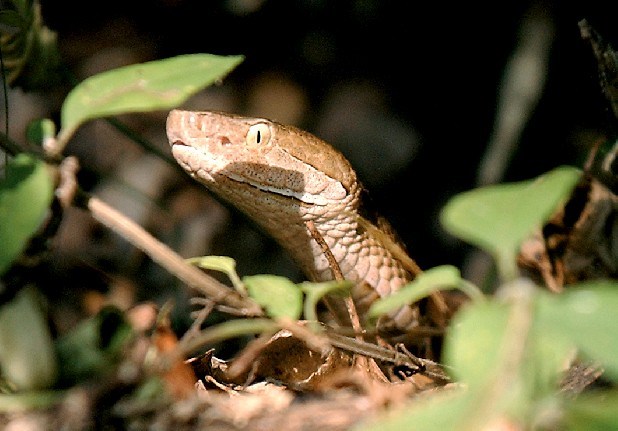
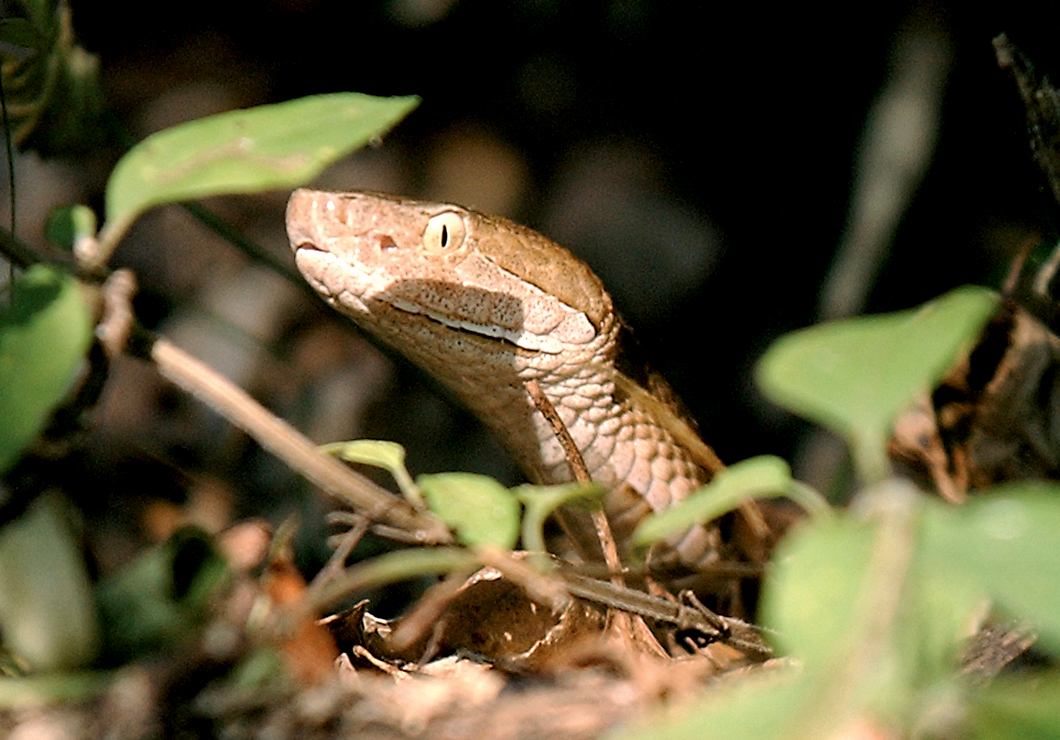
 A new study shows that the number of copperhead snakes is rising in Georgia while the number of king snakes, which prey on copperheads, is falling.
SAVANNAH, Ga. – As kingsnakes decline in localized areas of the Southeast, the abundance of one of their common meals – the venomous copperhead – seems to be increasing.
Researchers collected ongoing snake survey data to look for changes in population sizes of the two species in the Southeast, publishing their findings in the journal Herpetologica.
Both snakes are native across most of Georgia. The nonvenomous kingsnakes, which grow to more than 5 feet long, are so-named because they have a natural immunity to pit-viper venom, and so are able to prey on other snakes. They eat copperheads, a heavy-bodied venomous snake that can grow to a little more than 3 feet long.
From 377 traps deployed in an array of habitats, the authors recorded captures of 299 kingsnakes and 2,012 copperheads. Fort Stewart was one of the study sites in Georgia, along with the Joseph W. Jones Ecological Research Center at Ichauway in the southwest corner of the state. The data indicates that declines in the kingsnake populations coincide with increases in the copperhead populations. Why that happens is open to interpretation.
“What may be happening when the kingsnakes decline or are not present is it releases copperheads that are there from that predator pressure,” said Dirk Stevenson, a study author and assistant conservation scientist at the Orianne Society, a Georgia-based nonprofit dedicated to snake conservation.