
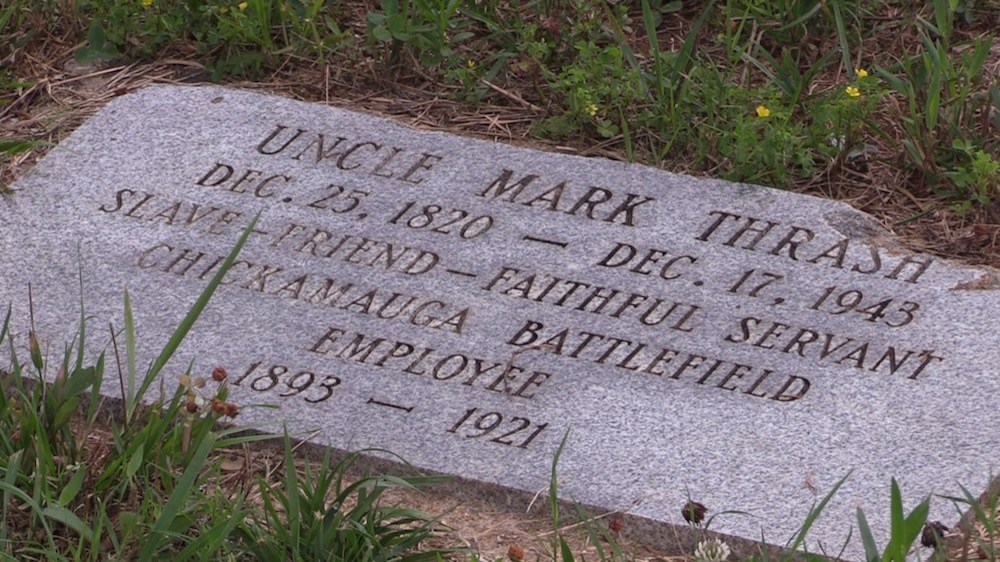
It’s not often these days that we get to read some really uplifting news – especially uplifting news about Black history. But Monday, a Chattanooga Times Free Press article headlined “Restoration at District Hill Cemetery close to being complete,” marked a red-letter day.
And it took a lot of doing to bring the more-than-a-century-old cemetery in Chickamauga, Georgia, back to the map, to research its deep history and hopefully ready to open fully within 12 to 18 months, according to Joyce Haslerig-Harrison, a fourth-generation landowner of the property where in the early 1900s, it was designated a “colored” cemetery by longtime Congressman Gordon Lee’s family.
“There’s a history here, and no one knows that history,” Harrison said. “There are so many African Americans that have contributed to this country, and if we don’t tell everyone the significance or the value of the people that lived it, who would do it if we don’t? It’s almost a ministry of service that you’re doing for your community and your country to tell those stories.”
For instance, among those buried there is “Uncle” Mark Thrash, a once-enslaved groundskeeper for the Chickamauga Battlefield through the late 1800s and early 1900s. Thrash is known to have buried Union and Confederate soldiers and would tell visitors to the battlefield stories of life before the Civil War. He lived in a two-room cabin on park grounds for years, and he died there just eight days before his 123rd birthday.
According to the National Park Service, Thrash “would enthrall visitors for hours. … In the end, it is somewhat irrelevant how many of his stories are true. Thrash’s carefully crafted public image of “Uncle Mark” was a means by which he could not only survive, but thrive in an era in which African Americans were considered second class citizens. And in doing so, he promoted the preservation of this park, and inspired people to care about this place. Even now, decades after his death in 1943, visitors will often share with park staff stories of meeting Mark Thrash when they were younger, and how he inspired them to learn about the battle.”