
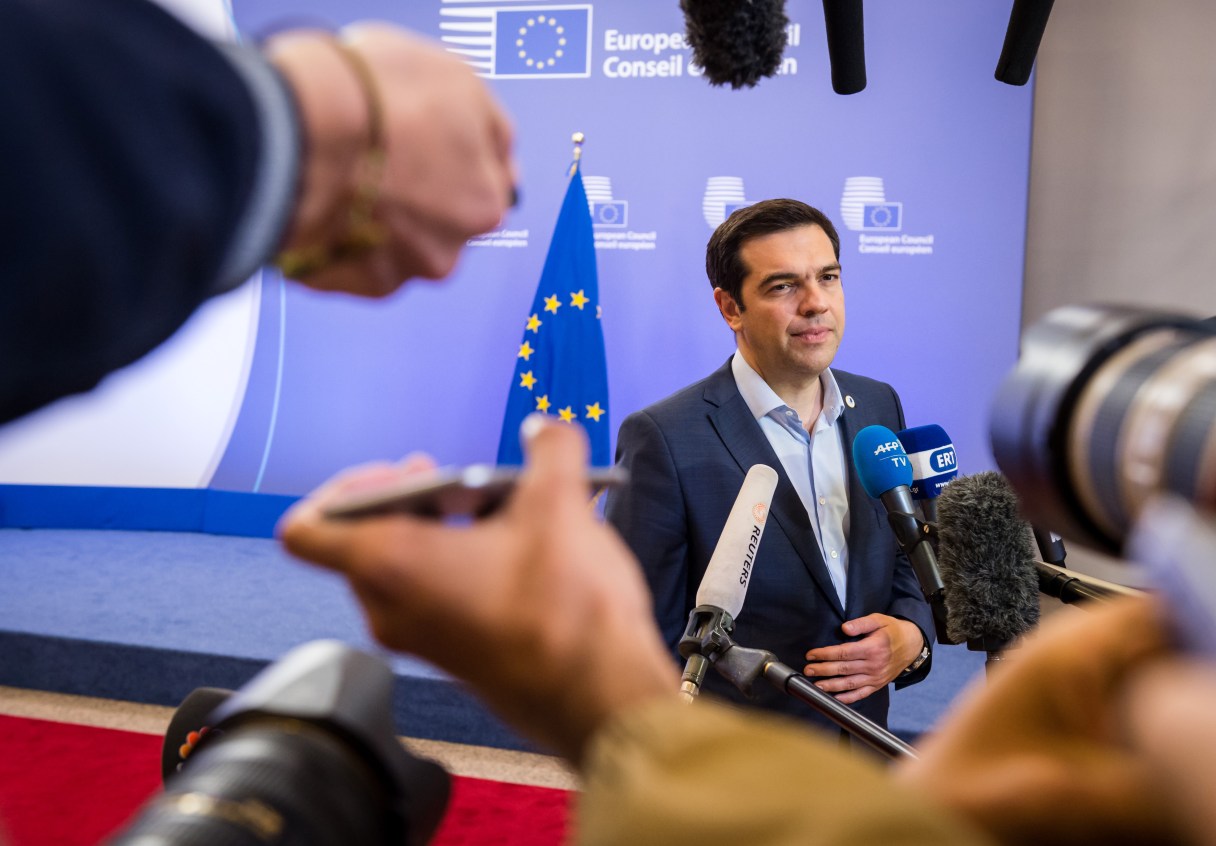
BRUSSELS (AP) – As dawn broke in Brussels on Monday, Europe’s frazzled leaders gazed into an abyss: the looming exit of Greece from a common currency that symbolized European unity.
Hours past a midnight deadline to clinch a Greek bailout deal, German Chancellor Angela Merkel and Greek Prime Minister Alexis Tsipras were about to walk away from the table – exhausted from all-night talks filled with threats, shouting and ultimatums.
A single text message rescued the talks – and possibly the euro. Dutch Premier Mark Rutte, a hard-liner on Greek reform waiting outside with other leaders, sent European Union President Donald Tusk an SMS proposing a compromise on the last sticking point keeping the two sides apart.
For three hours, Merkel, Tsipras, Tusk and French President Francois Hollande had been stuck in dead-end closed-door talks, and the message suddenly made something click. Within an hour, the deal was clinched.
This account of the dramatic events that led to a last-minute bailout agreement for Greece has been pieced together from interviews with a half-dozen officials from EU nations and institutions who attended the negotiations over the past months. They spoke on condition of anonymity because the talks were not public.