
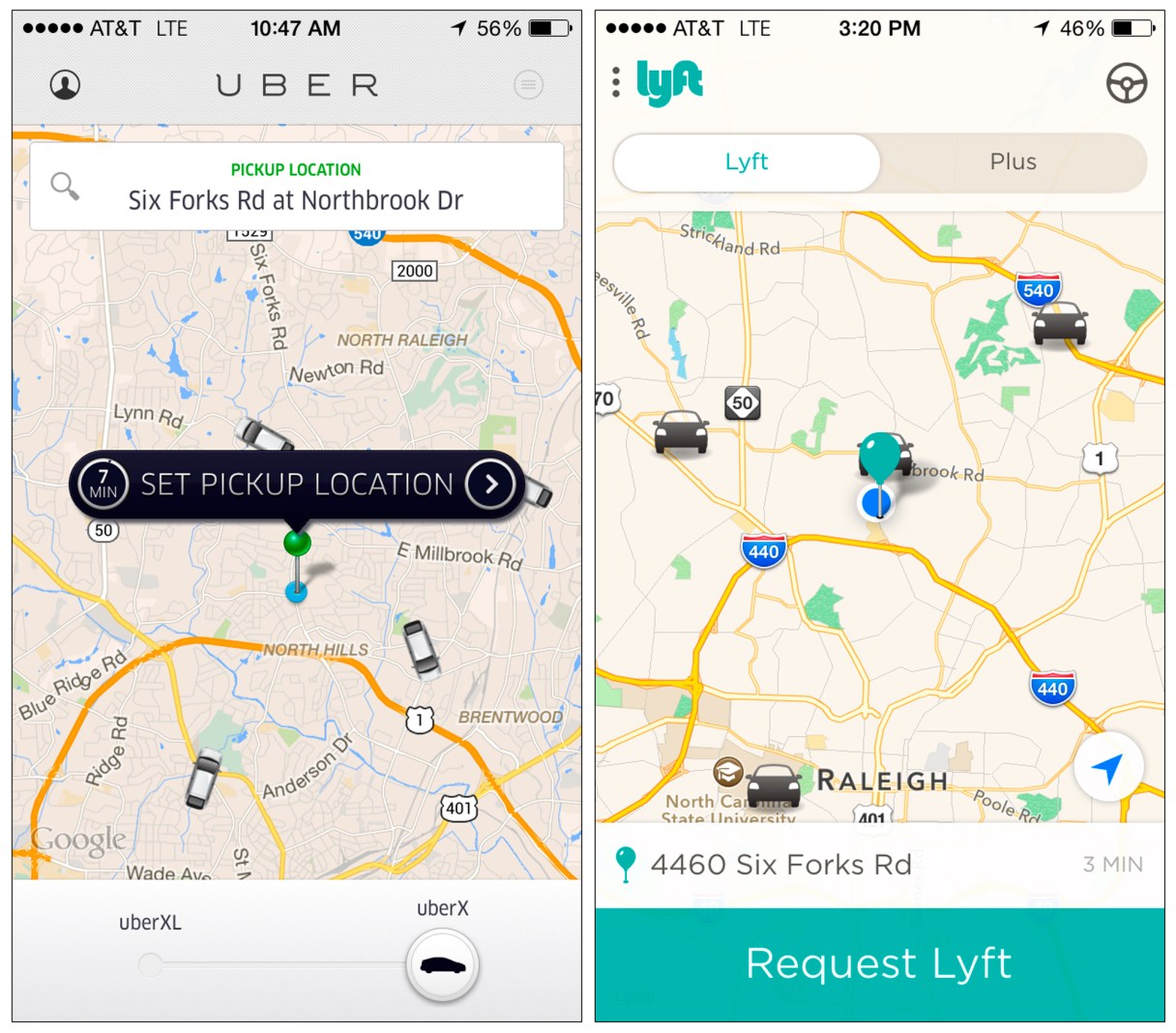
RALEIGH, N.C. (AP) – North Carolina has become an attractive market for smartphone-based car services such as Uber and Lyft, which are drawn to the state’s mid-sized cities that have college students and young professionals but lack extensive mass transit. It’s also one of many states where little regulation exists outside of traditional cab and limo services.
Uber currently offers rides in 10 cities in North Carolina, ranging from Wilmington and Asheville to the larger Raleigh and Charlotte. The company says that’s more than any other state but California. Six of those cities have populations greater than 200,000, and all are home to universities.
The companies’ expansion has legislators in North Carolina and elsewhere scrambling to study their business models ahead of sessions in 2015 when they could address insurance, car inspections or criminal background checks. Throw in concerns from traditional taxi companies and insurance lobbyists, and Uber and Lyft’s public policy staffs should stay busy.
At a meeting this week of North Carolina’s Revenue Laws Study Committee, co-chairwoman Rep. Julia C. Howard said she anticipated someone would introduce a bill, but she wasn’t aware of a specific proposal yet.
“We’re getting into some tall weeds here,” Howard said, referring to the nuances involved after a colleague asked about pricing differences between Uber, Lyft and taxis.