
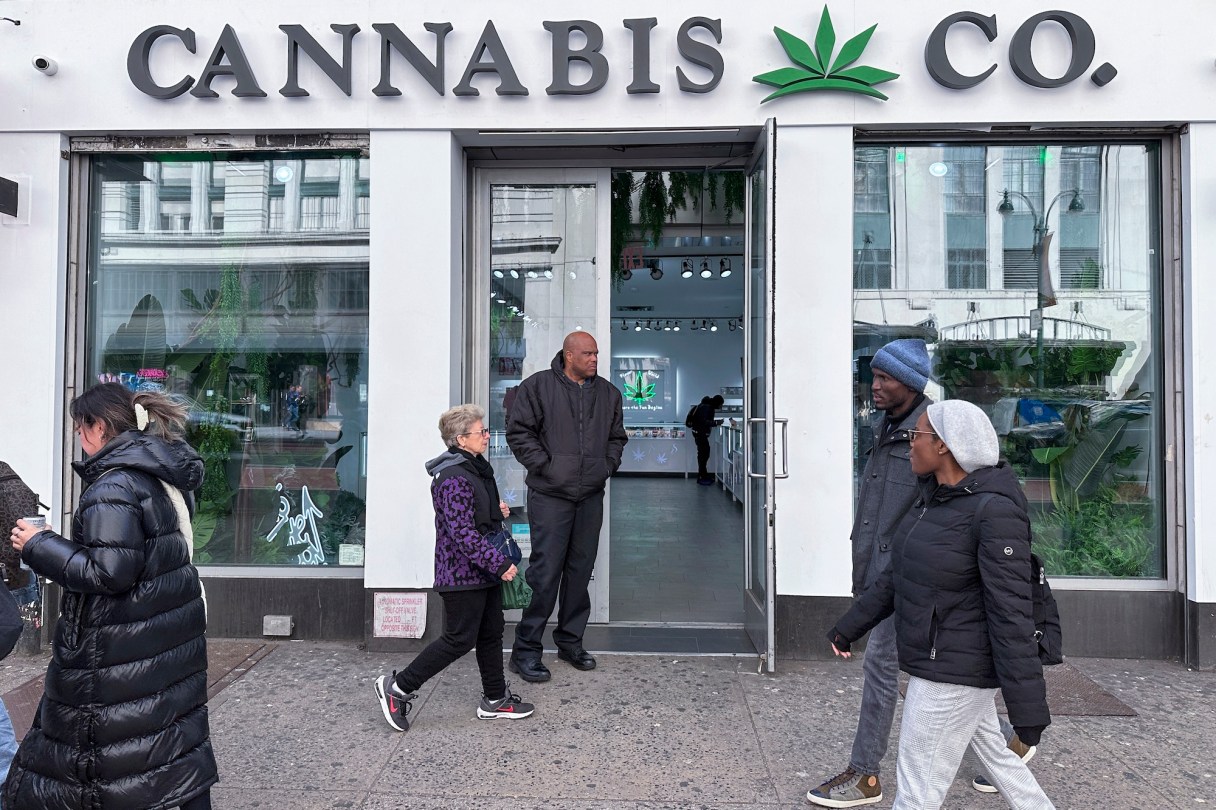
Depending on where you live and how you want to use it, it is pretty easy to get marijuana in the U.S. At first medical marijuana, which has legitimate palliative uses, achieved widespread acceptance.
Over time, however, the requirements for proof of medical use weakened, leading to de facto legalization in many areas. Now 24 states plus the District of Columbia, representing half the country’s population, have approved legalization for recreational use.
And yet the key question remains unanswered: Is this really a good idea?
For all the political popularity of marijuana legalization, a lot of people I know don’t love the practical consequences. In many places — both cities and suburbs — the smell of marijuana wafting through the air is commonplace. Meanwhile, pot has become much more potent, having stronger effects on users than it did 30 years ago.
But there is a way to approach this question more systematically. What do the numbers show? A new study from the Federal Reserve Bank of Kansas City offers some important keys toward an answer.