
Friday, November 13, 2026Nov 13

Needs go unmet 6 months after Maria hit Puerto Rico

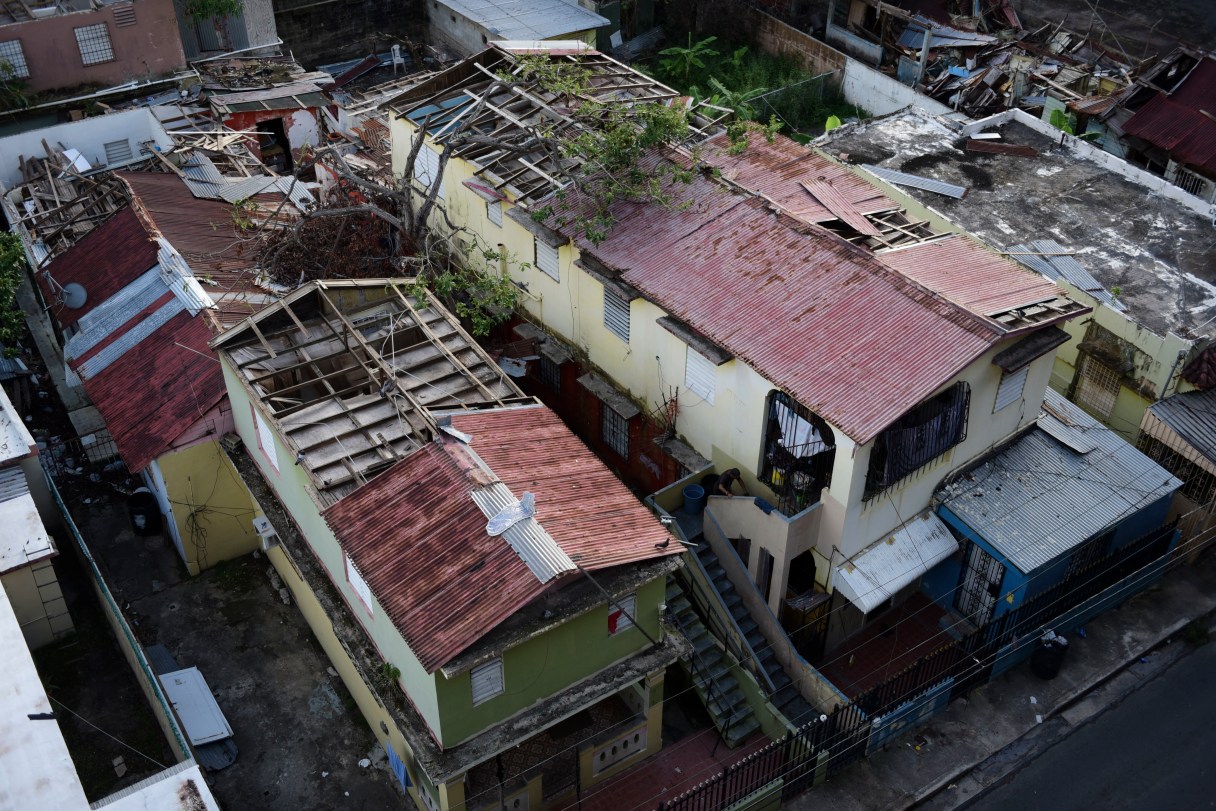
In this Nov. 15, 2017 photo, some roofs damaged by the whip of Hurricane Maria are still exposed to rainy weather conditions, in San Juan, Puerto Rico. A newly created Florida company with an unproven record won more than $30 million in contracts from the Federal Emergency Management Agency to provide emergency tarps and plastic sheeting for repairs to hurricane victims in Puerto Rico. Bronze Star LLC never delivered those urgently needed supplies, which even months later remain in demand on the island.  (AP Photo/Carlos Giusti)
In this Nov. 15, 2017 photo, some roofs damaged by the whip of Hurricane Maria are still exposed to rainy weather conditions, in San Juan, Puerto Rico. A newly created Florida company with an unproven record won more than $30 million in contracts from the Federal Emergency Management Agency to provide emergency tarps and plastic sheeting for repairs to hurricane victims in Puerto Rico. Bronze Star LLC never delivered those urgently needed supplies, which even months later remain in demand on the island. (AP Photo/Carlos Giusti)

SAN JUAN, Puerto Rico (AP) – Generators are still humming. Candles are still flickering. Homes are still being repaired.

Puerto Rico was hit by Hurricane Maria exactly six months ago, and the U.S. territory is still struggling to recover from the strongest storm to hit the island in nearly a century.

“There are a lot of people with needs,” said Levid Ortiz, operating director of PR4PR, a local nonprofit that helps impoverished communities across the island. “It shouldn’t be like this. We should already be back on our feet.”

Some 250 Puerto Ricans formed a line around him on a recent weekday, standing for more than two hours to receive bottles of water and a box of food at a public basketball court in the mountain town of Corozal. Many of those waiting were still without power, including 23-year-old Keishla Quiles, a single mother with a 4-year-old son who still buys ice every day to fill a cooler to keep milk and other goods cold amid rising temperatures.

“Since we’re a family of few resources, we have not been able to afford a generator,” she said. “It’s been hard living like this.”