
Thursday, November 12, 2026Nov 12

Supreme Court to hear new challenge to labor unions

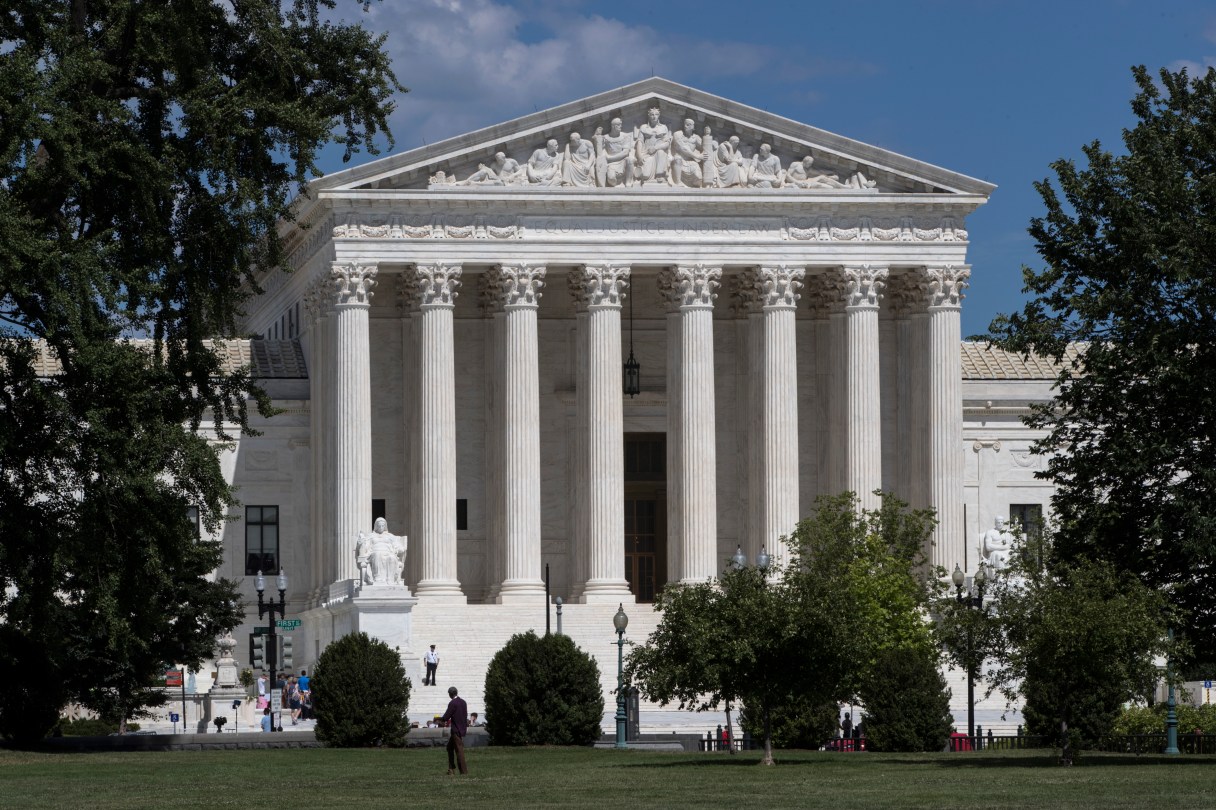
In this June 26, 2017 photo, The Supreme Court is seen in Washington. A Supreme Court with a reconstituted conservative majority is taking on a new case with the potential to financially cripple Democratic-leaning labor unions that represent government workers. The justices deadlocked 4-4 in a similar case last year.  (AP Photo/J. Scott Applewhite)
In this June 26, 2017 photo, The Supreme Court is seen in Washington. A Supreme Court with a reconstituted conservative majority is taking on a new case with the potential to financially cripple Democratic-leaning labor unions that represent government workers. The justices deadlocked 4-4 in a similar case last year. (AP Photo/J. Scott Applewhite) In this June 26, 2017 photo, The Supreme Court is seen in Washington. A Supreme Court with a reconstituted conservative majority is taking on a new case with the potential to financially cripple Democratic-leaning labor unions that represent government workers. The justices deadlocked 4-4 in a similar case last year. (AP Photo/J. Scott Applewhite)

WASHINGTON (AP) – A Supreme Court with a reconstituted conservative majority is taking on a new case with the potential to financially cripple Democratic-leaning labor unions that represent government workers. The justices deadlocked 4-4 in a similar case last year.

The high court agreed Thursday to again consider a free-speech challenge from workers who object to paying money to unions they don’t support.

The court could decide to overturn a 40-year-old Supreme Court ruling that allows public sector unions to collect fees from non-members to cover the costs of negotiating contracts for all employees.

The latest appeal is from a state employee in Illinois. It was filed at the Supreme Court just two months after Justice Neil Gorsuch filled the high court seat that had been vacant since Justice Antonin Scalia’s death.

The stakes are high. Union membership in the U.S. declined to just 10.7 percent of the workforce last year, and the ranks of private-sector unions have been especially hard hit.