
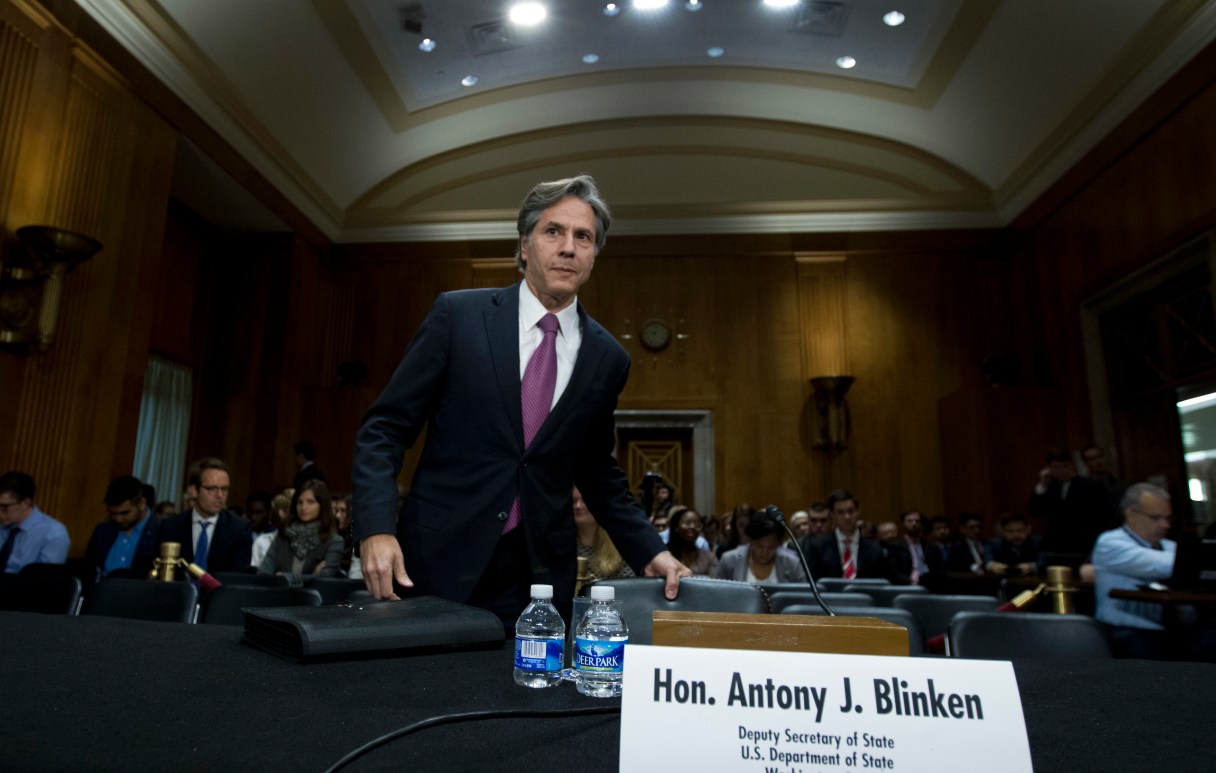
WASHINGTON (AP) – A senior Obama administration official told lawmakers Thursday that the failure of a cease-fire in Syria poses serious consequences for Moscow and gives the United States leverage, an argument that drew a skeptical response from Republicans and Democrats.
Deputy Secretary of State Antony Blinken said if the civil war in Syria escalates, Russia may become stuck in a quagmire and also will be seen as complicit with Syrian President Bashar Assad in the slaughter of Sunni Muslims, the country’s largest religious group.
But Blinken’s outlook was met with skepticism from members of the Senate Foreign Relations Committee. Sen. Bob Corker, R-Tenn., the committee chairman, criticized the administration for not having a backup plan in Syria after a cease-fire brokered between the U.S. and Moscow collapsed about 10 days ago. Secretary of State John Kerry has warned that the U.S. will stop coordinating with Moscow unless Russian and Syrian attacks on the Syrian city of Aleppo end.
“There is no Plan B. There never has been a Plan B,” Corker said.
Blinken said “we also are actively considering other options” at President Barack Obama’s direction for ending the civil war. But Blinken also said that Russia and the Assad government face severe consequences if the conflict doesn’t end, a situation he said gives the U.S. an advantage.