
For answers to frequently asked questions about the coronavirus, click here.
SAVANNAH, Ga. (AP) – The number of confirmed coronavirus infections in Georgia exceeded 3,800 on Tuesday, with more than 100 people dead, as mayors pressed for Gov. Brian Kemp to impose greater restrictions statewide in hopes of slowing the new virus.
Savannah Mayor Van Johnson told a news conference Tuesday that mayors on a conference call the to discuss the virus response a day earlier had largely agreed the Republican governor needs to take more robust action.
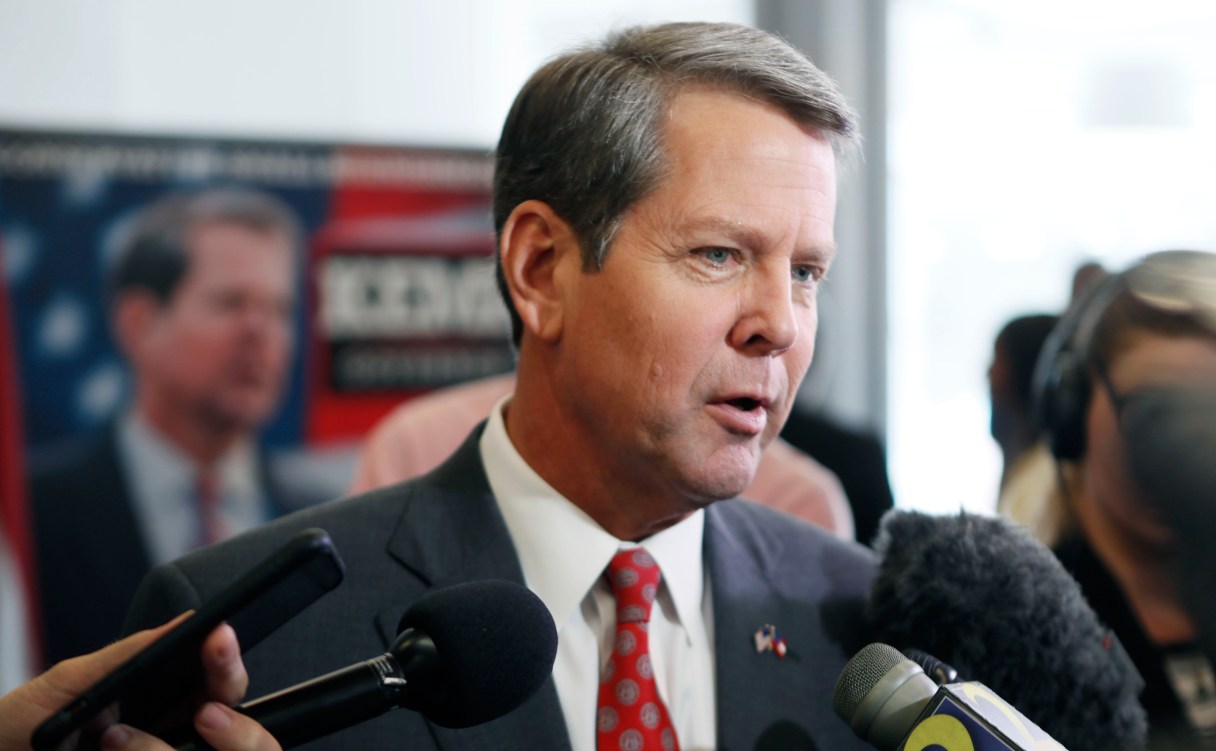
Kemp has closed schools, banned gatherings of 10 or more people, shut down bars and nightclubs and ordered people in fragile health to stay home. But he’s resisted calls for a statewide order for all Georgians to shelter at home, saying those decisions are best left to local governments. The result has been a patchwork of ordinances that can vary widely even between neighboring communities.
“I understand that he wants to take it slow. I understand that he wants to maintain arrows in his quiver,” Johnson said in Savannah, where the virus has killed at least two people within surrounding Chatham County. “But the fact of the matter is these cities need some consistency. Because right now, we’re all over the place.”
The Georgia Municipal Association held a conference call for mayors Monday to update them on the virus response, said Larry Hanson, the group’s executive director. But Hanson said there’s still disagreement over what role the state should play.
A shrinking handful of Georgia counties still have no confirmed cases of COVID-19, the disease caused by the virus. Fearful of closing businesses and losing jobs, Hanson said, some local leaders don’t want the governor to impose tougher restrictions statewide.
“But there is a growing number of mayors calling for that,” Hanson said.
“There’s no question there are a number of mayors who are concerned and fearful and are trying to manage this crisis at the local level,” he said. “And some think that more stringent actions are needed.”
The Georgia Department of Public Health reported Tuesday that the virus has killed at least 108 people statewide, and confirmed infections have surpassed 3,800. Dougherty County in southwest Georgia, with 18 deaths and more than 450 infections, has suffered at rates higher than any community in the state.
Testing for COVID-19 has been limited in Georgia, with results often taking longer than a week. That’s hindered the ability of state health officials to know how widespread infections truly are.
Kemp’s office said in a news release Tuesday that state health officials working with clinical laboratories at Georgia universities should soon be able to process up to 3,000 test samples daily using equipment borrowed from campus research labs and new methods approved by a state task force.
Meanwhile, the state Board of Pardons and Paroles said it’s reviewing cases of some inmates for possible early release to help prisons manage infection risks. A news release said the board is weighing clemency for some nonviolent offenders within roughly six months of finishing their sentences.
For most people, the virus causes mild or moderate symptoms, such as fever and cough, that clear up in two to three weeks. For some, especially older adults and people with existing health problems, it can cause more severe illness, including pneumonia and death.
Kemp told a televised town hall meeting last week that he’s prepared to take further action “if things get worse,” but also noted his concern for Georgia’s economy.
“You have people saying, `Look, we need to be working. I’m worried about losing my home, I’m worried about getting meals for my kids,'” Kemp said. “And so those are the kinds of things we’re balancing.”
The Georgia Municipal Association last week urged all 538 cities statewide to adopt some type of emergency order aimed at slowing the spread of the virus. Hanson said he didn’t know how many had adopted such measures, but the association’s website Tuesday listed roughly 60 cities and counties that had taken action.
Augusta Mayor Hardie Davis said Tuesday he’s extending local orders closing many city services and some businesses including barbershops, theaters and bowling alleys. Augusta has not ordered residents to stay home. Davis told a news conference he doesn’t want a “heavy handed” response.
“We should be able to practice safe social distancing at home when possible,” Davis said. “And it should not have to be mandatory.”