
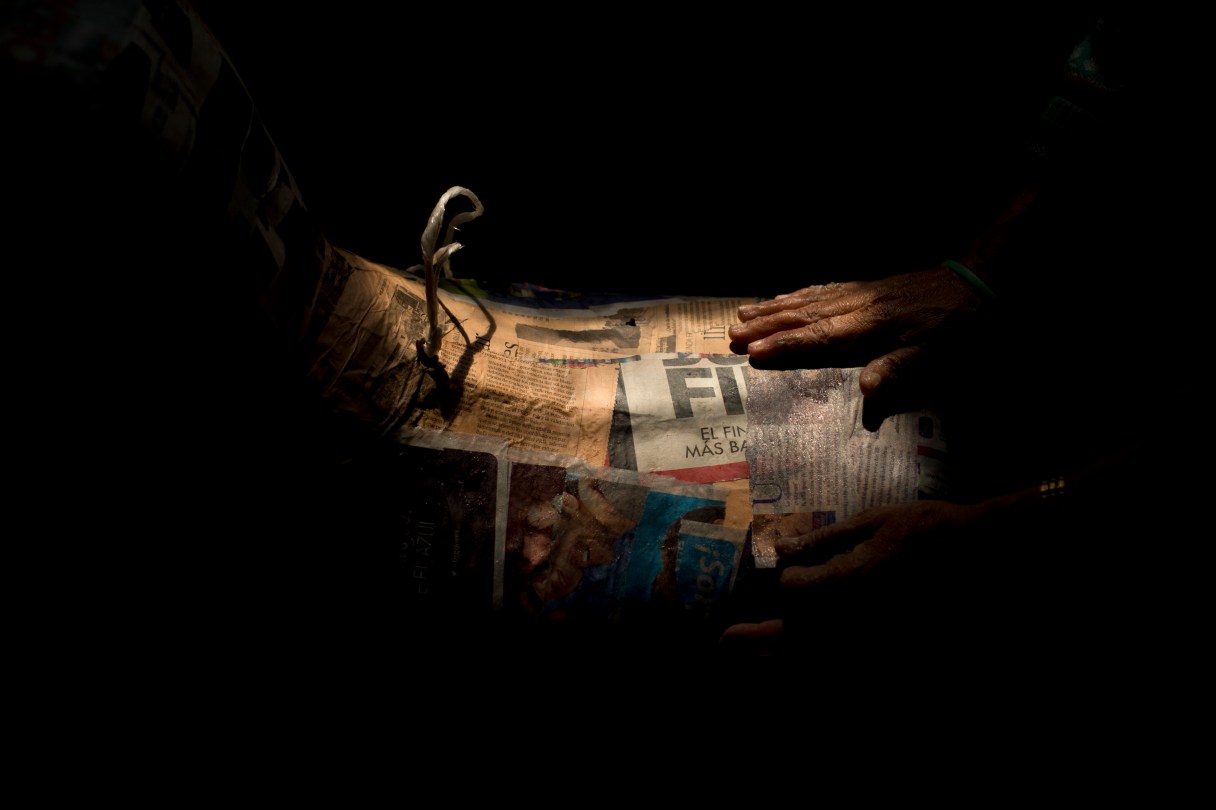
MEXICO CITY (AP) – A Mexican party isn’t complete without a piñata, and Melesio Vicente Flores and Cecilia Albarran Gonzalez have spent the last 25 years making high-end versions of the papier-mache figures to later be stuffed with candies and broken open with a stick or club.
As they practice the centuries-old tradition of pinata-making, the couple caters to a smaller market of consumers demanding higher quality “artistic” figures that pay greater attention to detail. Still, competition is tight as more run-of-the mill pinata makers sell their creations more cheaply. Three other rooftops full of the drying figures are visible on the hillside below the couple’s workshop and home.
At their four-story house built into a hillside on the east side of Mexico’s sprawling capital, the Vicente-Albarran family fashions cartoon characters like Mickey Mouse for children’s birthdays, or caricatures of despised politicians for protests.
Now in their 50s, the couple began making pinatas in 1989 and later expanded the family business to include their daughter Elvia Vicente Albarran and son-in-law Guillermo Luna Martinez.
On the rooftop of their shared home, Luna covers cement molds in the shapes of body parts with newspaper and lays them out to dry. One story below, mother and daughter cut newspapers into strips, coat them in glue made from wheat flour and layer over gaps left after the shapes are cut from the molds. Vicente assembles the pieces into completed characters.