
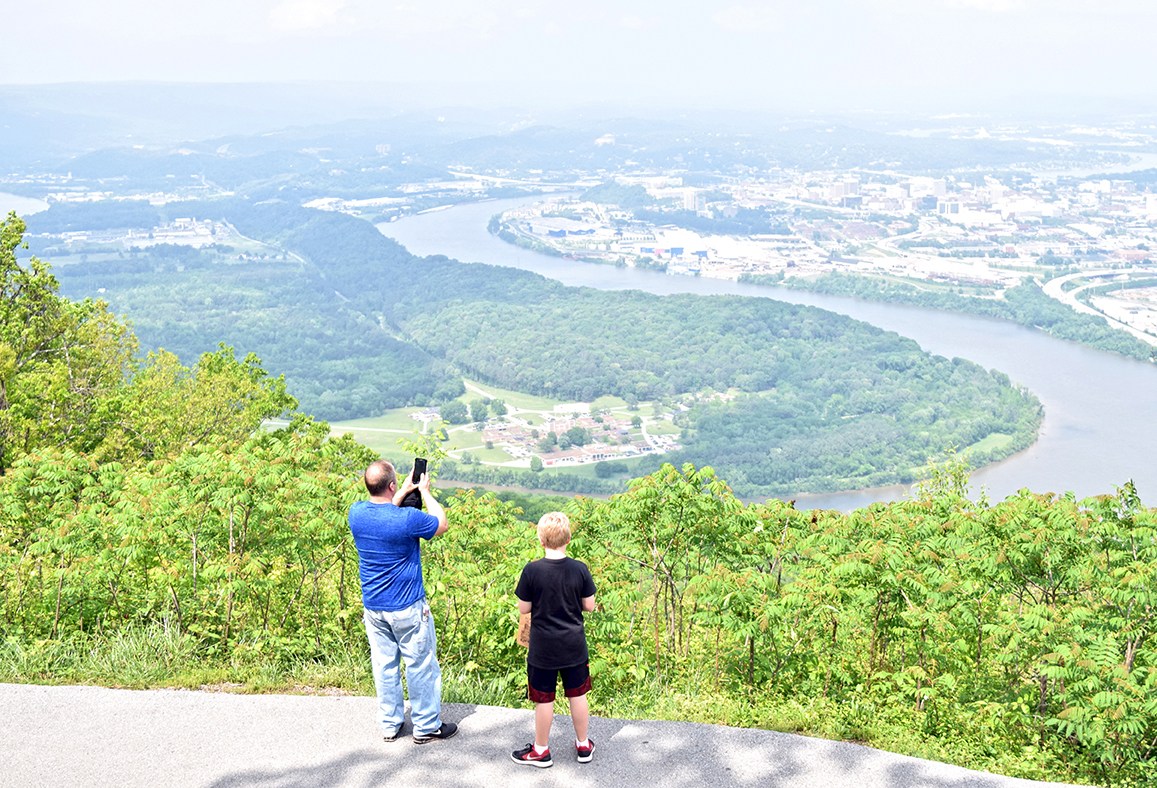
Moccasin Bend has served as a strategic crossroads through more than 10,000 years of human history. With its rich bottom land along the Tennessee River, the Bend first attracted nomadic hunter-gatherers and later permanent settlements and ceremonial centers.
Around the time of the American Revolution, the emerging colonial economy pushed the Cherokees into the region just as they were shifting from a village-based culture to farmsteading. One farm on the Bend was owned by John Brown, a one-eighth Cherokee, who operated Brown’s Ferry.
In the late 1830s, thousands of Cherokees were deported on the Trail of Tears to Oklahoma. Many floated down the Tennessee River and around Moccasin Bend while others crossed the peninsula on foot.
Moccasin Bend became a weak point during the Confederate siege of Chattanooga in early October 1863. Union artillery at the toe of Stringer’s Ridge bombarded Confederate defense routes on the shoulder of Lookout Mountain, letting Federals pour up Lookout Valley.
Shortly afterward, Gen. Ulysses Grant ordered a surprise attack on Confederate pickets at Brown’s Ferry, which allowed Union supply wagons (the Cracker Line) to cross the river and the Bend to reach Chattanooga.