
Thursday, November 12, 2026Nov 12

French voters begin casting ballots in presidential election

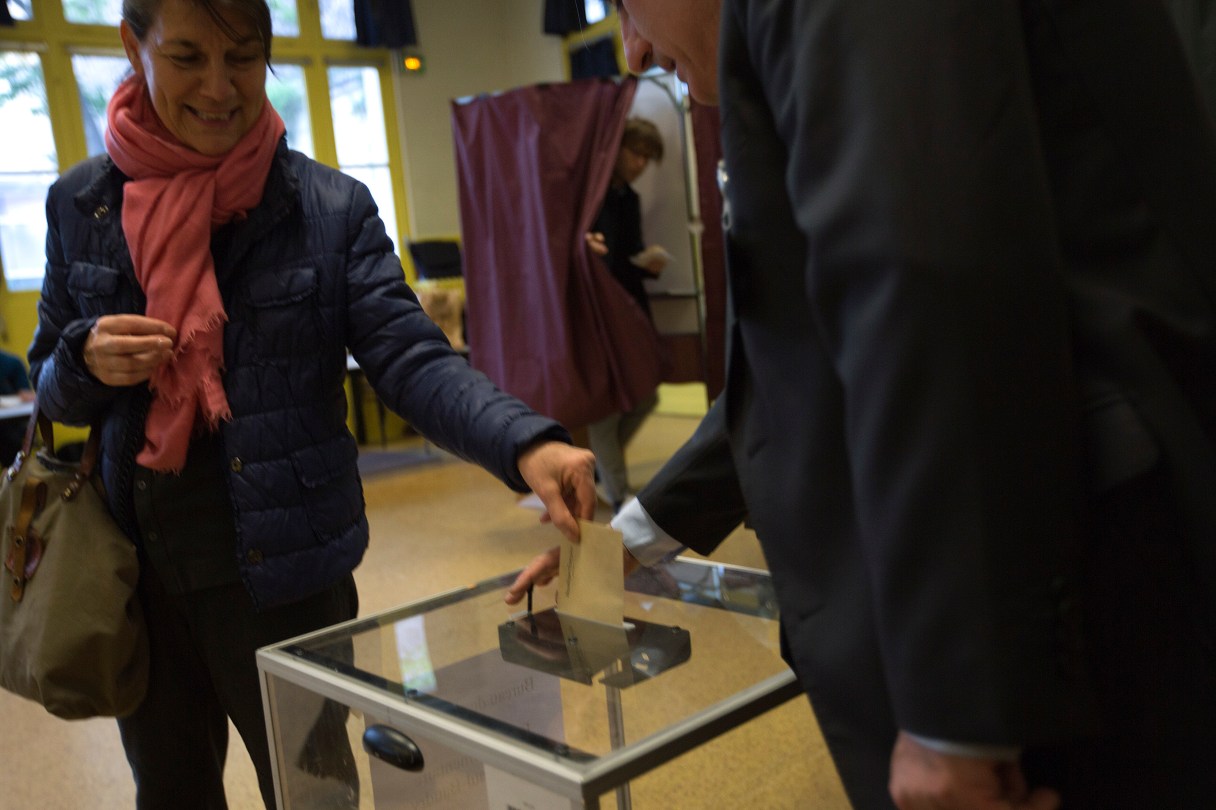
A woman casts her vote for the first-round presidential election at a polling station in Paris, Sunday, April 23, 2017. French voters are casting ballots for their next president in an unusually close first-round election Sunday, after a campaign dominated by concerns about jobs and immigration and clouded by security fears following a recent attack on police guarding the Champs-Elysees in Paris. (AP Photo/Emilio Morenatti)
A woman casts her vote for the first-round presidential election at a polling station in Paris, Sunday, April 23, 2017. French voters are casting ballots for their next president in an unusually close first-round election Sunday, after a campaign dominated by concerns about jobs and immigration and clouded by security fears following a recent attack on police guarding the Champs-Elysees in Paris. (AP Photo/Emilio Morenatti) A woman casts her vote for the first-round presidential election at a polling station in Paris, Sunday, April 23, 2017. French voters are casting ballots for their next president in an unusually close first-round election Sunday, after a campaign dominated by concerns about jobs and immigration and clouded by security fears following a recent attack on police guarding the Champs-Elysees in Paris. (AP Photo/Emilio Morenatti)

PARIS (AP) – French voters began casting ballots for the presidential election Sunday in a tense first-round poll that’s seen as a test for the spread of populism around the world.

Over 60,000 polling stations opened at 0600 GMT for voters who will choose between 11 candidates in the most unpredictable election in generations.

Opinion polls point to a tight race among the four top contenders vying to get into the May 7 presidential runoff that will decide who becomes France’s next head of state.

Polls suggest far-right nationalist Marine Le Pen and Emmanuel Macron, an independent centrist and former economy minister, were in the lead. But conservative Francois Fillon, a former prime minister, appeared to be closing the gap, as was far-left candidate Jean-Luc Melenchon.

France’s 10 percent unemployment, its lackluster economy and security issues topped concerns for the 47 million eligible voters.