
Monday, November 16, 2026Nov 16

Pentagon chief heads east as US tries to maintain Asia focus

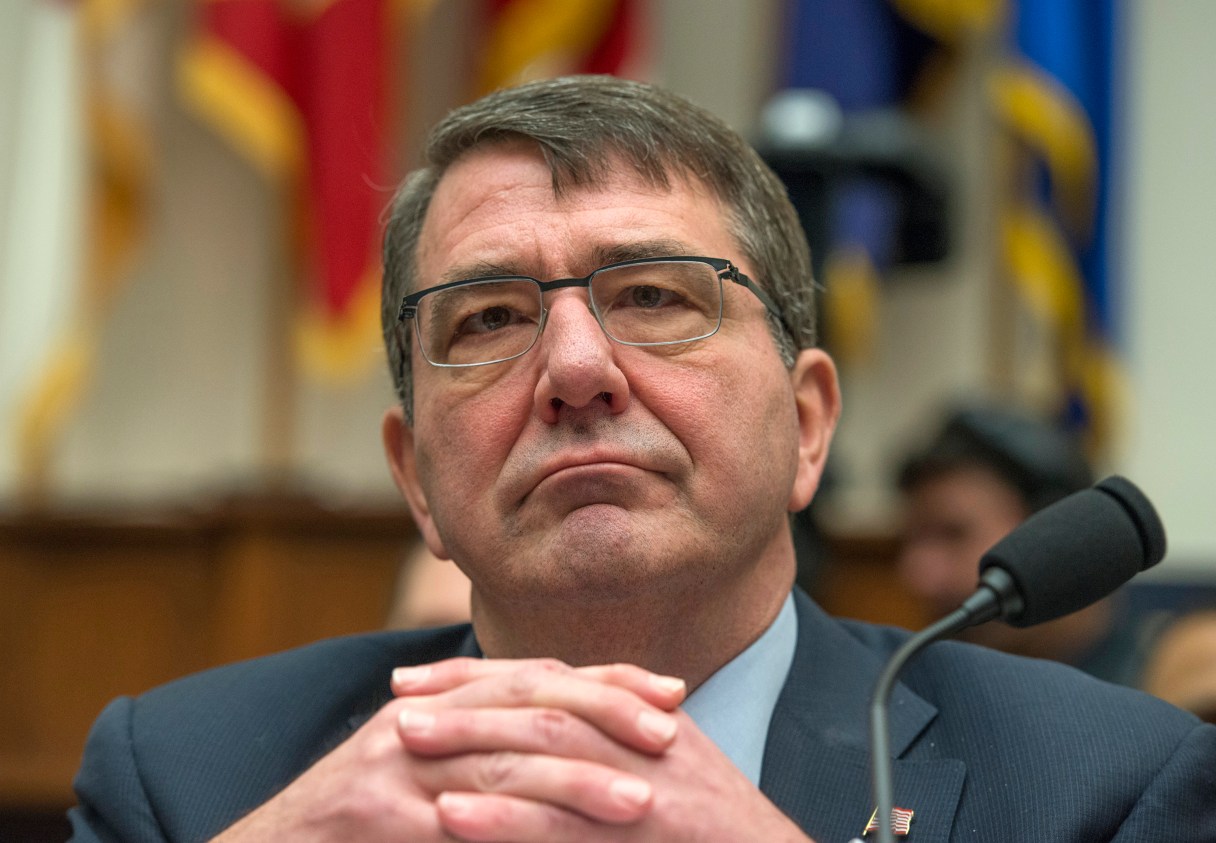
FILE - In this March 18, 2015 file photo, Defense Secretary Ash Carter listens on Capitol Hill in Washington. To put a spotlight back on Asia, Carter will visit Japan and South Korea this week, the first of a string of planned trips to the region during his first year as Pentagon chief. He will visit India and attend an international security conference in Singapore in May, and he may visit China later in the year.  (AP Photo/Molly Riley, File)
FILE - In this March 18, 2015 file photo, Defense Secretary Ash Carter listens on Capitol Hill in Washington. To put a spotlight back on Asia, Carter will visit Japan and South Korea this week, the first of a string of planned trips to the region during his first year as Pentagon chief. He will visit India and attend an international security conference in Singapore in May, and he may visit China later in the year. (AP Photo/Molly Riley, File)

WASHINGTON (AP) – Islamic extremists grab parts of Iraq and Syria. Yemen slides into civil war. Iran’s nuclear program strains U.S. relations with Israel. Ukraine fights Russian-backed separatists.

At a time of crisis across the Middle East and beyond, the Obama administration is trying to keep its focus on a widely advertised shift to Asia.

The administration has pursued the strategy since 2011, arguing that no region is more important to the United States’ long-term interests than Asia, particularly as the rise of China jangles nerves in other Asian capitals.

Yet the volatile Middle East keeps drawing back the attention of U.S. policymakers, and the U.S. military.

A year ago, it seemed unlikely the U.S. would have troops back in Iraq after completing its withdrawal in 2011. The rise of the Islamic State group has put fractious Iraq back on the U.S. front burner. Meanwhile, the White House is pumping the brakes on planned U.S. troop withdrawals from Afghanistan this year.