
According to certified yoga instructor Matt Fields-Johnson, the most important thing to bring to your first acro-yoga class is a sense of humor. “You’re going to fall. A lot,” he says. The second most important thing to bring is a basic level of fitness. “If you don’t have the flexibility to touch your toes,” says Fields-Johnson, “that’s problematic.”
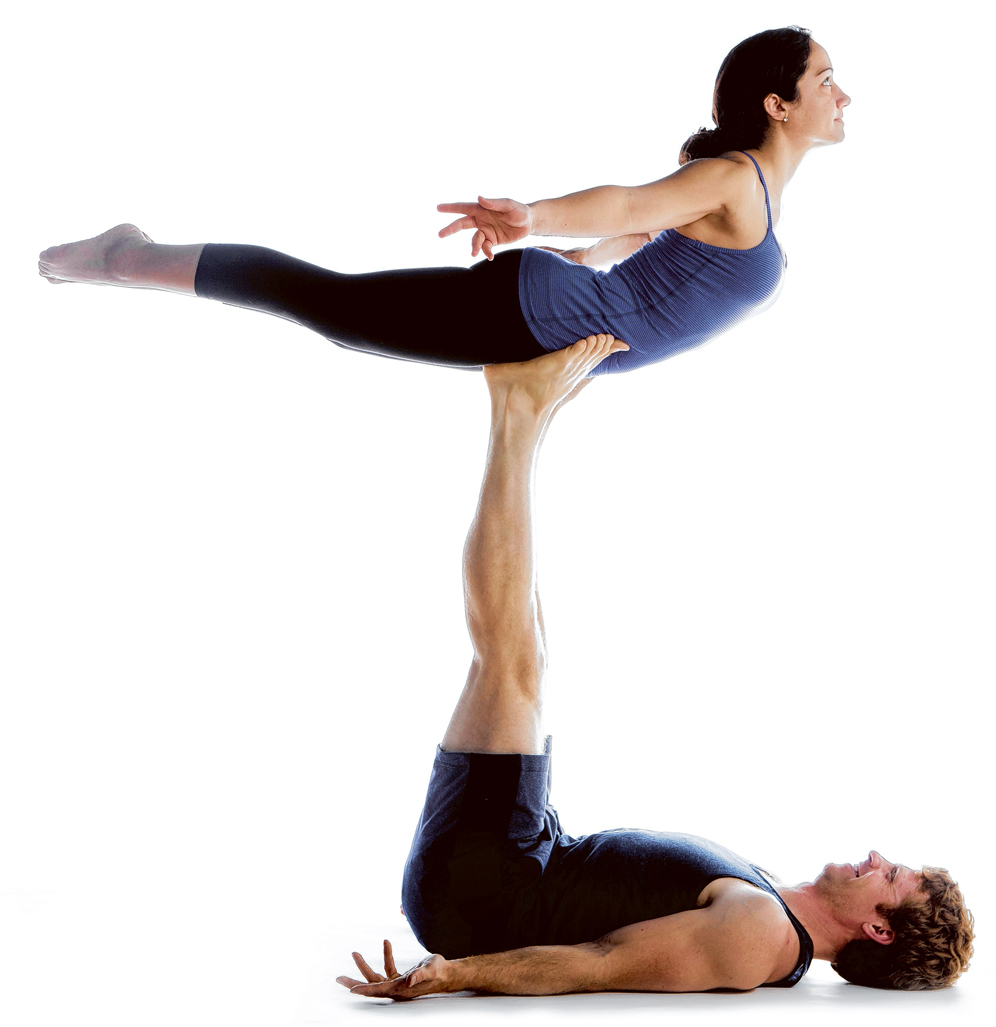 Matt Fields- Johnson, the base, supports Joy Dixon, the flyer, in bird, a basic Acro-yoga pose that requires the flyer to have a strong back and squeeze her legs while the base balances her on his feet.
Acro-yoga is the blend between acrobatics, yoga and performance art. It requires two people: a base and a flier. The base partner stays connected to the ground while lying down, sitting or standing. The flier, supported by the base, is elevated in the air while moving his or her body into a series of shapes, or yoga poses. The result resembles something like a living sculpture.
“Only it’s more unique because this sculpture is only temporary and it’s moving around,” says Fields-Johnson. The artistic allure of acro-yoga is certainly one facet of its appeal. But in fact the sport, first termed acro-yoga in 2001, offers a variety of both physical and emotional benefits to its participants.
Solar Side
The solar side of acro-yoga entails more acrobatics and athleticism. “The physical benefit is that it gets you really strong,” says Fields-Johnson. Both the base and the flier benefit from increased endurance strength as well as toning. The flier has the added advantage of growing core strength and flexibility.