
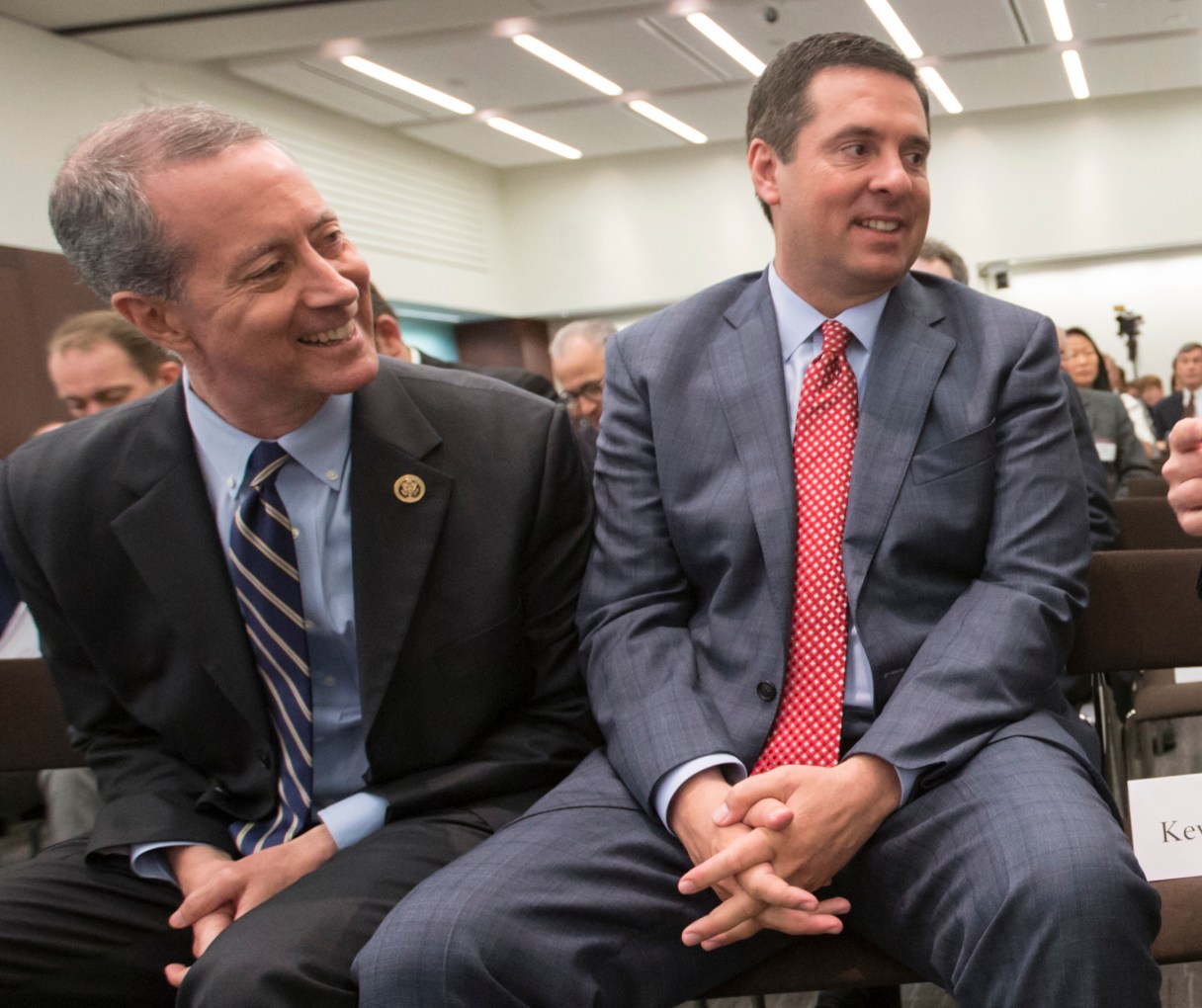
WASHINGTON (AP) – Russia’s violation of a key nuclear arms control treaty has become more egregious, two top Republican congressmen said in a letter released Wednesday that urged the Obama administration to confront and impose penalties against Moscow.
Rep. Devin Nunes of California, chairman of the House intelligence committee, and Rep. Mac Thornberry of Texas, who leads the House Armed Services Committee, sent President Barack Obama a two-page letter to express their “urgent concern” over what they described as Russia’s “near-decade-long pattern of violations that undermine this seminal arms control treaty and place it on the verge of collapse.”
Russia has rejected accusations that it has violated the Intermediate-Range Nuclear Forces Treaty, which President Ronald Reagan signed with Soviet leader Mikhail Gorbachev in 1987. The treaty, which helps protect the security of the U.S. and its allies in Europe and the Far East, prohibits the United States and Russia from possessing, producing or test-flying a ground-launched cruise missile with a range of 300 to 3,400 miles.
Late last year, Brian McKeon, principal deputy undersecretary of defense for policy, told Congress that Russia had already tested a ground-based system well into the ranges covered by the INF treaty. McKeon didn’t accuse Russia of any other violations, which would include producing the missiles. But in their letter, Nunes and Thornberry wrote, “It has become apparent to us that the situation regarding Russia’s violation has worsened.” They didn’t elaborate.
Russia says the U.S. has failed to provide evidence to prove allegations of Russian breaches and it also has alleged that some elements of the U.S. missile defense shield violate the treaty.