
And to Drink …
For selecting a wine with these meaty pork ribs, it’s all about the sweet, hot and spicy flavorings. They call for a red of substance and body, ideally with freshness and acidity as well. My first thought is of grenache, which worldwide has undergone a stylistic transition from overripe and sweet to fresh and complex over the past few years. Where would you like to go? France for Châteauneuf-du-Pape or Gigondas? Spain for Priorat or Sierra de Gredos? California or Australia? Plenty of great ones are out there. You could try something more esoteric, like a bobal from Manchuela in Spain or a red from the Canary Islands. The Douro in Portugal and Languedoc in France are making winning wines. Beaujolais and pinot noir would work, too, as would a dry earthy Lambrusco. Choices abound.— Eric Asimov
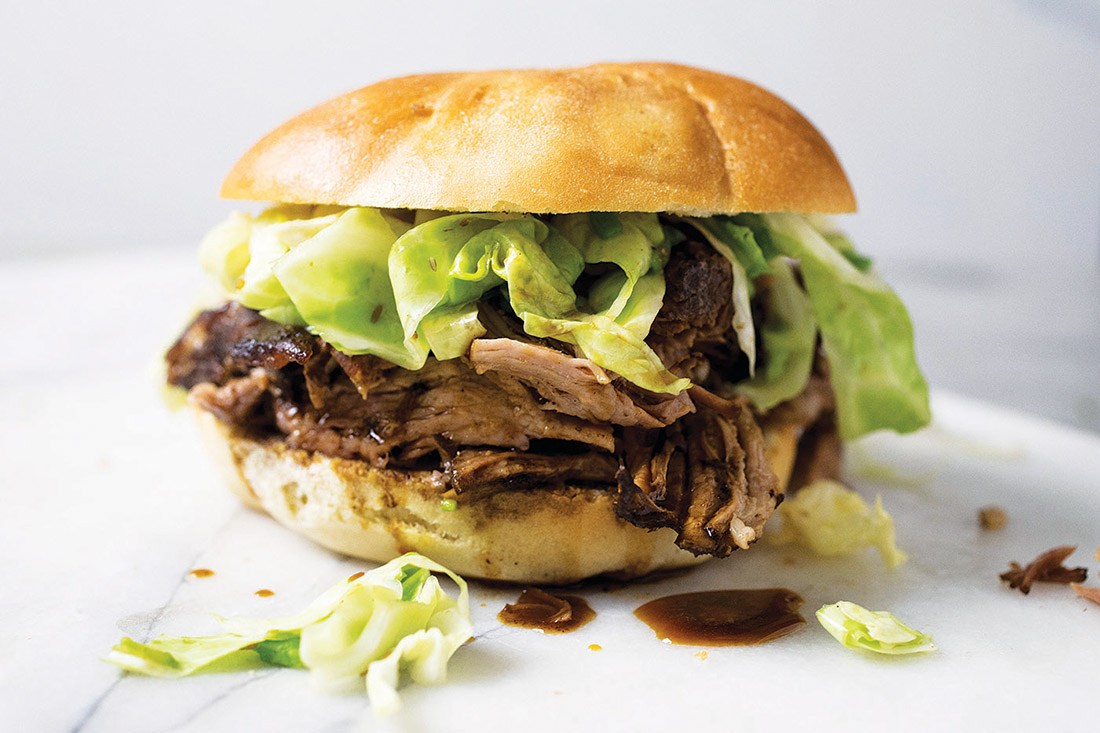
 Shredding the tender pork is easy. (Andrew Scrivani/The New York Times)
First, a disclaimer: This is not a recipe for real barbecue. There’s no fire involved; you use a standard oven. The recipe should probably be called Slow-Cooked Pork à la Barbeque, and rightfully so.
It does not conform to Texas, Kansas City or any other cherished American barbecue standards. There is no ketchup or cola in the sauce. There’s not even sauce per se, and the meat simmers in liquid instead of basking in smoky dry heat. In this way, it’s more like a soupy Mexican barbacoa of lamb or goat.
The seasoning veers Caribbean, though, with plenty of sweet spices, like clove, cinnamon, coriander and allspice. Cayenne provides a moderate baseline heat, which can be amplified with as much Scotch bonnet or habanero chile heat as you wish. On all accounts, it is robustly flavorful.
After slathering the meat with a flavorful paste, you stick it in a Dutch oven (I used an old enamelware turkey roaster), add a little water and let it bubble slowly under the lid for a few hours. There is nothing to do but wait.