
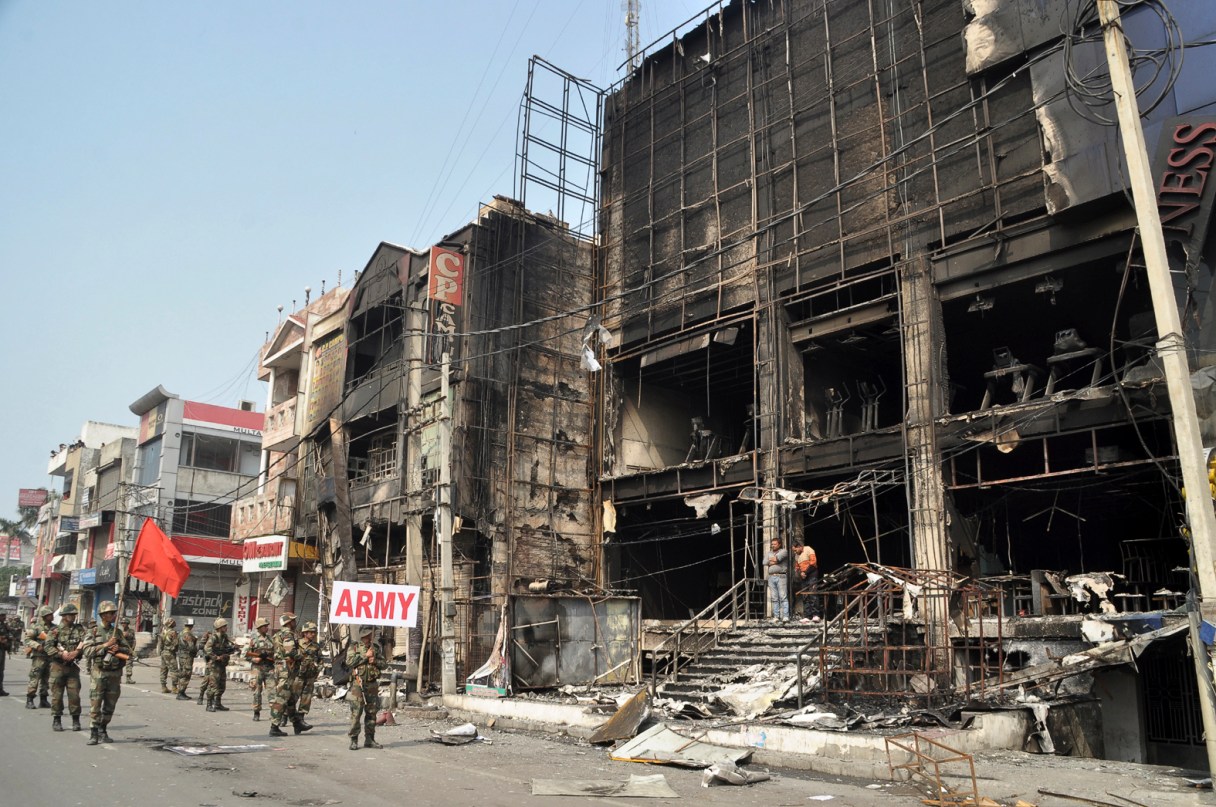
NEW DELHI (AP) – As thousands of members of an underprivileged community in northern India continue to protest to demand government benefits, more than 16 million people in India’s capital are facing a major water crisis as a result of the violent demonstrations, which have left at least 10 dead.
The protesters have damaged equipment that brings water from Munak canal in Haryana state to New Delhi, depleting the capital’s water supply. New Delhi gets about 60 percent of its water from the neighboring state.
Arvind Kejriwal, Delhi’s chief minister, announced Sunday that schools in the capital would be closed Monday. He also ordered the rationing of water to people’s homes.
At least 10 people have been killed in firing on protesters by Indian security forces since the weeklong protests turned violent on Friday, Yashpal Singhal, the state’s top police officer, told reporters on Sunday. Another 150 protesters have been injured in clashes in various parts of Haryana.
Sporadic violence was reported in Haryana on Sunday, with protesters setting a bank ATM and bank records on fire. Singhal said no major incidents of violence were reported in the state.
He also said paramilitary forces and irrigation engineers were trying to restore the water flow from Munak canal to New Delhi.
The protesters, members of the lower-caste Jat agricultural community, are demanding benefits both at the federal and state levels, including guaranteed government jobs or university spots. Talks Friday between community leaders and state government representatives failed to lead to an agreement.
The protesters are demanding 27 percent government job quotas or university spots for their community.
India’s constitution includes a system of affirmative action for people in the lowest castes to help them overcome discrimination. The government has expanded the number of groups, including the Jat, qualifying for quotas.