
Friday, November 13, 2026Nov 13

California environmentalists decry feds’ fire plan

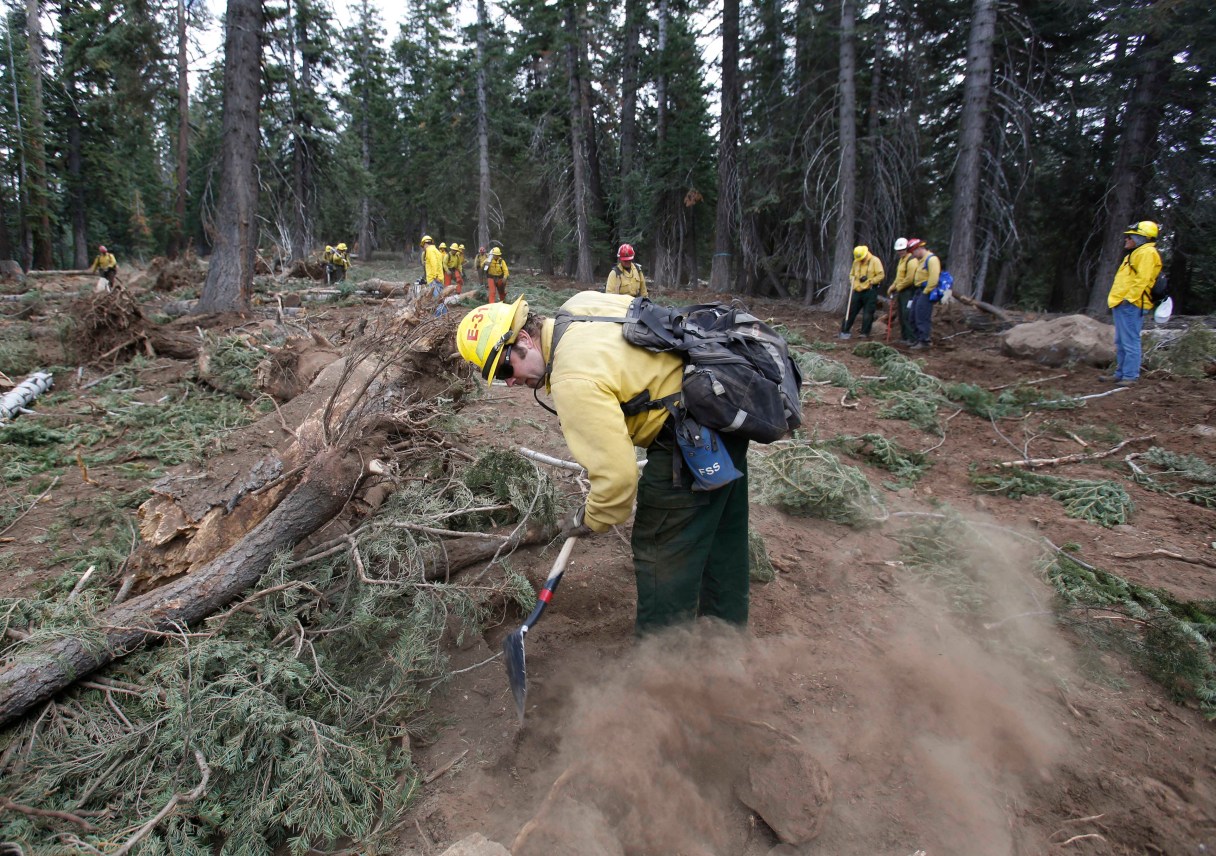
FILE - In this Sept. 25, 2013 file photo, Scott Small, and other National Forest Service crew members work to restore terrain that was bulldozed for a firebreak in the battle against Rim Fire on a nordic ski trail along Dodge Ridge in the Stanislaus National Forest, near Tuolumne City, Calif. The Forest Service says it will release a final decision Wednesday, Aug. 27, 2014, on how much timber to log from the Sierra Nevada's largest wildfire in recorded history. Last year's Rim Fire burned 400 square miles including parts of Yosemite. A debate has since raged about sending burned and dead trees to lumber mills or leave them and let nature take its course. (AP Photo/Rich Pedroncelli, File)

FRESNO, Calif. (AP) – Federal forest officials say they were trying for a balanced approach in new plan to allow loggers to remove dead wood from a massive California wildfire, but environmentalists are calling it a travesty for trees.

The highly awaited decision announced by the U.S. Forest Service Wednesday and expected to be finalized Thursday will allow logging on 52 square miles of forests blackened in the Rim Fire, which burned 400 square miles of the Stanislaus National Forest, Yosemite National Park’s backcountry and private timber land.

It came amid a standoff between environmentalists and supporters of the timber industry over what to do with the trees that died in the fire. The blaze also destroyed 11 homes and cost more than $125 million to fight.

Susan Skalski, supervisor of the Stanislaus National Forest, said that she tried to balance the need to reduce future fires with protecting the environment and wildlife. She took into consideration input from the public, environmental groups and the timber industry and said it was impossible for her to devise a perfect recovery plan.

“I did my best to balance all these important goals, with the intent of providing a decision that best serves the public interest,” she said. “I realize that my decision will not please every member of the public.”