
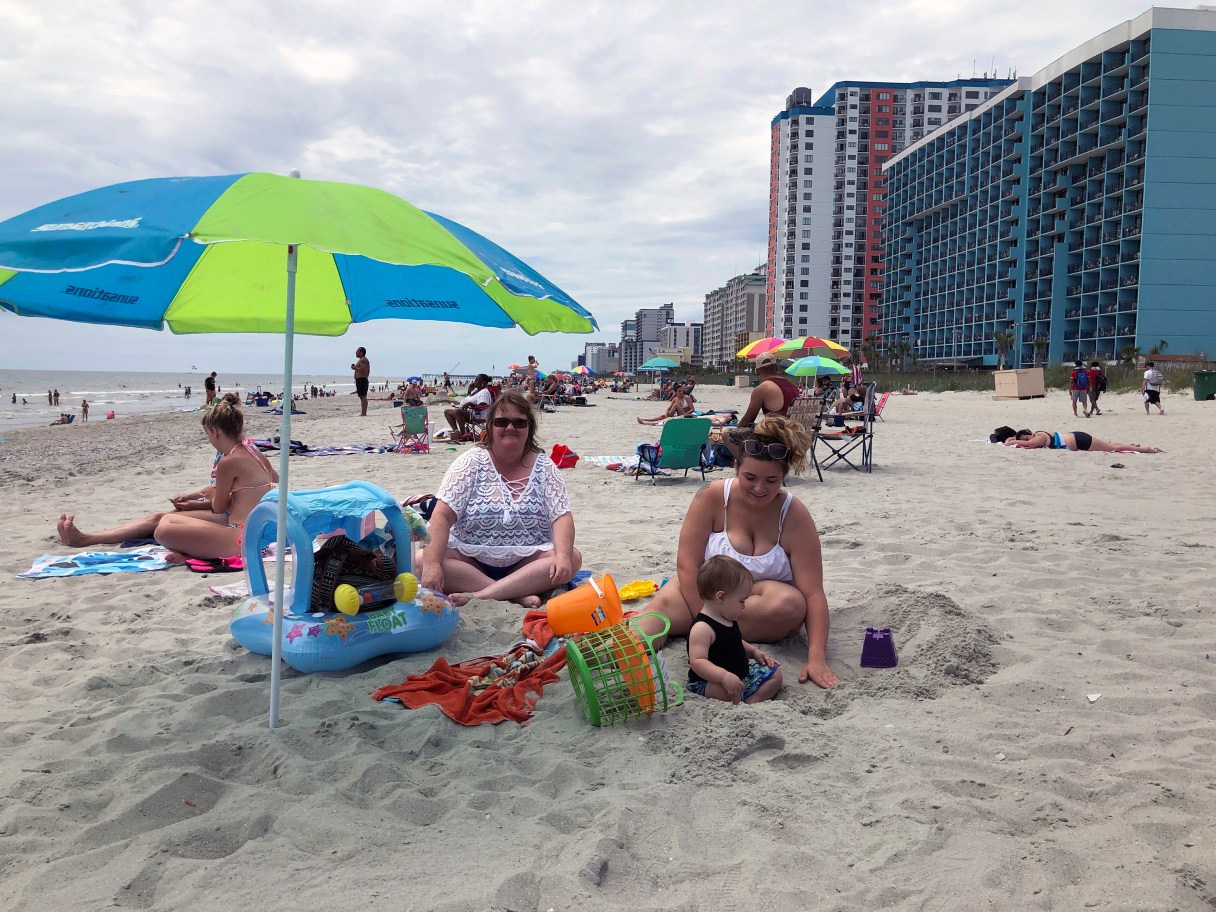
MYRTLE BEACH, S.C. (AP) – The elevator doors opened and inside were 10 people crammed into a space no bigger than a closet, none of them wearing a mask.
In bathing suits, they walked out of the hotel, across the pool deck and into the sand in what is fast becoming South Carolina’s hot spot for COVID-19 – Myrtle Beach. People in this resort city are leaving their cares – and sometimes their face coverings – at home after months of worry as hotels, restaurants and beaches reopen.
Mark Johnson said he doesn’t like wearing a mask when he’s at work delivering doughnuts to grocery stores around Charlotte, North Carolina. “Just wash your hands and use common sense,” Johnson said as he sat on a chair in the sand, a can of beer in his cup holder.
The coronavirus has not taken a vacation. When hotels were allowed to start taking reservations again on May 15, there had been 283 COVID-19 cases in Horry County, which includes Myrtle Beach. By June 22, that number had climbed to more than 2,000, and infections had doubled in nine days.
And those numbers include only people who live in the county. The figures do not count anyone who tests positive after taking COVID-19 home along with a souvenir hermit crab or an airbrushed T-shirt. Business leaders estimate 20 million people visit the area each year, 60 times Horry County’s population of about 330,000.