
Monday, November 16, 2026Nov 16

Weapons watchdog: Chlorine likely used in Syria

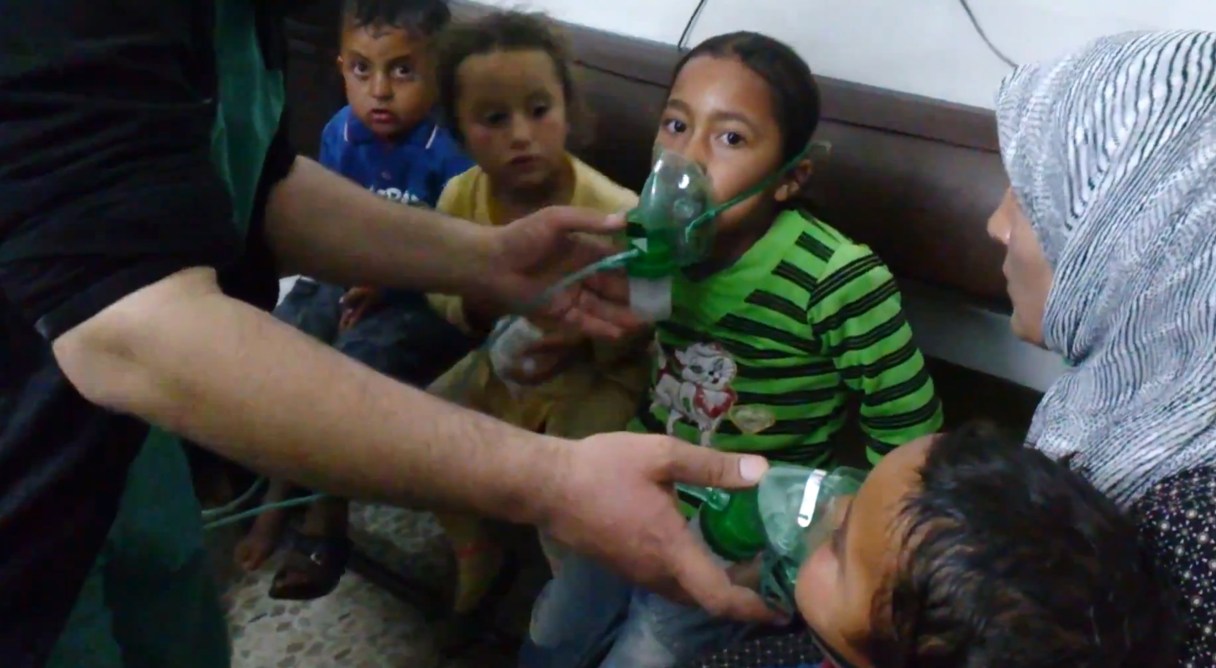
FILE - In this file image taken from video obtained from the Shaam News Network, posted on April 16, 2014, an anti-Bashar Assad activist group, which has been authenticated based on its contents and other AP reporting, children are seen receiving oxygen in Kfar Zeita, a rebel-held village in Hama province some 200 kilometers (125 miles) north of Damascus. A toxic chemical, almost certainly chlorine, was used "systematically and repeatedly" as a weapon in attacks on villages in northern Syria earlier this year, the global chemical weapons watchdog said Wednesday, Sept. 10, 2014. (AP Photo/Shaam News Network, File)

THE HAGUE, Netherlands (AP) – A toxic chemical, almost certainly chlorine, was used “systematically and repeatedly” as a weapon in attacks on villages in northern Syria earlier this year, the global chemical weapons watchdog said Wednesday.

The Organization for the Prohibition of Chemical Weapons said that a report by a fact-finding mission it sent to Syria based its conclusion on dozens of interviews with victims, physicians, eye-witnesses and others.

The report, which was not immediately published in full, does not apportion blame for the chlorine attacks on three villages in northern Syria, OPCW spokesman Michael Luhan said. The OPCW put out only a short statement summarizing the findings.

An earlier report by the mission also said chlorine likely was used as a weapon in Syria.

Human Rights Watch said in May that it had strong evidence that in April this year Syrian army helicopters dropped bombs containing chlorine on the same rebel-held villages mentioned by the OPCW report.