
Friday, November 13, 2026Nov 13

Ultra-liberal Portland moves to rein in protests

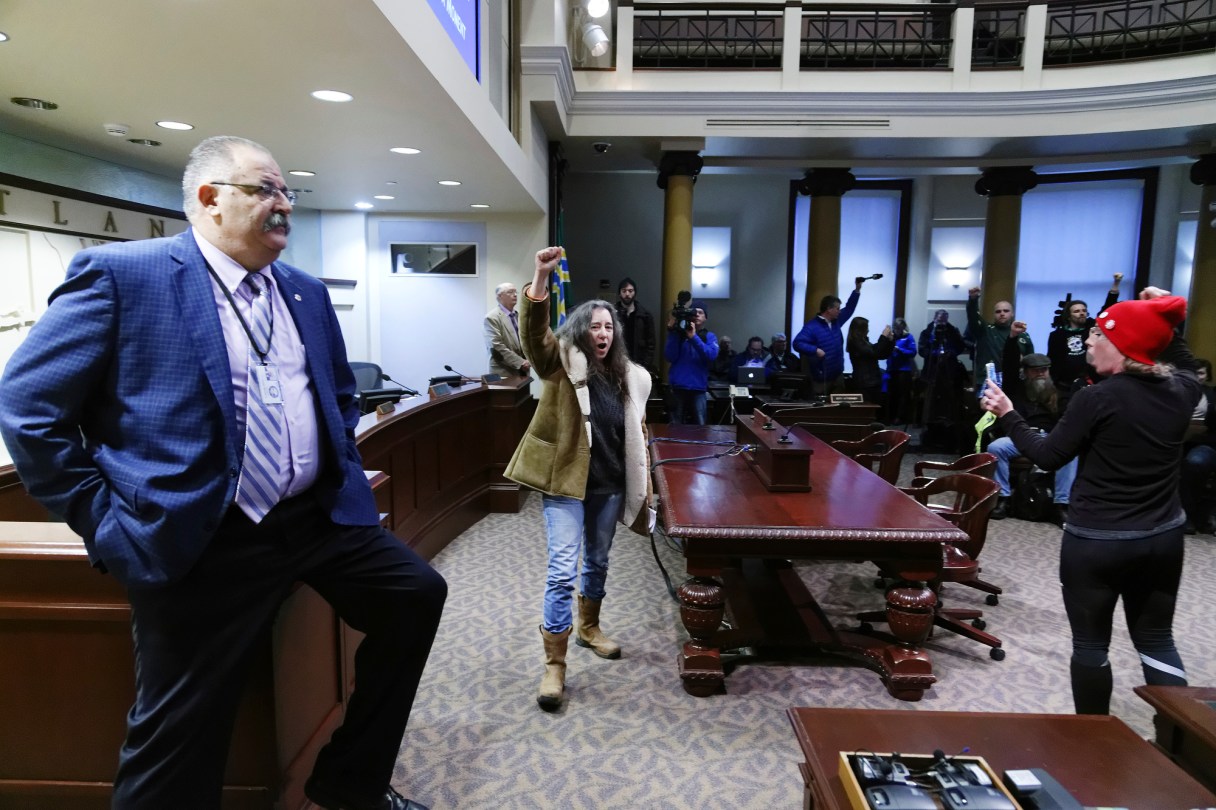
FILE - In this Feb. 22, 2017, file photo, Mimi German, center, and, Star Stauffer, right, disrupt the Portland City Council meeting to protest Mayor Ted Wheeler's performance regarding police tactics related to protests, people of color, and homeless issues, in Portland, Ore. The City Council approved an emergency ordinance Wednesday, March 15, that will allow the city to eject disruptive protesters and ban them from council chambers for up to 60 days in some cases. (Mike Zacchino/The Oregonian via AP, File)
FILE - In this Feb. 22, 2017, file photo, Mimi German, center, and, Star Stauffer, right, disrupt the Portland City Council meeting to protest Mayor Ted Wheeler's performance regarding police tactics related to protests, people of color, and homeless issues, in Portland, Ore. The City Council approved an emergency ordinance Wednesday, March 15, that will allow the city to eject disruptive protesters and ban them from council chambers for up to 60 days in some cases. (Mike Zacchino/The Oregonian via AP, File) FILE - In this Feb. 22, 2017, file photo, Mimi German, center, and, Star Stauffer, right, disrupt the Portland City Council meeting to protest Mayor Ted Wheeler's performance regarding police tactics related to protests, people of color, and homeless issues, in Portland, Ore. The City Council approved an emergency ordinance Wednesday, March 15, that will allow the city to eject disruptive protesters and ban them from council chambers for up to 60 days in some cases. (Mike Zacchino/The Oregonian via AP, File)

PORTLAND, Ore. (AP) – In Oregon’s ultra-liberal city of Portland, where protest is a way of life, the new mayor is taking on the sacrosanct.

Mayor Ted Wheeler and the City Council unanimously approved an emergency ordinance Wednesday that would allow city leaders to eject disruptive protesters from meetings and ban them from council chambers for up to 60 days in some cases.

As they voted, commissioners said months of protests by a small group of people have shut down meetings, disrupted government business, caused stress to city staff, undermined projects and prevented other residents from appearing before the council.

“I don’t know why you’ve decided that your voices are more important than anyone else who comes to this chamber to give testimony,” said Commissioner Chloe Eudaly, who was elected to the Council last fall and called the interruptions “toxic.”

“The fact that I can’t singlehandedly and immediately satisfy your demands does not mean that we are not listening to you.”