
Thursday, November 12, 2026Nov 12

As world mourns Paris, many in Mideast see double-standard

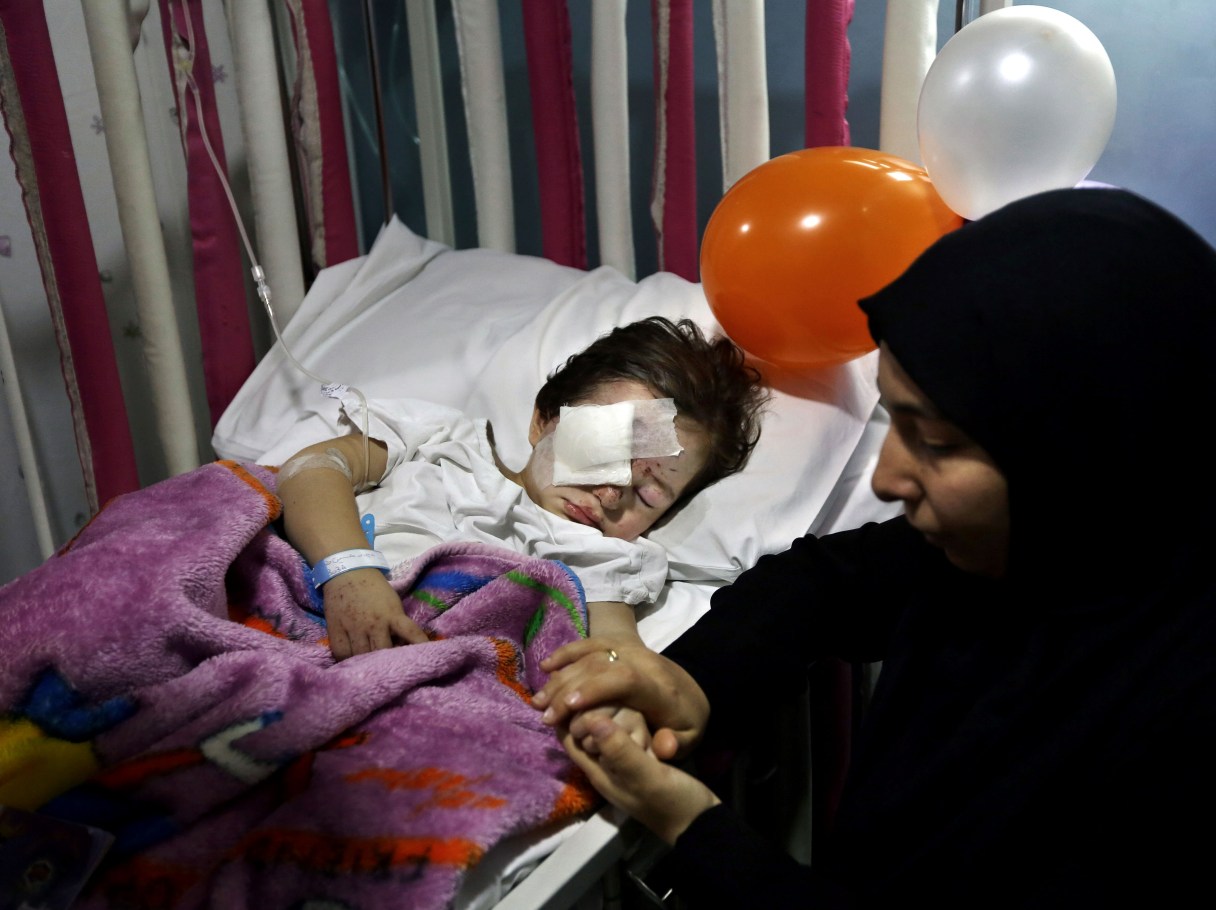
FILE - In this Friday, Nov. 13, 2015 file photo, Adraa Taleb holds the hand of her maternal cousin Haidar Mustafa, three, who was wounded in Thursday's twin suicide bombings, as he sleeps on a bed at the Rasoul Aazam Hospital in Burj al-Barajneh, southern Beirut, Lebanon. Haidar's parents Hussein and Leila were killed in the blast as they were parking their car when one of two suicide attackers blew himself up in a southern Beirut suburb near their vehicle. Within hours of the Paris attacks last week that left 129 dead, outrage and sympathy flooded social media feeds and filled the airwaves. Commenting on the public outpouring of support and anger following the Paris attacks, Lebanese blogger Joey Ayoub accused the media and world leaders of caring less about deaths in Beirut in IS attacks than deaths in Paris at the hands of the same group. (AP Photo/Bilal Hussein, File)
FILE - In this Friday, Nov. 13, 2015 file photo, Adraa Taleb holds the hand of her maternal cousin Haidar Mustafa, three, who was wounded in Thursday's twin suicide bombings, as he sleeps on a bed at the Rasoul Aazam Hospital in Burj al-Barajneh, southern Beirut, Lebanon. Haidar's parents Hussein and Leila were killed in the blast as they were parking their car when one of two suicide attackers blew himself up in a southern Beirut suburb near their vehicle. Within hours of the Paris attacks last week that left 129 dead, outrage and sympathy flooded social media feeds and filled the airwaves. Commenting on the public outpouring of support and anger following the Paris attacks, Lebanese blogger Joey Ayoub accused the media and world leaders of caring less about deaths in Beirut in IS attacks than deaths in Paris at the hands of the same group. (AP Photo/Bilal Hussein, File) FILE - In this Friday, Nov. 13, 2015 file photo, Adraa Taleb holds the hand of her maternal cousin Haidar Mustafa, three, who was wounded in Thursday's twin suicide bombings, as he sleeps on a bed at the Rasoul Aazam Hospital in Burj al-Barajneh, southern Beirut, Lebanon. Haidar's parents Hussein and Leila were killed in the blast as they were parking their car when one of two suicide attackers blew himself up in a southern Beirut suburb near their vehicle. Within hours of the Paris attacks last week that left 129 dead, outrage and sympathy flooded social media feeds and filled the airwaves. Commenting on the public outpouring of support and anger following the Paris attacks, Lebanese blogger Joey Ayoub accused the media and world leaders of caring less about deaths in Beirut in IS attacks than deaths in Paris at the hands of the same group. (AP Photo/Bilal Hussein, File)

BAGHDAD (AP) – Within hours of the last week’s Paris attacks, as outrage and sympathy flooded his social media feeds and filled the airwaves, Baghdad resident Ali al-Makhzomy updated his Facebook cover photo to read “solidarity” — and his friends were shocked.

“Everyone was like why are you posting about Paris and not about the attacks in Baghdad every day,” the recent law school graduate said. “A lot of my friends said, ‘ok, so you care more about them than you care about us?'”

He had unintentionally tapped into frustration in Iraq, Lebanon and Syria with what many see as a double-standard: The world unites in outrage and sympathy when the Islamic State group kills Westerners, but pays little attention to the near-daily atrocities it carries out in the Middle East.

The day before the Paris attacks, twin suicide bombers struck a southern Beirut suburb, killing at least 43 people, and on Friday a suicide bomber struck a funeral in Iraq, killing at least 21. Both attacks were claimed by the IS group and reported by major media outlets, but generated little interest outside the region, where the turmoil of recent years has made such events seem like a sadly regular occurrence.

Baghdad has seen near-daily attacks in recent years, mainly targeting the security forces and the country’s Shiite majority. Bombings killed an average of more than 90 civilians a month last year, according to Iraq Body Count, a U.K.-based group that documents civilian deaths in Iraq.