
Friday, November 13, 2026Nov 13

Egypt begins King Tut exploration, searching for Nefertiti

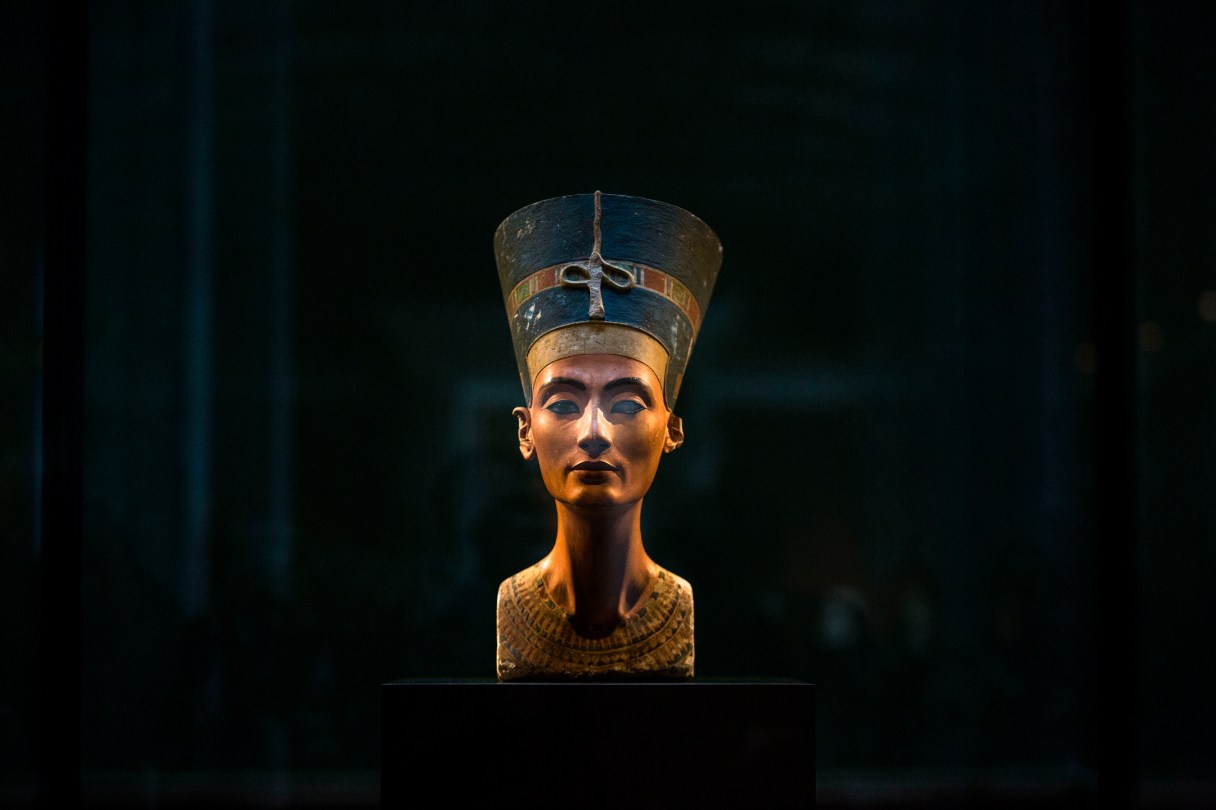
FILE - In this Sept. 10, 2014 file photo, a 3,300-year-old bust of Queen Nefertiti  is displayed at the New Museum in Berlin, Germany. Egypt’s antiquities ministry said on Thursday, Nov. 26, 2015 exploration has begun inside King Tutankhamun’s 3,300 year-old tomb, in the search for alleged hidden chambers, one of which may include Queen Nefertiti, according to a new theory. (AP Photo/Markus Schreiber, File)
FILE - In this Sept. 10, 2014 file photo, a 3,300-year-old bust of Queen Nefertiti is displayed at the New Museum in Berlin, Germany. Egypt’s antiquities ministry said on Thursday, Nov. 26, 2015 exploration has begun inside King Tutankhamun’s 3,300 year-old tomb, in the search for alleged hidden chambers, one of which may include Queen Nefertiti, according to a new theory. (AP Photo/Markus Schreiber, File) FILE - In this Sept. 10, 2014 file photo, a 3,300-year-old bust of Queen Nefertiti is displayed at the New Museum in Berlin, Germany. Egypt’s antiquities ministry said on Thursday, Nov. 26, 2015 exploration has begun inside King Tutankhamun’s 3,300 year-old tomb, in the search for alleged hidden chambers, one of which may include Queen Nefertiti, according to a new theory. (AP Photo/Markus Schreiber, File)

CAIRO (AP) – Egypt’s Antiquities Ministry said Thursday that exploration has begun inside King Tutankhamun’s 3,300 year-old tomb in the search for hidden chambers that an Egyptologist believes could include Queen Nefertiti.

The ministry said the search would last three days. Results are to be announced Saturday in Luxor, the southern Egyptian city that served as the pharaonic capital in ancient times.

Egypt’s Antiquities Minister Mamdouh el-Damaty said in September he was convinced a hidden chamber may lie hidden behind King Tut’s final resting place.

British Egyptologist Nicholas Reeves, who toured the tomb with el-Damaty in September, theorized that Tutankhamun, who died at the age of 19, may have been rushed into an outer chamber of what was originally Nefertiti’s tomb.

Reeves reached his theory after high-resolution images discovered what he said were straight lines in King Tut’s tomb. These lines, which were previously hidden by color and the stones’ texture, indicate the presence of a sealed chamber, he said.