
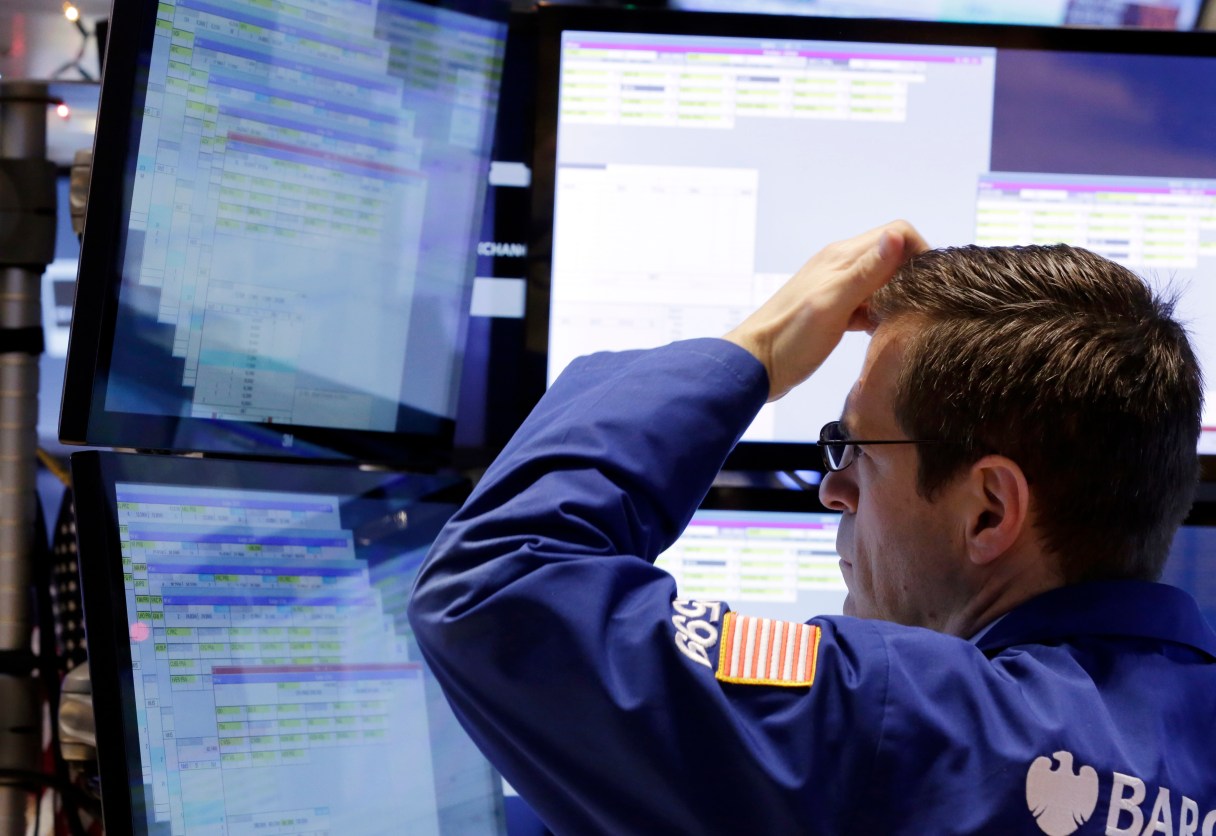
NEW YORK (AP) – The junk-bond market has something to really fear: fear itself.
Investors are rushing out of junk bonds, spooked by last week’s closure of a mutual fund focused on some of the lowest-quality, highest-yielding bonds. The shutdown comes on top of fears that a spike in bond defaults is coming, and it’s led investors to rush for the exits in a corner of the market that generally doesn’t handle such things well.
The price drops are hitting many investors who are new to junk bonds and have little experience with the notoriously volatile market. Since the Federal Reserve slashed interest rates to a record low in 2008, investors have been creeping into ever-riskier options in search of more income. They’ve been attracted to junk bonds, also known as high yield, because they pay higher interest rates than high-quality bonds. The downside is that they’re issued by companies more likely to default, socking investors with losses.
In just two days, the central bank is widely expected to finally raise rates above their emergency low levels. The policy has helped avert a deeper downturn following the financial crisis, but critics say it’s also spread hidden risks throughout the financial system by making investors cavalier.
“Investors took more and more risk without even knowing it,” said George Cipolloni, a co-manager of the Berwyn Income fund.