
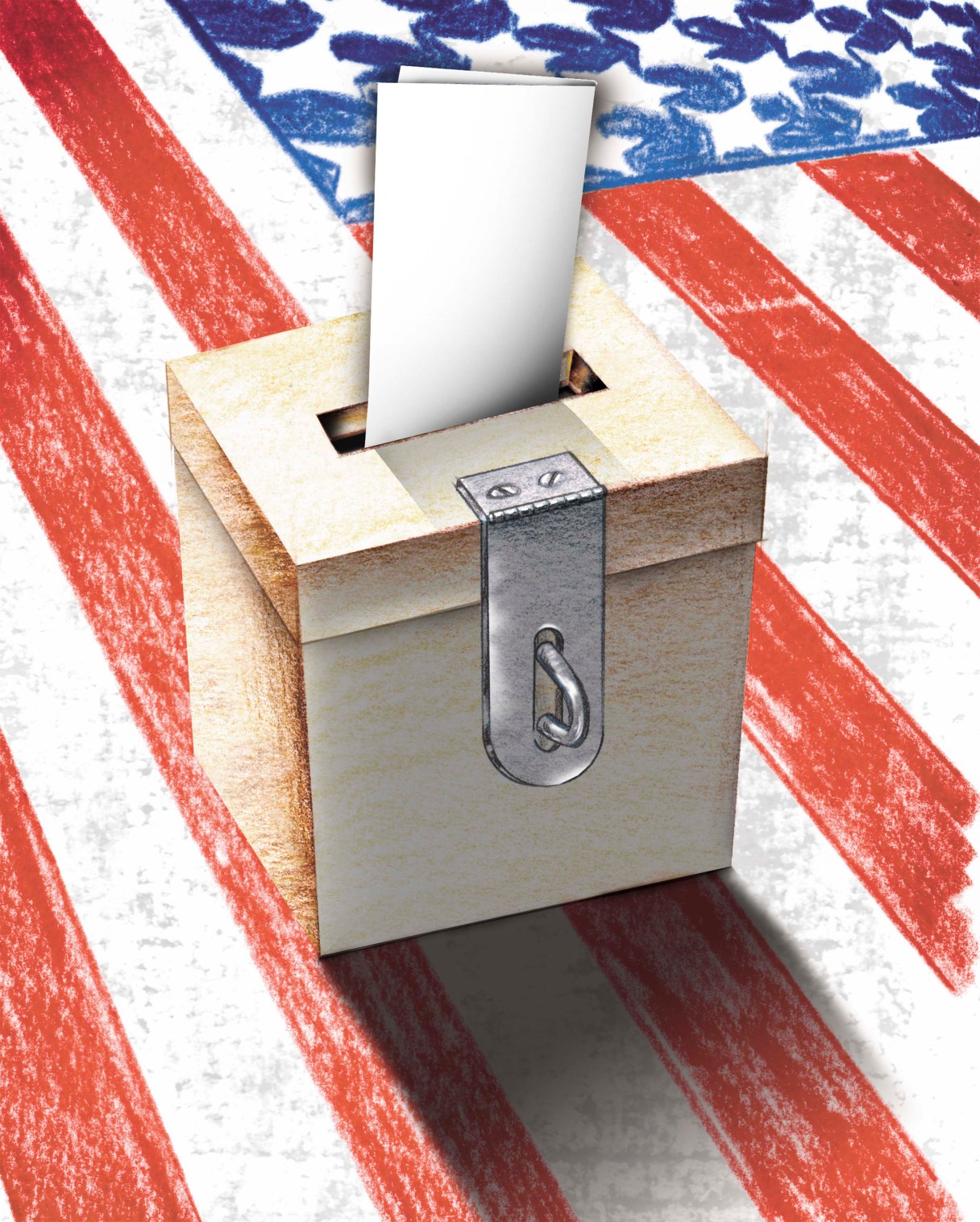
From the time of its founding, our nation has struggled with the issue of voting rights. The U.S. Constitution ceded to the states the determination of eligibility to vote. For decades, only white men who owned property could cast a ballot.
The Civil War led to the ratification in 1870 of the 18th Amendment, which prohibited states from denying a male citizen the right to vote on the basis of “race, color, or previous condition of servitude.” Following Reconstruction, Southern states enacted a series of “Jim Crow” laws, which legalized racial segregation and blocked African Americans, Native Americans, and many immigrants from voting. Literacy tests and poll taxes – payments for the right to vote – further restricted access to the ballot.
A series of voting-related amendments were ratified in the 20th century.
* 17th (1913): U.S. Senators elected by popular vote, instead of by state legislatures.
* 19th (1920): All women granted the right to vote. Wyoming had begun the process of women’s suffrage in 1879.
* 23rd (1961): Citizens of Washington, D.C., allowed to vote in presidential elections.
* 24th (1964): Poll taxes prohibited.
* 26th (1971): Voting age dropped from 21 to 18 years.
Supreme Court decisions in the 1960s established the principle of “one man, one vote,” which voided many state restrictions on voting. The Civil Rights Act of 1964 forbade racial discrimination in voting. This was followed by the Voting Rights Act of 1965, which prohibited literacy tests as a determinant of eligibility to vote.
For decades, in many states, the political party in power has limited the vote of potential opponents through gerrymandering. This tactic involves drawing boundaries of electoral districts to favor candidates of the majority party.
Raising the discredited specter of massive voter fraud, some states have restricted voting by requiring photo identification for voters. These states may limit the number of sites at which this ID can be obtained. Elderly and disabled individuals, poor people and workers with limited time off from their jobs are disadvantaged by these regulations.
Early voting can be restricted to as few as four days. The number of polling stations may be limited and placed in inconvenient locations.
Some state legislatures work overtime to tighten voter eligibility. In March 2020, while national attention was focused on the COVID-19 pandemic, Kentucky legislators quietly passed stringent requirements for voter identification in that state.
A growing number of states have chosen an opposite course by facilitating voting. Twenty states permit absentee voting so long as an excuse is submitted. Six states and the District of Columbia have established permanent absentee status for elderly and disabled voters. Five states – Colorado, Hawaii, Oregon, Utah, and Washington – currently conduct all elections by mail.
On April 7, Wisconsin held its primary elections. Arguing that the COVID-19 pandemic endangered the health of voters and election workers, Gov. Tony Evers, a Democrat, issued an executive order that postponed the election until a safer time. The Wisconsin Supreme Court overrode his order by a Republican majority 4-2 vote. An appeal to the U.S. Supreme Court led to a Republican majority 5-4 decision overturning the governor’s order. The Wisconsin election was held amid chaos, closed voting stations and lengthy waits by voters.
Given the uncertainties of the COVID-19 pandemic, a similar outcome is possible for our Nov. 2 presidential election. The adaptation by Congress of uniform voting regulations would prevent chaos and a possibly discredited election and eliminate the health risks for voters and workers at polling stations. Two measures are needed:
* A uniform period of 20 days for early voting in each state.
* Easy application for a paper ballot that would be counted so long as it was postmarked by midnight of Election Day.
At this point in our history, is it not time for state legislatures to stop playing political games with our voting rights?
Contact Clif Cleaveland at ccleaveland@timesfreepress.com.