
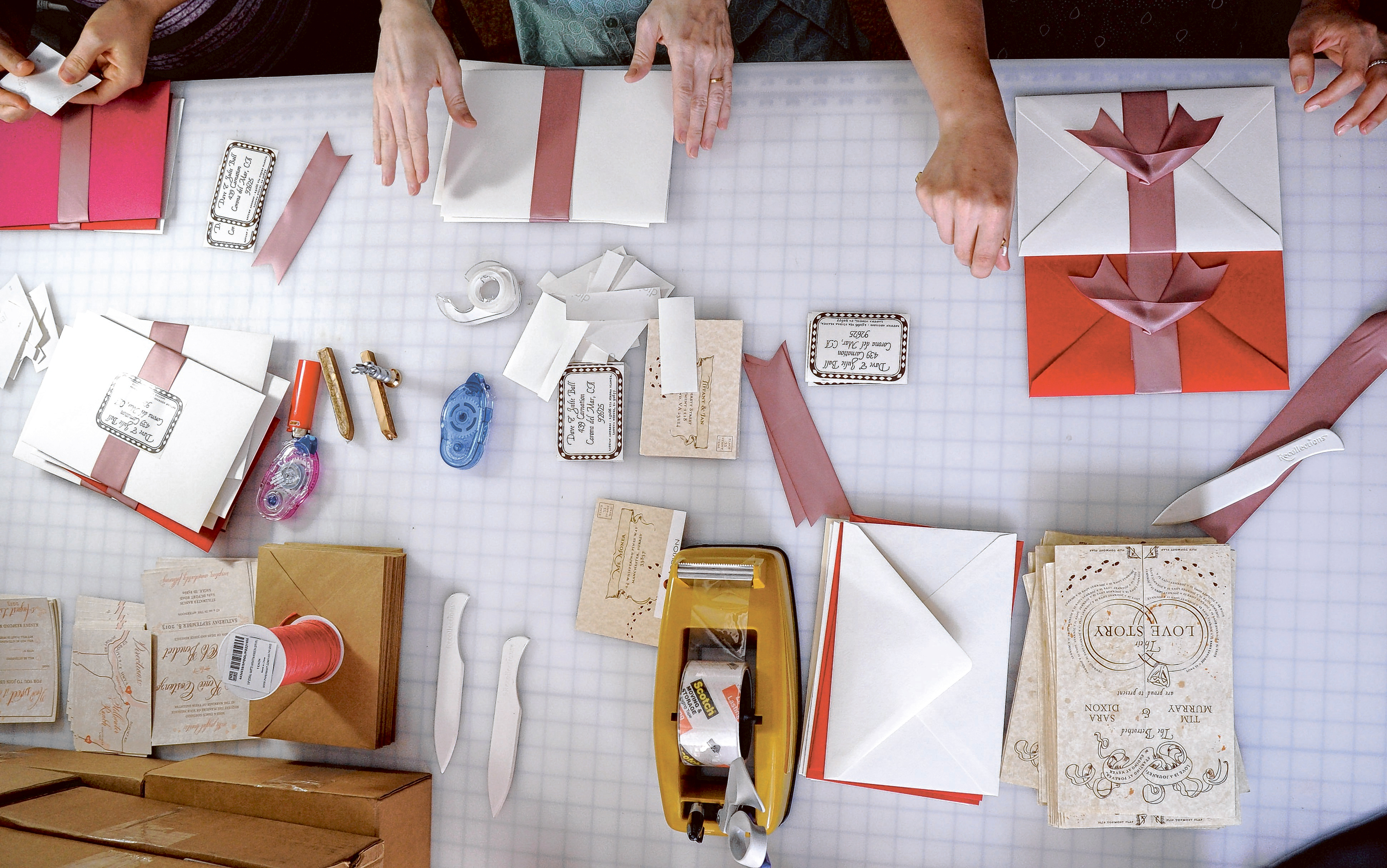
 Etsy seller Melissa Meek’s workspace
When I was planning my wedding, as so many excited brides-to-be before me, I headed straight to Etsy-the Internet’s famous and ever-growing online marketplace which provides nearly one million crafters, artists and vintage collectors a place to sell their wares-for little touches to make my big day stand out.
A handmade birdcage veil from a seller in California, a custom flower fascinator for my hair, a pearl strand bracelet adorned with a vintage brooch, gifts for my bridesmaids and groomsmen.
Etsy made it easy for me to find ways to personalize every aspect of my wedding, and almost every room of my new home after the wedding was over, without ever having to lift a glue gun.
So you want to start an Etsy…
Do your researchPricing items to sell on Etsy can be a big challenge because you have to cover the cost of your materials, price items competitively so consumers choose yours over someone else’s and still somehow make a profit. For Meek, the best way to manage this is to do a lot of research to find the best, most cost-effective materials to cut the supply budget and make room to lower the price of items for the consumer. “I’ve done a lot of research before I sell a new design. With ribbon, if you buy a spool from Michaels, it’ll be $3 for not a lot of ribbon,” she says. “Instead, I’ll try to get it in bulk so that particular line on the price quote isn’t a big as if you went to Michaels or Hobby Lobby.”Take great photos”The photography is a big one,” says Forman. “I went ahead and got a photo booth this year and that was a game changer for me. Having professional lighting makes a big difference.” Forman had trouble selling his items on Etsy at first, due in part to the fact that his photography wasn’t highquality. He recommends spending more time and effort to make your photos great so your products stand out in the crowd.Give great customer serviceEtsy offers buyers the opportunity to leave feedback about an item they have purchased, which is helpful to encourage other people to buy from you in the future- but it can also get you in trouble if you don’t offer great customer service.”Always give the customer what they want,” says Ronco. “Be polite to every customer and try to make them happy. Sometimes you have to compromise what you want to do, but just make them happy one way or another.”Know the trendsRonco says that part of the reason why her business has been so successful is because she found a “niche within a trend” that made her product really popular. If an item you are selling is way out of style (crochet scrunchies, anyone?), it may be high time to consider a change to something more current.Also, Meek says that knowing trending topics in pop culture are important because an item described as a “bird necklace” may not sell, but one described as a “Hunger Games-inspired bird necklace” has a much better chance because The Hunger Games is trending right now.Make sure you market yourself well via your website/ logo, Etsy descriptions and photos.”It’s sort of subliminal, but you can communicate with the logo you have and the colors you use and the way you describe your company- at least proper grammar helps,” says Meek. “It really is your storefront that communicates a lot. It’s your first impression on your customers, and you’d be amazed how immediately people will turn you down because the page isn’t inviting. Creating this atmosphere, it makes people feel like it’s a good decision.”Having a defined brand and logo, clear photos and precise descriptions promotes buyer trust and makes them feel like you have a quality product. Bad marketing can definitely hinder your chance of making a sale.”I’ve seen some really bad marketing out there,” says Forman. “Don’t put cats with your product. I saw this person on Etsy with a beautiful basin sink and in the picture there was a cat sitting in it. You couldn’t even see the bottom of the sink. That takes the cake for bad marketing.”
Although I do make up a fair portion of Etsy’s sales (or at least I feel like I do, anyway), I’m not the only consumer enamored with the thought of hand-made or one-of-a-kind goods.
Since the virtual market opened its doors in 2005, Etsy has provided a thriving income source for many artists and collectors, and in some cases has allowed these entrepreneurs-many of whom are right here in Chattanooga-to make Etsy and their craft a full-time job.
“I was a waitress for like seven years. I worked a corporate job before that, and one day I left on a lunch break and never went back … I decided I would just make jewelry instead. And it just blew up one day,” says Taqqiya Ronco, owner of Homegrown Silver and Stone.
Ronco began listing her signature dainty stacking rings on Etsy in 2011 while she worked as a waitress, and suddenly the unthinkable happened- she began selling more and more until she had so many orders to fill that she was forced to quit and run her Etsy shop full time.
“One day I just called and said, ‘I’m sorry I can’t come in anymore.’ I was working like 100 hours a week for four months before I got someone to help me. I cried a lot. It was so stressful because I would sleep four hours a day and work the other 20 hours a day for months,” she says. “I would make hundreds of rings a day, I don’t even know exactly how many … my poor fingers. During the Christmas season, I made a few thousand. It was really intense.”
Although it was always her goal to start her own business making jewelry, Ronco never expected her dreams would be realized as quickly as they were.
“It was just so unexpected and random. I made one plain little silver stacking ring and put it on Etsy and people kept ordering it. I taught myself how to make all of this. I just fiddled around and voila,” she says. “I had no idea this would happen. This was like my 10-year plan that just sped up to one year. I literally just thought if I could pay my rent with the money that I make making jewelry then I would be good. It’s been so crazy, it’s just silly.”
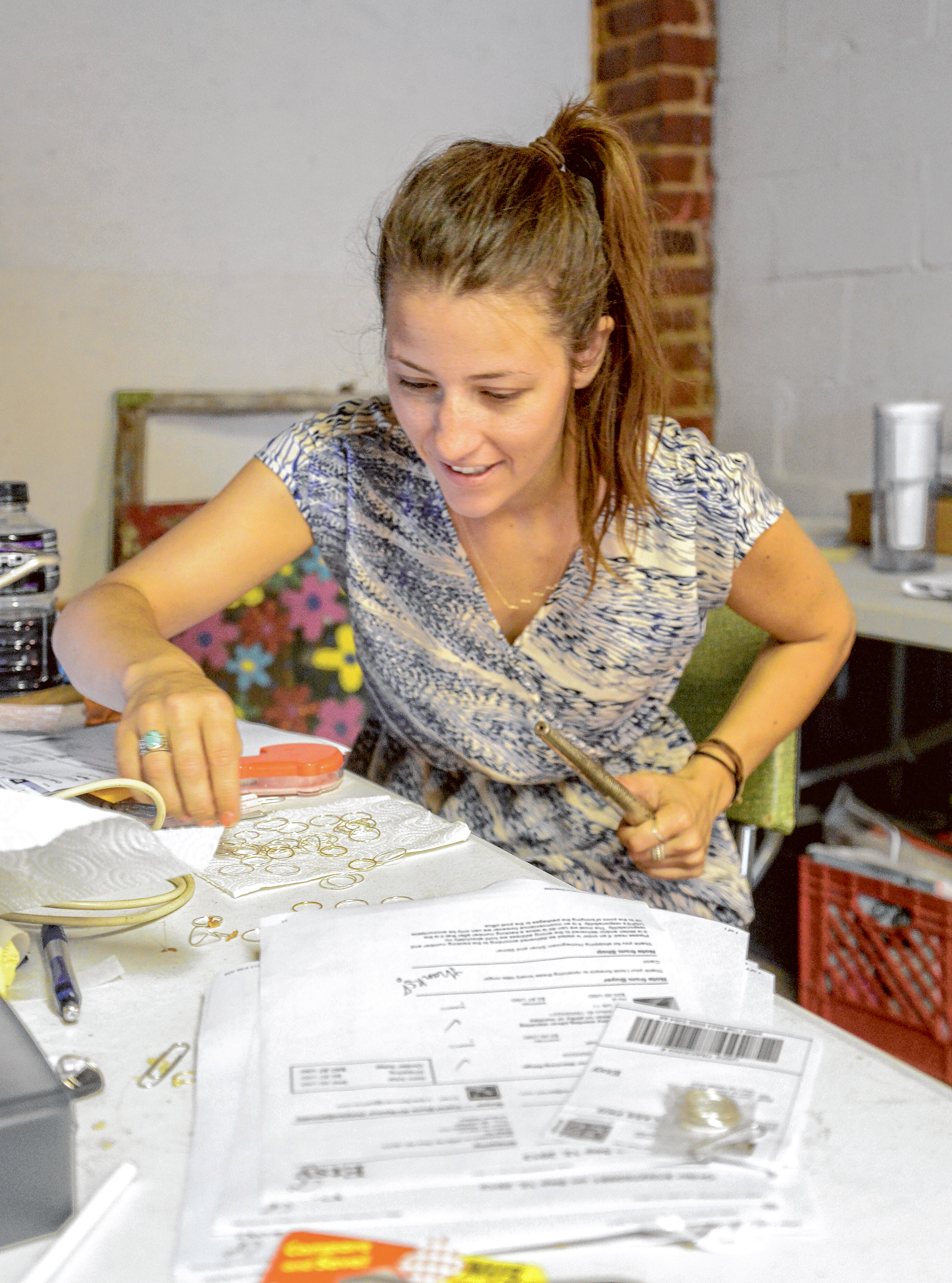 Taqqiya Ronco, owner of Homegrown Silver & Stone, at her Frazier Avenue shop.
With her handmade jewelry business booming, Ronco was able to open up her own storefront on Frazier Avenue in March of this year, featuring many of her designs but also fair-trade goods and work from other crafty Chattanoogans such as jewelry, hand-bound books, bags and wallets. Not only was she able to open up her own brick and mortar space, but Ronco was able to hire a handful of employees to help with demand and grow her wholesale business so that her rings are sold in boutiques from Los Angeles to New York City and all the way to Australia.
“What I’m trying to work on now is branding my jewelry line under the name of Najma which is my middle name,” says Ronco. “The next five years, if I was doing what I’m doing right now, I’d be perfectly happy. I couldn’t ask for more.”
Ronco isn’t the only shining example in Chattanooga of the possibilities of Etsy. Although jewelry crafters make up a significant portion of Etsy sellers, other Chattanooga Etsy entrepreneurs have carved out a spot for themselves in everything from woodworking to selling fabric supplies to handmade furniture.
Melissa Meek, owner of the Etsy shop “one little m,” has a loyal clientele behind her paper goods business, which offers 100-percent customizable wedding/event invitations and quirky paper gifts, such as a pregnancy count-down calendar with a bubble wrap bubble to pop for each day until the due date.
“As a kid I played with origami a lot, and I’ve always been interested in the paper medium. I think it’s becoming more of a novelty almost. When you get a piece of paper that is really unique in the mail, you feel more special than if you were to get an e-vite,” says Meek. “Hardly anybody does actual written with pen on paper correspondence so when you get one, the handmade feel is very special.”
She, like Ronco, was working full-time doing web design for a local company before she took her Etsy business on full time. Meek’s success on Etsy can be credited mainly to her clever designs and the care she takes with each order, but also because of her careful research and trial and error to decide which strategies work best in growing her business.
“Etsy is a great place to sell things and I think it’s a great opportunity, too. I think there are a lot of moms that want to work from home and they have their crafts that they sell which is awesome,” she says. “Starting on Etsy is really simple to do. It’s easy, you can just create a shop online and start selling things. But people don’t realize how much planning should go into that if they really want their items to sell.”
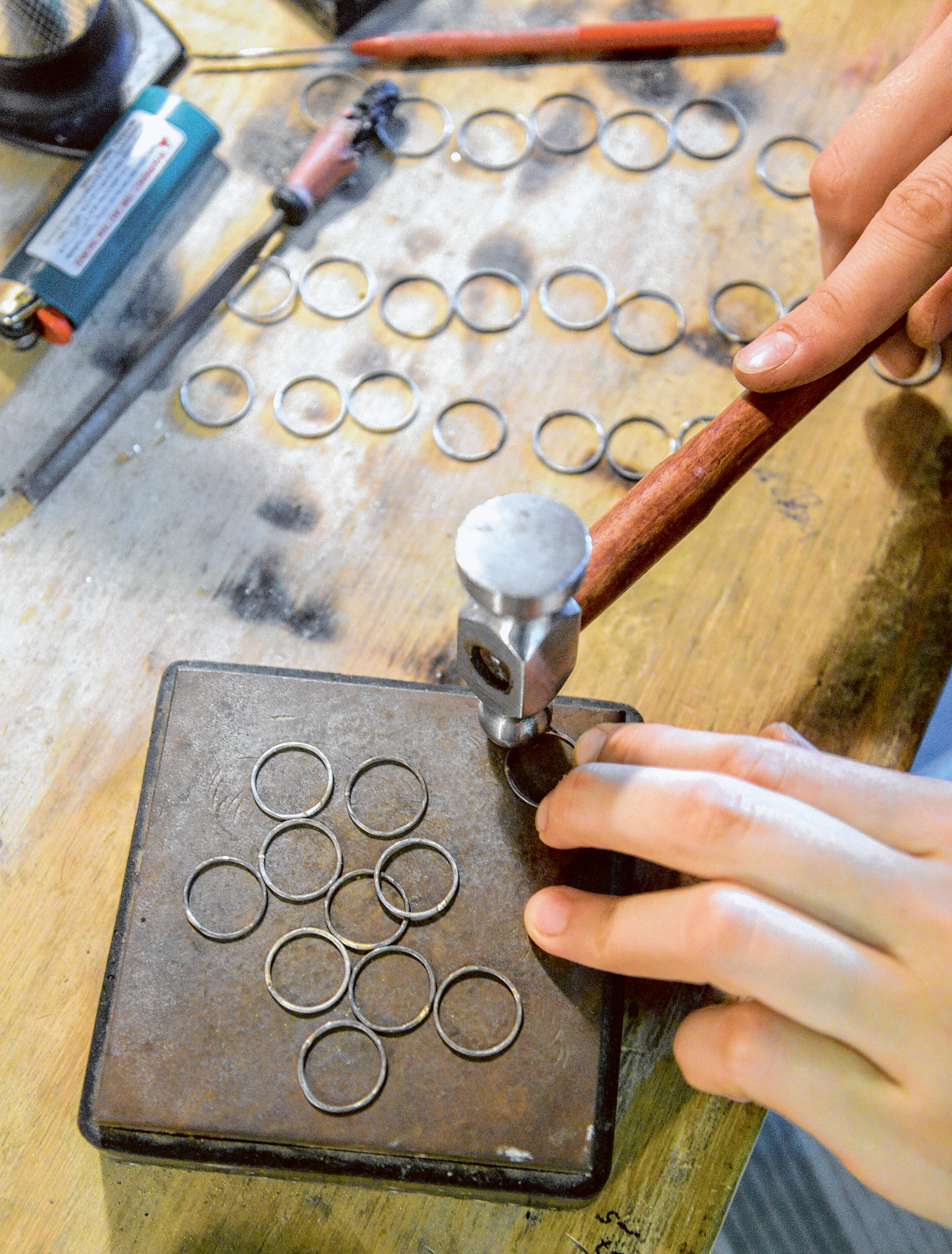 Taqqiya Ronco’s staff creates stacking rings at her Frazier Avenue shop, Homegrown Silver & Stone.
One thing she learned quickly was to find a niche and go with it rather than trying to do too many things at once. “In the very beginning when I started my Etsy in 2009, I had lots of different products. I had a couple different art prints and random accessories, and I also did dressmaking for a while, while the invitations were the leading products. I went a little crazy at first and took all of my hobbies and turned them into a job,” Meek says. “I cut all of that out, and cut out the dressmaking relatively recently. It’s definitely something I had to feel out for a couple of years. I was basically testing the waters to see what sells. If you’re trying to do too many things, your focus may not be on the one thing you’re really good at which for me is invitations. The other thing is dressmaking. I love it, but it took up so much of my time and I felt like I was working on the weekends and rushing through projects. I was like, ‘I shouldn’t be rushing through someone’s custom order.'”
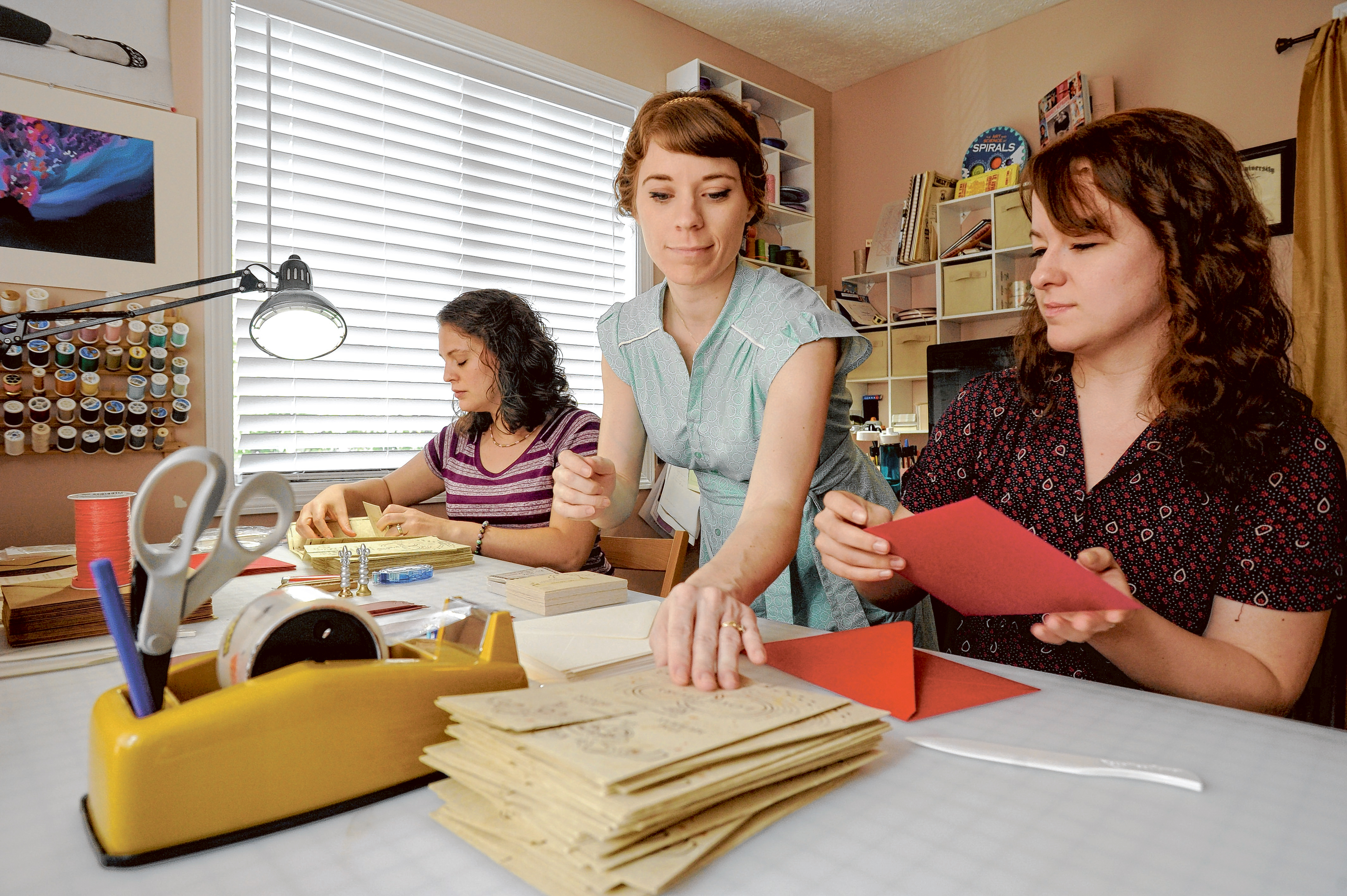 Melissa Meek and her employees assemble invitations for her Etsy shop “one little m.”
Finding her store’s identity was just one step in the process of increasing her sales and taking her business to a level where she could fully rely on it for income. Providing customers with detailed descriptions of each item, keeping up with pop culture to know what’s trendy right now and “tagging” her items (entering keywords into each listing) based on that information, and providing exceptional customer service are other things Meek has focused on with her business.
“One of the most important things for me is integrity and availability. For many of my wedding invitation customers, especially, other vendors aren’t going well and not getting back with them so they really appreciate a fast response,” she says. “I cherish treating each customer as an individual and a friend. I would just encourage people who want to start selling on Etsy … it’s just about relationships. It’s one of the most important things that I’ve gotten from doing this for about four years now.
“You want them to feel special-this is their wedding or event. You want them to feel like they are getting a quality product. You want them to feel that this is a good decision and a good place to buy things in the future.”
With Meek’s expanding sales on Etsy and on her website, she has been able to hire three part-time employees to help with assembly, and there is even talk of a storefront in the future. “This is a dream job for me,” she says. “It’s so freeing to be able to make up my own work, really. It reminds me of childhood where you think of something and you put it together and no one can limit you on what you can dream up.”
Although both Meek and Ronco dreamed of taking their handmade goods full time for a while, one successful local Etsy business owner, John-Michael Forman, was caught by surprise by his love of his craft.
“I went to school for psychology and youth ministry and ended up getting sucked into the art world. I took as many ceramics classes as I could and I just loved it,” says Forman. “I’ve been doing pottery and some woodworking full time for just over a year now. I kind of got into it slowly when I graduated in 2010. I wanted to work with my hands. I didn’t want to be in academia or anything related with scholarly work. I did remodeling for a couple of years then my pottery on the side. I was getting commission work and going to a couple of festivals and the business was growing and growing. I eventually was able to stop the remodeling and just do pottery.”
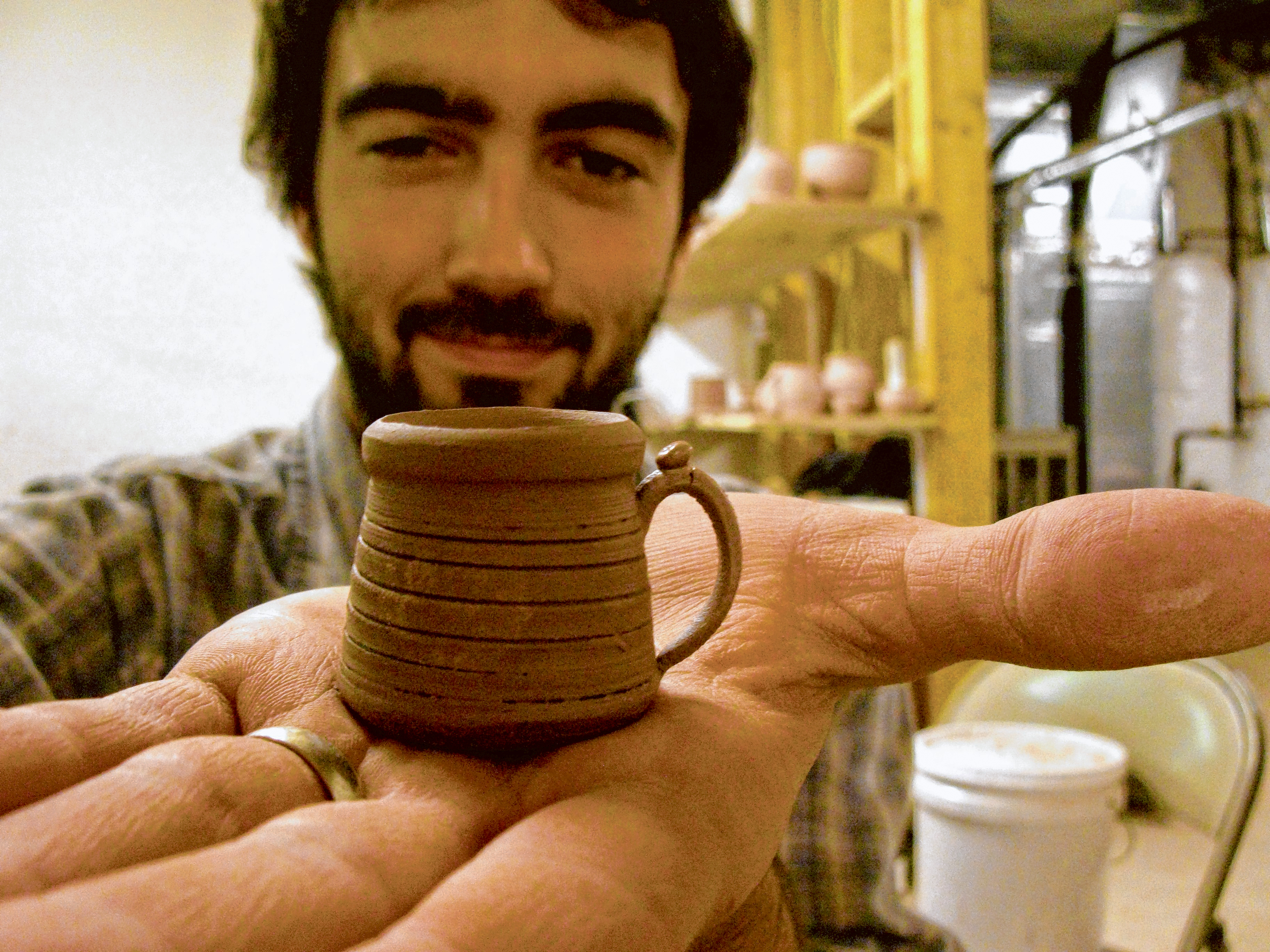 John-Michael Forman, owner of Forman Pottery, a Chattanooga-based pottery business.
Forman’s Etsy shop, Forman Pottery, offers all types of pottery from mugs to storage jars to serving platters, as well as wooden breadboards. “The aesthetic of my work is kind of Appalachian and rustic. There is this draw for me to kind of that rustic Appalachian earthy style … I think some of it has to do with growing up in Florida. It’s kind of a cultural black hole,” he says with a laugh. “It was an hour south of Disneyworld. My wife describes it as a ‘culture of leisure’ where people like riding around in boats and going to theme parks and recreating, but up here there is this culture and art and the mountains that inspire art and creativity and draw in people that are like minded. It seems like beautiful things in the geography of a place tend to attract interesting people and a stronger art scene and a music scene.”
Even though Forman’s transition into pursuing his business full time was fairly seamless, his first experience with selling on Etsy was quite the opposite. “I started selling on Etsy in 2011 in that first year after I graduated when I was kind of doing pottery on the weekends. I put up like three items and they ran their entire course and expired. I don’t think anyone viewed them at all,” he says. “My descriptions were too snarky and my photos were bad. I didn’t know what language was sellable. One of my original pieces I put up was an urn and the description said something like ‘Great for keeping anything from cookies to grandma.’ Etsy is a pretty quirky place, so that may be sellable language to millenials, but the majority of my clientele is middle-aged women who might not have that sense of humor.
“And I wasn’t paying for advertising. I get fed up with advertisements, but with Etsy, it’s the only way to get noticed. When you pay for advertising, it moves your item to the first line on the list. It might still be 10 pages in someone’s search, but if I wasn’t paying, it would be like 1,000 pages in. The items would never get noticed. I’d essentially given up on selling anything on Etsy.”
Etsy’s Beginning
Etsy was conceived by Rob Kalin in early 2005. A painter, carpenter and photographer, Kalin found there was no viable marketplace to exhibit and sell his creations online-other E-commerce sites having become too inundated with overstock electronics and broken appliances.He, along with Chris Maguire and Haim Schoppik, designed the site, wrote the code, assembled the servers, spliced the cables and launched Etsy on June 18, 2005 after only three sleepless months.Fast forward to today, and Etsy has surpassed 30 million members. It’s now available in nine languages, with payment capabilities across the world- providing a platform for more than 900,000 independent businesses to sell their goods online to millions of people around the world.-Information adapted from Etsy.com.
For Forman, the answer to his Etsy dilemma was to try advertising, invest more in his product photography and create clear descriptions for each item. From there, the rest was history. “Etsy’s been the engine behind my business for almost a year now. Bit by bit I started selling things, and it’s just snowballed,” he says. “The snowball is still growing now, and a lot of commission work is coming in. People are asking if they can set up wedding registries. I’ve actually opened up a second store just for wedding registries. It’s been unreal.”
No matter how successful you become, there is always a challenge when it comes to selling pottery online, Forman says.
“Pottery brings a lot of challenges. Nothing is guaranteed. Stuff happens that sometimes is in my control, but there is a lot of stuff that’s out of my control like glaze reacting strangely, bubbling or coming out the wrong color. It’s science, but not predictable science,” he says. “I’m trying to market things on a larger scale.
Businesses depend on their product being dependable to survive and when my product is working against me every other time, it’s hard to keep up. And there’s also the threat of stuff breaking in the mail. It’s happened with a lot of Etsy orders and I have to apologize and get a new item to them in time.” Forman’s goal with his business is to open his own studio in St. Elmo where he can have an open door, engage with his neighbors there and give them a face to go with his work. “I’d love to invite people to sit at my wheel with me and have conversation. As it is now, I sit alone and make stuff. I’d love to have humans to talk with,” he says. “It would be a great opportunity to sit down and get to know people and get to know people’s stories. That’s my dream right now.”
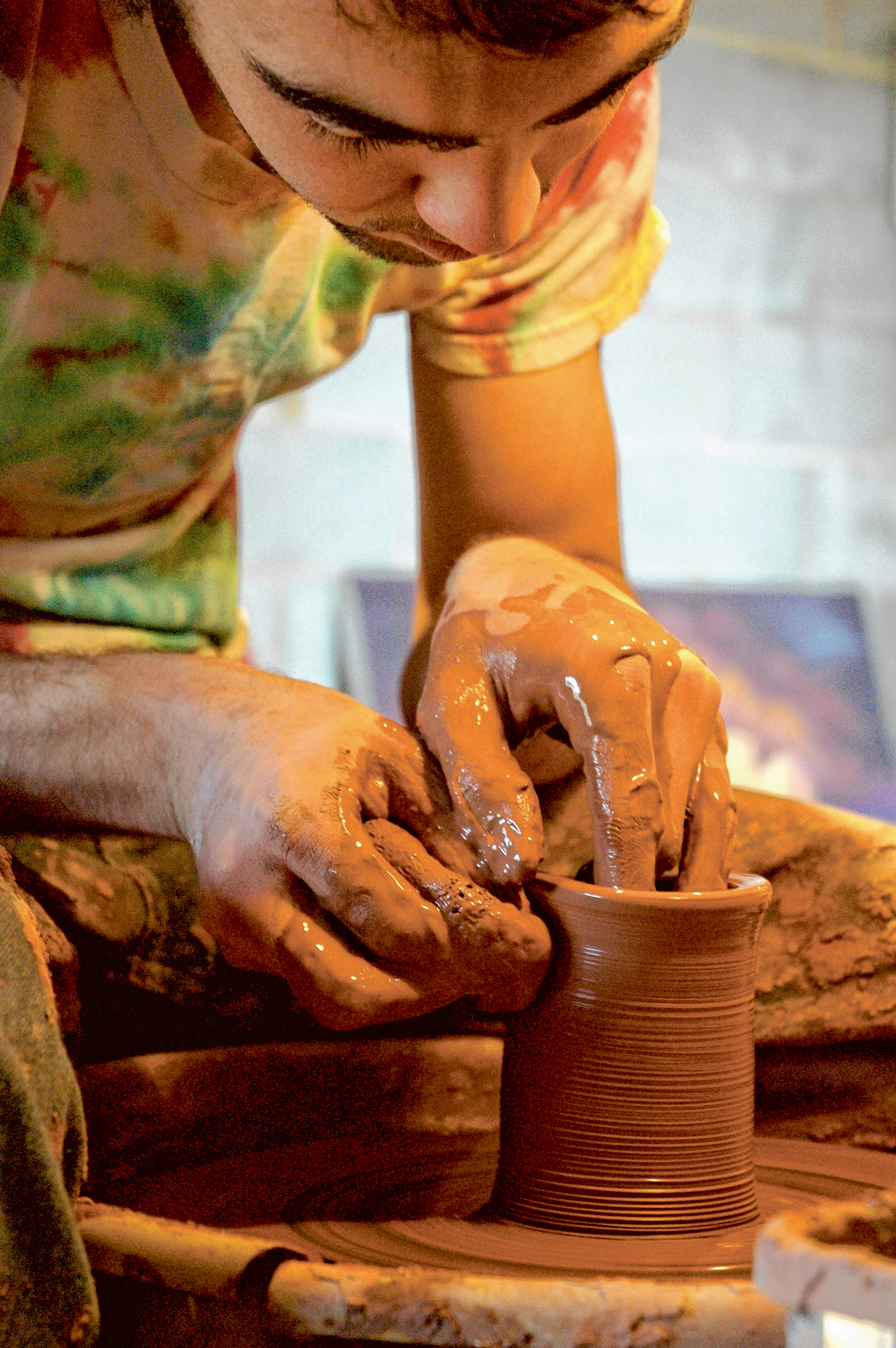 John-Michael Forman, owner of Forman Pottery, creates a piece for his Etsy shop.
Even if the popularity of Etsy dies down a bit- although there are no signs pointing to that so far-I have faith that these Chattanooga crafters will continue to thrive. Not only because of the pride they put into each item, but also because those who make purchases on Etsy have the unique opportunity to connect with their seller in the way Forman describes.
They can, in a way, sit with him at his wheel or with Ronco at her silversmithing workspace or with Meek at her table full of cardstock and ribbon, and see their individual stories and appreciate all of the time and effort they put in to make sure each item is beautiful.
“Handmade things just have intrinsic value because they have a soul to them,” Forman describes. “Every single piece I made, I’ve had a couple of minutes of intimacy with. I spent time with that ball of clay. There’s not a machine involved to stamp that out. With every handmade shop on Etsy, a person spent time with every piece. I think people like that, people like the idea of that, and they are willing to deal with the quirks that go along with that. One of the interesting things about handmade stuff is that it’s valuable because it’s imperfect. It’s a little bit paradoxical and fascinating.”