
Monday, November 16, 2026Nov 16

Hospitals fear any surge of coronavirus cases, supply shortages

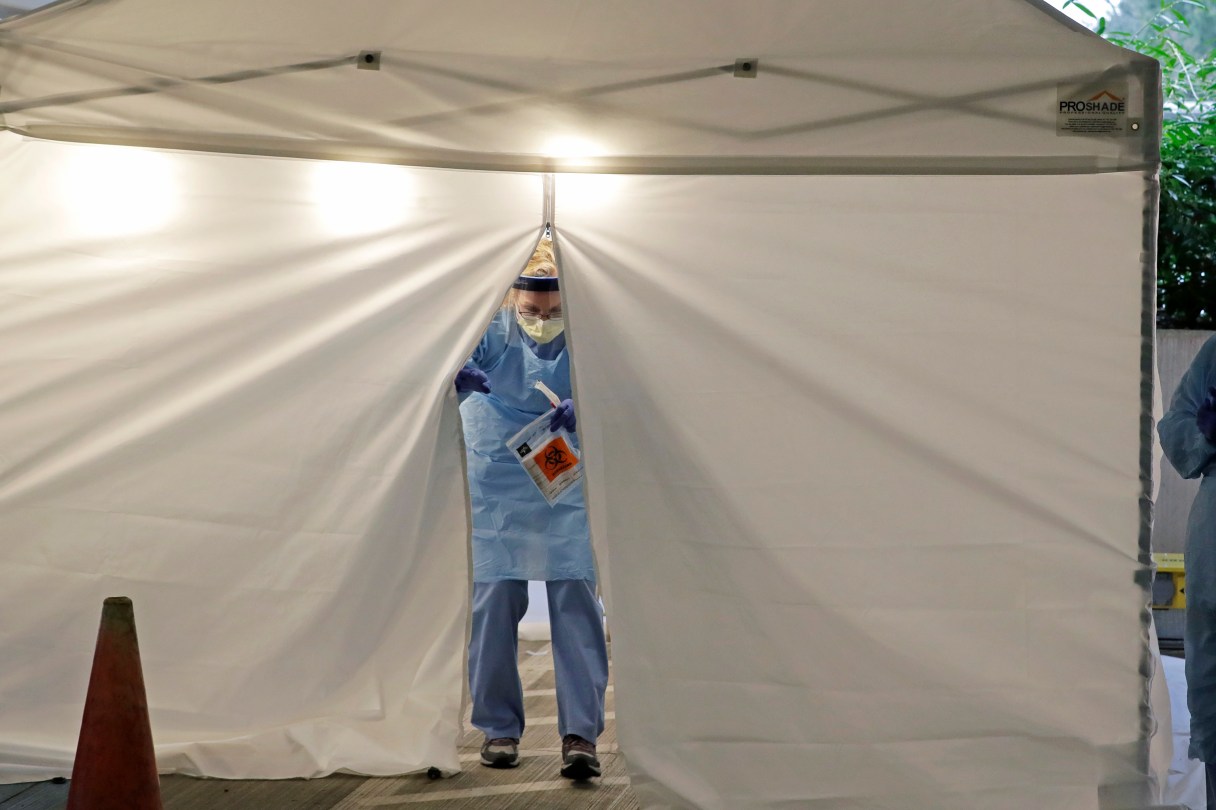
A nurse at a drive up COVID-19 coronavirus testing station set up by the University of Washington Medical Center exits a tent while holding a bag containing a swab used to take a sample from the nose of a person in their car, Friday, March 13, 2020, in Seattle. UW Medicine is conducting drive-thru testing in a hospital parking garage and has screened hundreds of staff members, faculty and trainees for the COVID-19 coronavirus. U.S. hospitals are setting up triage tents, calling doctors out of retirement, guarding their supplies of face masks and making plans to cancel elective surgery as they brace for an expected onslaught of coronavirus patients. (AP Photo/Ted S. Warren)

TOLEDO, Ohio (AP) – Government and hospital leaders are increasingly sounding the alarm about the health care system in the U.S. and its readiness to absorb waves of patients in the worst-case scenario involving the new coronavirus outbreak.

Authorities nationwide already are taking major steps to expand capacity with each passing day, building tents and outfitting unused spaces to house patients. They also are urging people to postpone elective surgeries, dental work and even veterinarian care. New York’s governor called for using military bases or college dorms as makeshift care centers.

Among the biggest concerns is whether there will be enough beds, equipment and staff to handle several large outbreaks simultaneously in multiple cities.

Dr. Anthony Fauci, the National Institutes of Health’s infectious diseases chief, said it’s critical that steps be taken now to prevent the virus from spreading quickly.

“The job is to put a full-court press on not allowing the worst-case scenario to occur,” said Fauci, who appeared Sunday on several network news shows.