
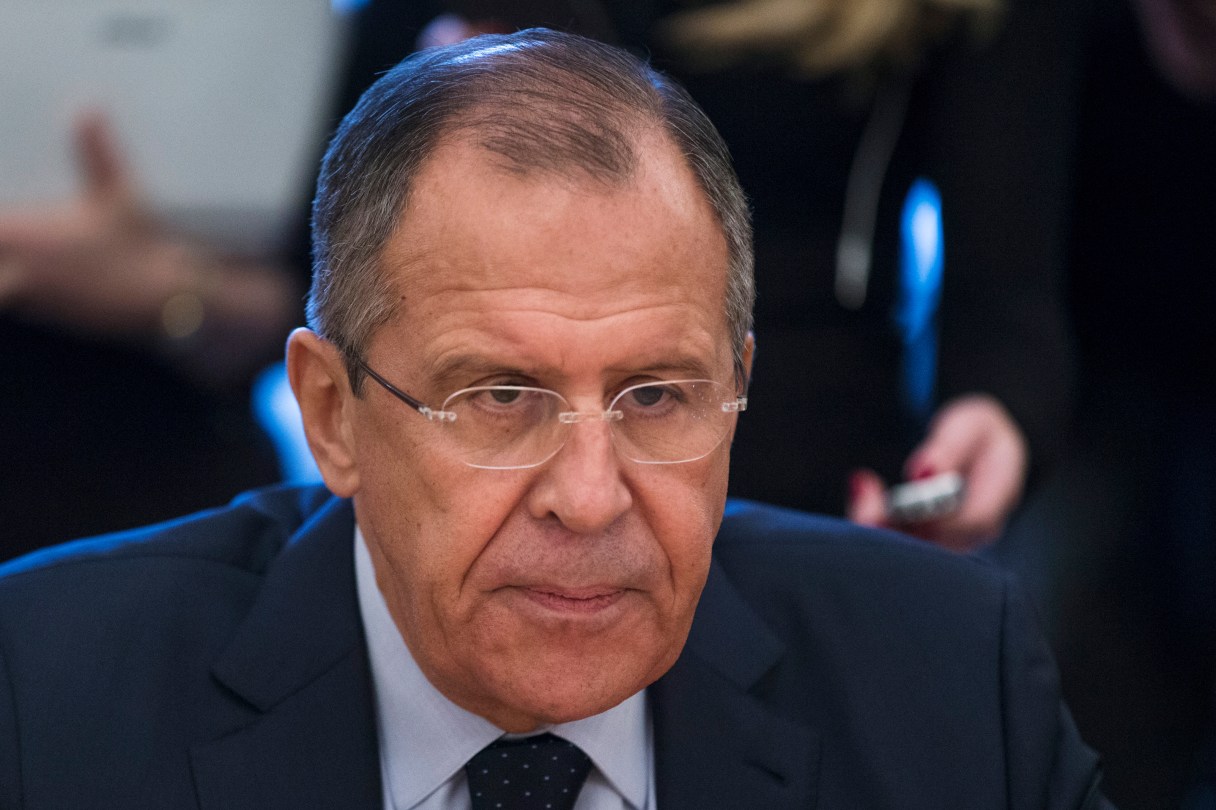
YEREVAN, Armenia (AP) – Russia’s foreign minister said Monday the next round of Syria talks expected to be held this weekend must not focus squarely on demands for Syrian President Bashar Assad’s resignation, which he called a “simplistic approach.”
Sergey Lavrov, speaking on a trip to Armenia, said the talks should focus instead on reaching consensus on who should represent the Syrian opposition and who should be considered extremists.
At the initial talks in Vienna on Oct. 30, the U.S., Russia, Iran and more than a dozen other nations agreed to launch a new peace effort involving Syria’s government and opposition groups. But they carefully avoided the issue of when Assad might leave power – a dispute at the heart of the nearly five-year-old conflict that has claimed more than 250,000 lives.
British Foreign Secretary Philip Hammond said there is “quite a lot going on” behind the scenes ahead of this weekend’s talks, and U.S. Secretary of State John Kerry “is highly active in trying to promote this process.” But Hammond stressed to reporters at U.N. headquarters in New York that no one should underestimate “the scale of the challenge.”
Hammond cited the “fundamental difference” between Britain, the U.S. and other countries that believe Assad must leave office as part of the transition process, and Syrian allies Russia and Iran “who believe that he should be able to take part in a future election and if that election decides that he should go, then he goes at that point.”