
Monday, November 9, 2026Nov 9

History in flames: Belgium recalls Leuven’s ruins

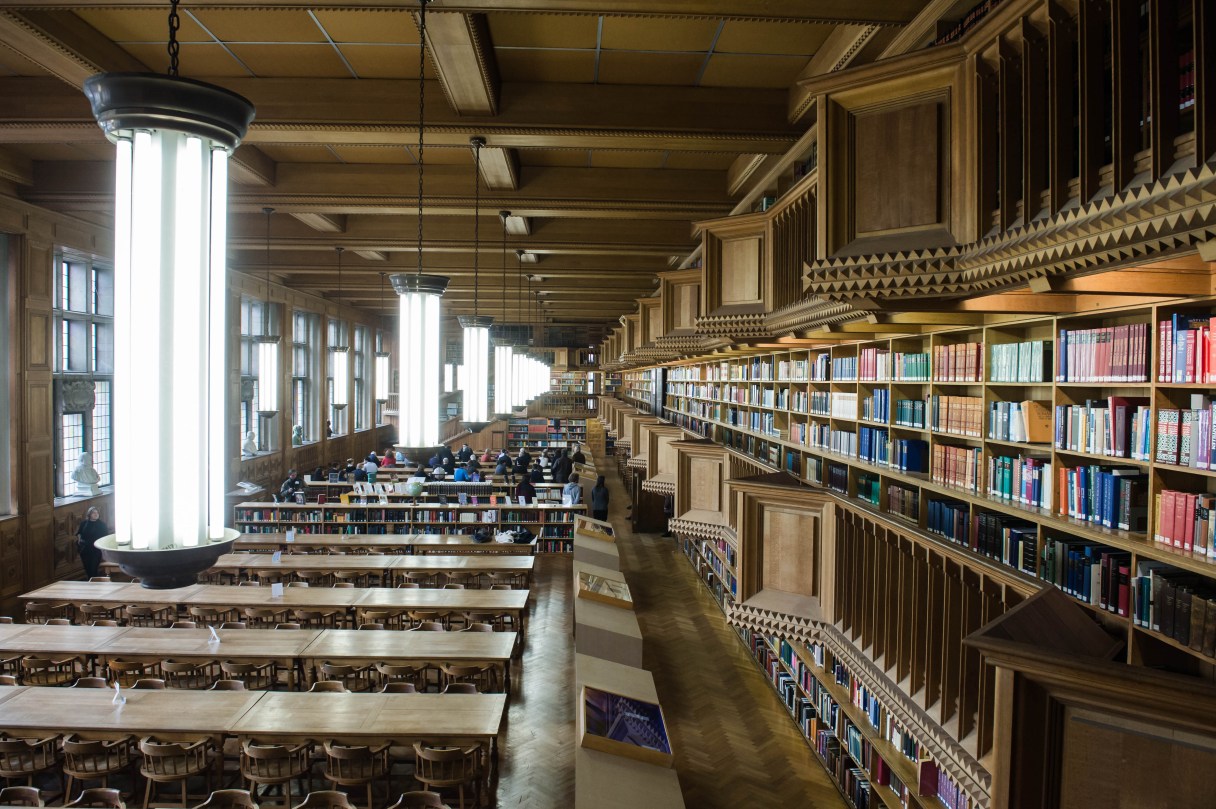
In this picture taken on Monday, Jan. 6, 2014, the interior of the Leuven University Library in Leuven, Belgium. The German invading forces set the heart of Leuven alight during the early days of World War I, paying special attention to the gem of learning and history, the university library. The library was later rebuilt with donations coming from around the world. (AP Photo/Geert Vanden Wijngaert)
In this picture taken on Monday, Jan. 6, 2014, the interior of the Leuven University Library in Leuven, Belgium. The German invading forces set the heart of Leuven alight during the early days of World War I, paying special attention to the gem of learning and history, the university library. The library was later rebuilt with donations coming from around the world. (AP Photo/Geert Vanden Wijngaert) In this picture taken on Monday, Jan. 6, 2014, the interior of the Leuven University Library in Leuven, Belgium. The German invading forces set the heart of Leuven alight during the early days of World War I, paying special attention to the gem of learning and history, the university library. The library was later rebuilt with donations coming from around the world. (AP Photo/Geert Vanden Wijngaert)

LEUVEN, Belgium (AP) – A century after German forces burned down the Leuven University library, Marie Legrand still has visions of the horrid scene. Even the scent of smoke she smelled as a 3-year-old stings in her mind to this day.

“When I close my eyes like I do now, I see the whole city in front of me, and the flames,” she told The Associated Press at her home, fanning invisible flames with her frail hands.

“The old Leuven, the old town, the old history. In short: History itself all went up in flames,” she said of the fire that invading German forces started on Aug. 25, 1914, targeting the university library in the heart of the Belgian town east of Brussels.

World War I had started weeks earlier and Belgium had slowed Germany’s march on France much more than expected. German irritation turned to anger, then to atrocities.

The destruction of the university library served little strategic purpose beyond ruining what people held dear – a practice that continues to thrive today, especially in the Middle East and Africa, where roaming rebels and defiant dictators are robbing the world of some of the highlights of human history.