
In the world of foot care, patients will find they have many options when it comes to custom orthotics. However, Dr. Ira Kraus urges people to make sure they fully research and understand what they are getting to be sure they get the right products for their needs.
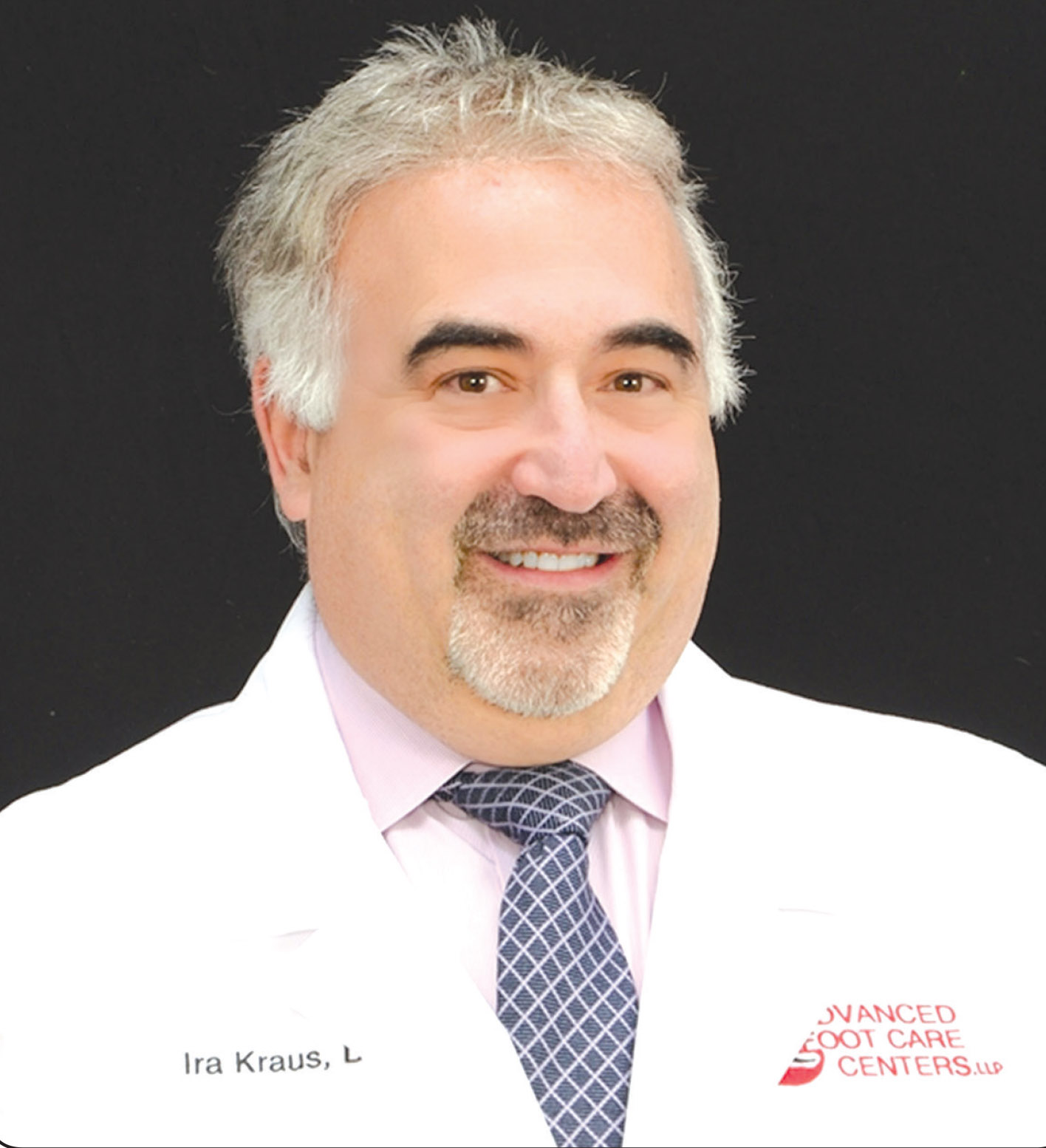 Dr. Ira Kraus
“If you are purchasing something over the counter and off the shelf in a drug store, they are not custom orthotics,” he said. “Custom orthotics can only be manufactured in an orthotic lab using casts and/or scanned images of your feet, sent to the lab with specific manufacturing instructions from your podiatrist.”
He added that there are some companies that claim they offer a “custom fit” on their products, but what they actually mean is your foot can be scanned and “analyzed” for a prefabricated orthotic device.
“What that means is that those orthotic devices are manufactured to fit a generic foot type,” Dr. Kraus explained. “There might be one device that is prefabricated for a generic flat foot and another prefabricated for a generic high-arched foot, but in no way is your foot, or anyone else’s foot, generic.”
While these prefabricated orthotic devices may help, they cannot be called “custom fit” because they were not
made to specifically fit one person’s individual foot.
However, there are instances when a podiatrist will recommend one of these prefabricated devices over a custom-fit device, said Dr. Kraus. The recommendation depends on the deformity from which patients suffer, in addition to whether the podiatrist believes an over-the-counter, non-custom device will be beneficial, he said.
“If they deem that an over-the-counter device would be suitable, or suggest such a device as a starting point, what
you will be purchasing is a prefabricated orthotic device. It is not custom to your foot, but it may be sufficient enough to provide you significant relief,” said Dr. Kraus.
Patients who do need a custom-fit device will find themselves in one of two categories: functional or accommodative.
“What people typically think of when they think of orthotics are those that are functional; coincidentally that type is the most often prescribed,” Dr. Kraus said. “The general objective of any functional orthotic, regardless of the condition it is prescribed for, is to allow the foot to sit in as neutral a position as possible.”
The neutral position is the position of the foot where the tendons and ligaments surrounding the ankle are aligned in
their most advantageous position, allowing the foot to function as “normally” as possible while eliminating compensation for any abnormality.
“In many conditions, the orthotic is indicated to block abnormal motion of the foot by bringing the ground up to the foot [via the orthotic material], helping to decrease pain and deformity,” he said.On the other side, the objective of an accommodative orthotic is to accommodate the foot rather than to place the foot in a neutral position.
“These are often utilized in patients who have rigid conditions where the foot would not benefit from epositioning,” Dr. Kraus said. “Therefore, accommodative orthotic devices are prescribed for patients who need pressure alleviation at areas of high pressure, such as diabetic patients with areas prone to ulceration. In such situations, realigning the
foot via the use of functional orthotics may do more harm to the patient than good.”
Regardless of whether the functional custom orthotic or the accommodative function orthotic is utilized, they are both
manufactured from a cast and/or digital image of the foot. Those casts or images are sent to a laboratory specializing in orthotic manufacturing and the custom orthotics come to life with adherence to specific manufacturing instructions from your podiatrist.
“Custom orthotics are exactly that,” Dr. Kraus said, “custom to your foot through the cast or images sent to the orthotic laboratory. Anything purchased over the counter cannot be custom if there are only a few varieties to choose
from and if your foot images were not sent to a specialized orthotic laboratory for manufacturing of your orthotic devices from those images.”
In March, Advanced Foot Care is hosting a contest called “Arch Madness” where patients can turn in their old orthotics (custom or over the counter) and purchase new custom orthotics from Advanced Foot Care to receive a $30 gift certificate that can be applied to any of the medical-grade over the counter products.
MORE INFORMATION
Advanced Foot Care has offices in Tennessee at 4308 Brainerd Road, 7550 East Brainerd Road, 5617 Highway 153, Suite 102, and 3742 Tennessee Avenue in St. Elmo. Georgia locations include 2368 Battlefield Parkway and 1716 Cleveland Highway #104 in Dalton. For more information about their services, or to schedule an appointment, visit advancedfootcarecenters.com.