
Sunday, November 15, 2026Nov 15

Seniors learn “parkour,” sport of daredevil youths

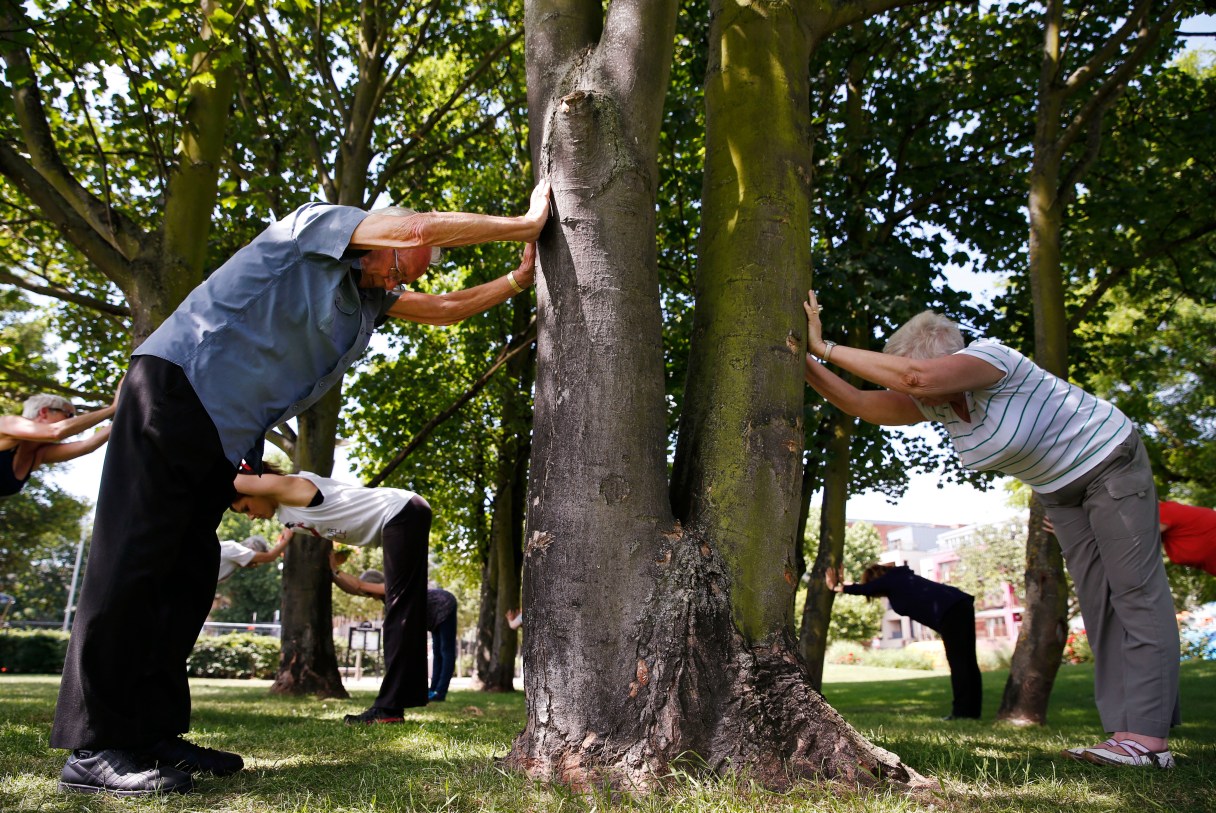
In this Tuesday, June 17, 2014 photo, elderly people stretch as they participate at a special parkour class at a park in south London. The unique weekly class for people over 60 called parkour, a flashy discipline usually known for its acrobatic running, climbing and gravity-defying jumps. The London parkour class  is taught by two instructors who have adapted the sport’s main elements to a level that can be handled even by those over 60 who have replacement joints or other medical conditions. (AP Photo/Lefteris Pitarakis)
In this Tuesday, June 17, 2014 photo, elderly people stretch as they participate at a special parkour class at a park in south London. The unique weekly class for people over 60 called parkour, a flashy discipline usually known for its acrobatic running, climbing and gravity-defying jumps. The London parkour class is taught by two instructors who have adapted the sport’s main elements to a level that can be handled even by those over 60 who have replacement joints or other medical conditions. (AP Photo/Lefteris Pitarakis)

LONDON (AP) – On a recent morning in London, Lara Thomson practiced spinning on benches, swinging from metal bars and balancing off raised ledges – all elements of a daredevil discipline known as “parkour.”

What was unusual about the scene is that Thomson is 79 and all of her classmates are over 60.

They are members of a unique weekly class for seniors in a sport more commonly known for gravity-defying jumps than helping people with arthritis.

Invented in the 1980s in France, parkour is a sport usually favored by extremely nimble people who move freely through any terrain using their own strength and flexibility, often using urban environments such as benches, buildings and walls as a type of obstacle course. It’s also known as free running.

The London parkour class of about a dozen students is taught by two instructors who have adapted the sport’s main elements to a level that can be handled even by those over 60 who have replacement joints or other medical conditions.