
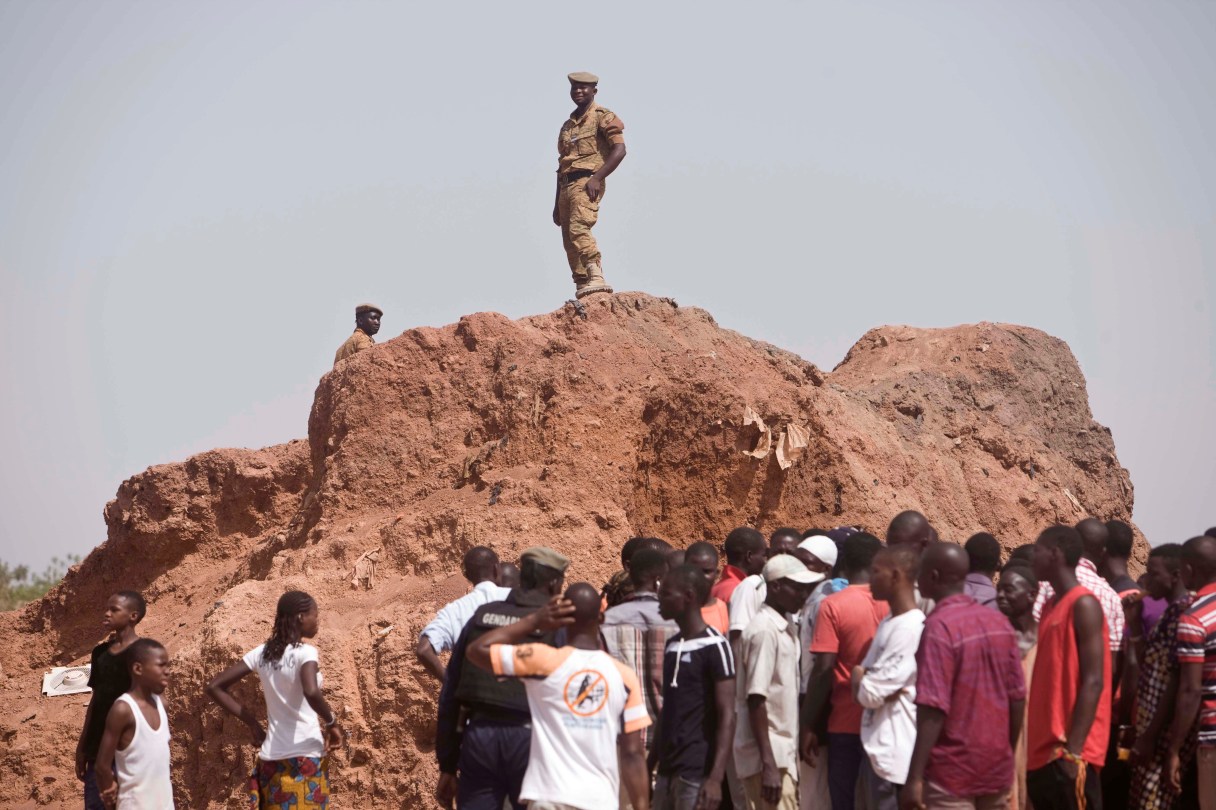
OUAGADOUGOU, Burkina Faso (AP) – Nearly 30 years after President Thomas Sankara was killed in a coup as he strived to make his West African country an egalitarian one, his purported grave is being dug up to answer lingering questions about his death.
Sankara was a Marxist, anti-imperialist revolutionary who in four years in power in Burkina Faso doubled the number of children in schools, reduced infant mortality, redistributed land from feudal landlords to peasants and planted 10 million trees that still help shade Ouagadougou, the capital. His style was different from other African presidents, ordering ministers to trade in Mercedes for more humble Renaults.
Sankara’s death at 37 in October 1987 after a coup staged by his once best friend Blaise Compaore has remained shrouded in secrecy.
Sankara and his followers were hurriedly buried, and his family and many others in Burkina Faso have for years wanted to know how he was killed, and if, in fact, his body is really in the Dagnoen Cemetery, on the eastern outskirts of Ouagadougou.
“We want the truth,” many people chanted Monday outside the cemetery, urging the gendarmerie to let journalists in.