
SAO PAULO (AP) – Past the graffiti-covered overpass and subway tracks, in a slum penned in by high-rises, 8-year-old Gabriela Aparecida fixes her curly hair into a bun as she waits for a ride to her new favorite activity: ballet. Peeling back the tarp over the doorway, the skinny girl reaches out into the dirt alleyway to hug the church volunteer arriving to take her to dance class.
Growing up amid drug dealers and addicts, Gabriela has yet to learn how to read. Yet she and other girls from a rough neighborhood known as a “cracolandia,” or crackland, are learning the graceful art courtesy of a local church group that also offers them food, counseling and Bible studies. The class is among several groups where young dancers hope to catch the eye of a respected Brazilian ballerina who recruits dozens of disadvantaged girls for an annual workshop.
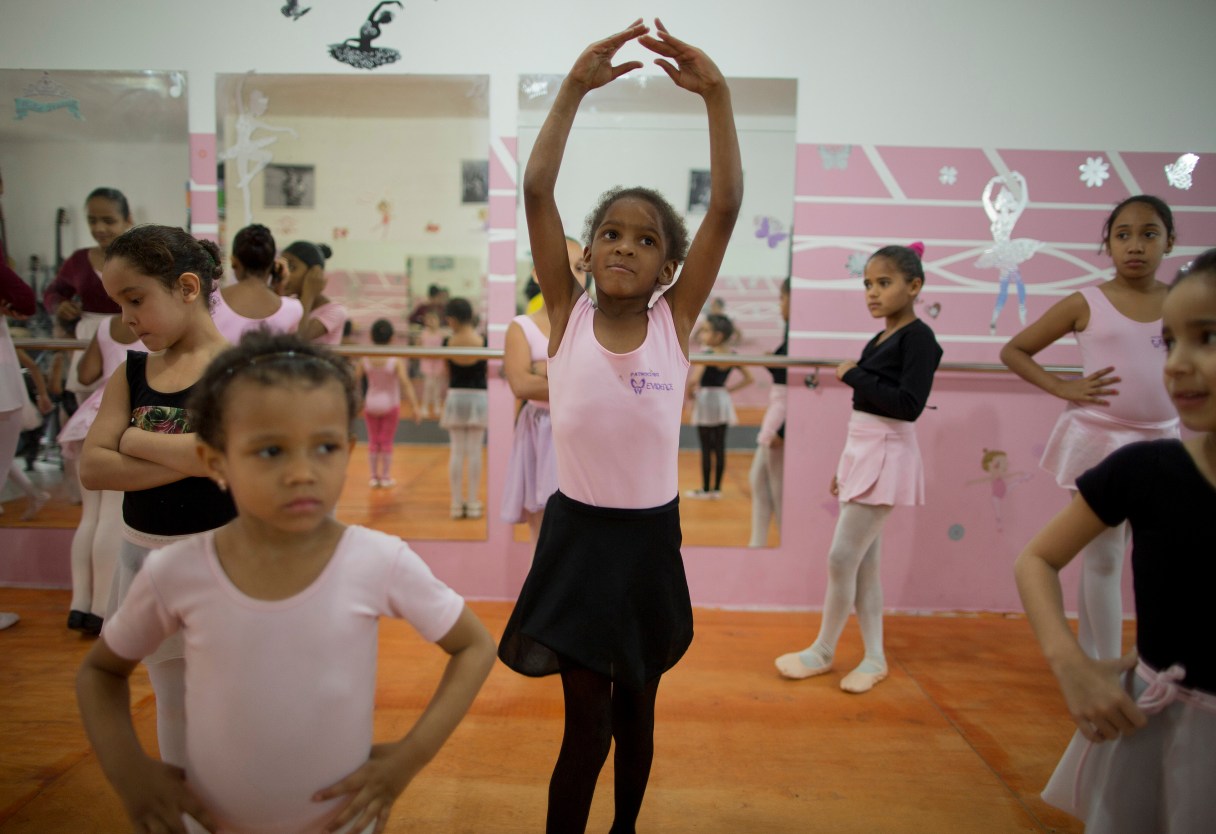
Twice a week, more than 20 girls, ages 5 through 12, board a Volkswagen van for a 10-minute ride to class, where they put on pink or black tights and ballet shoes donated by a dancewear store.
On a recent day, instructor Joana Machado played a jaunty tune of flutes and piano. Sitting on the floor, the girls formed a circle with their legs out in front of them and knees straight. They flexed their feet and then stretched their toes down toward the floor, over and over again while Machado corrected the younger ones’ form.
The time spent focused on grace and control is far removed from the girls’ daily lives. Many are being raised by parents who are recovering from or are addicted to drugs. Some girls live with relatives who are dealers, or they have been abandoned and taken in by neighbors. Some have experienced violence.