
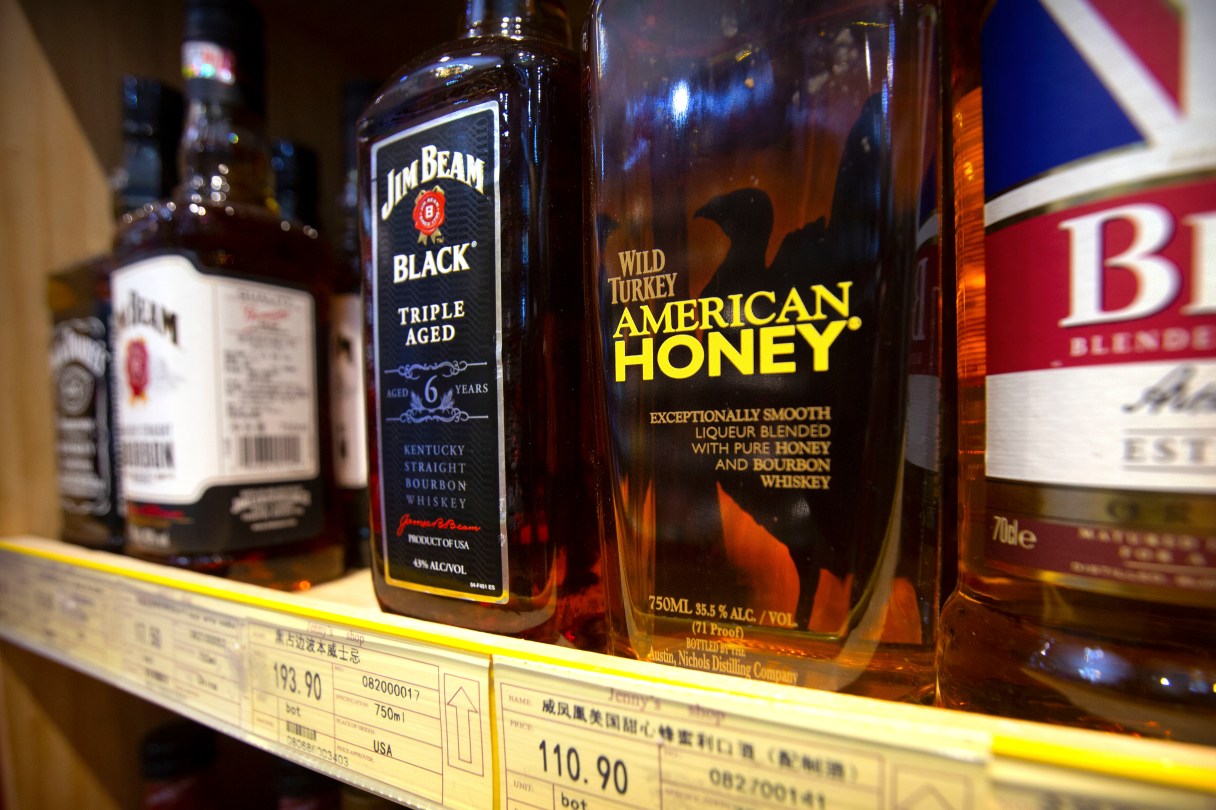
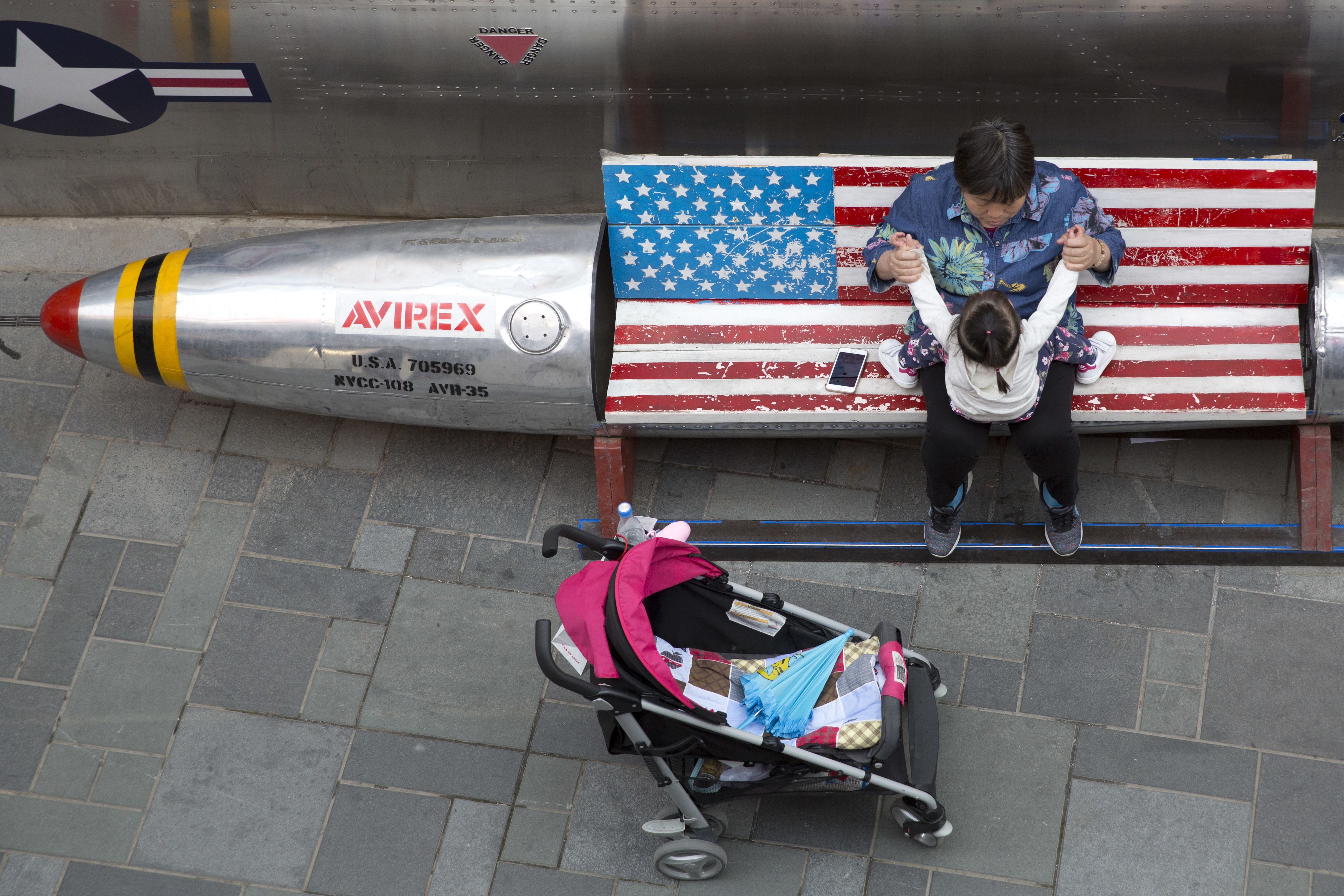
 FILE – In this April 12, 2018, file photo, a woman tends to a child near a promotional gimmick in the form of a bomb and the U.S. flag outside a U.S. apparel shop in Beijing. China’s options to retaliate in an escalating trade dispute with Washington go beyond matching U.S. tariff hikes to targeting American companies and government debt. Its state-dominated economy gives regulators tools to hamper sales of engineering, shipping and other services _ an area in which the United States runs a trade surplus _ and to disrupt operations for automakers, restaurant chains and other American businesses in China. (AP Photo/Ng Han Guan, File)
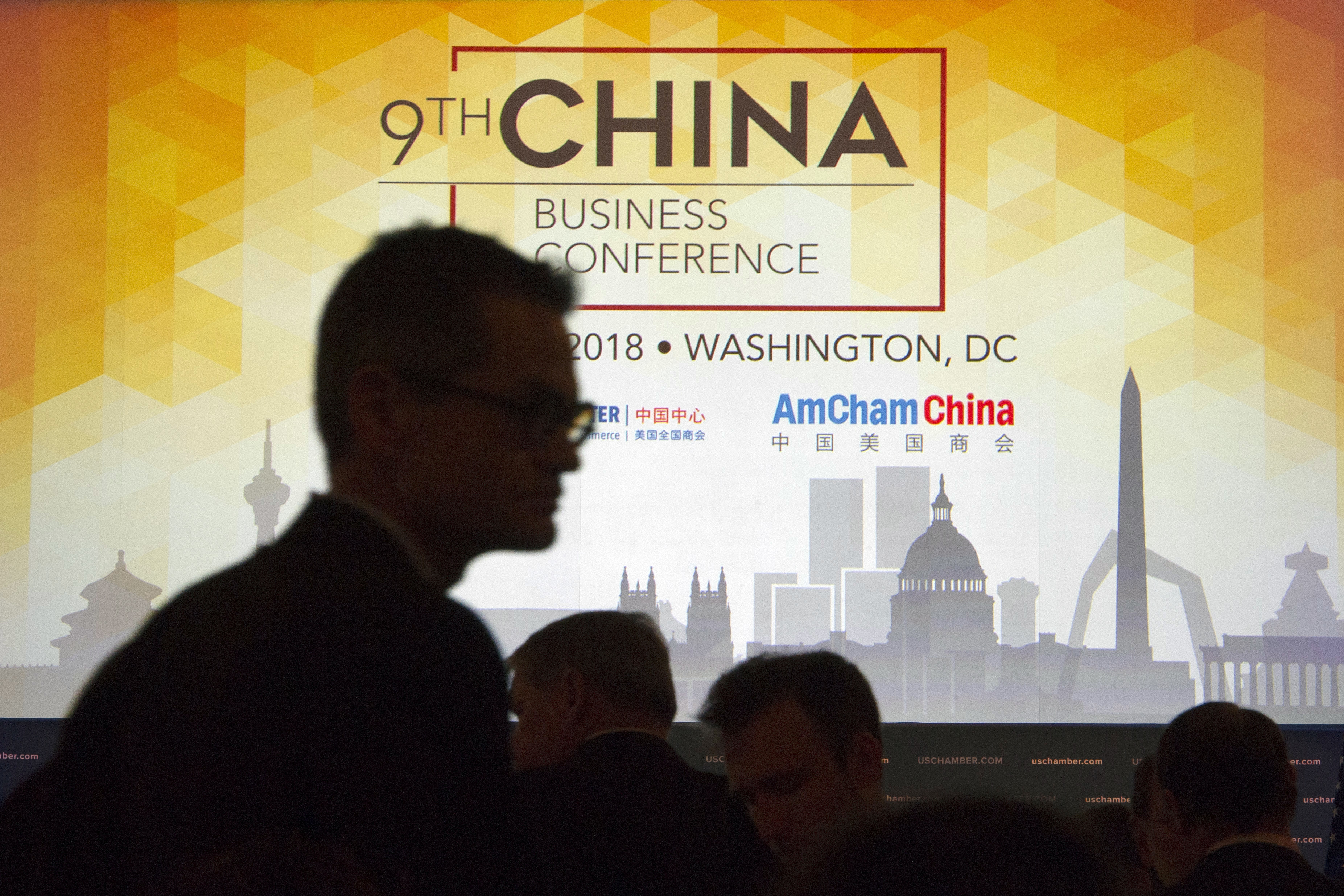 FILE – In this Tuesday, May 1, 2018, file photo, people take their seats before U.S. Trade Representative Robert Lighthizer speaks at the 9th China Business Conference at the U.S. Chamber of Commerce in Washington. China’s options to retaliate in an escalating trade dispute with Washington go beyond matching U.S. tariff hikes to targeting American companies and government debt. Its state-dominated economy gives regulators tools to hamper sales of engineering, shipping and other services _ an area in which the United States runs a trade surplus _ and to disrupt operations for automakers, restaurant chains and other American businesses in China. (AP Photo/Cliff Owen, File)
BEIJING (AP) – In his trade war with China, President Donald Trump wields one seeming advantage: The United States could ultimately slap tariffs on more than $500 billion in imported Chinese goods. Beijing has much less to tax: It imported just $130 billion in U.S. goods last year.
Yet that hardly means China would be powerless to fight back once it ran out of U.S. goods to penalize. It possesses a range of other weapons with which to inflict pain on the U.S. economy.
Indeed, China’s Commerce Ministry has warned of “comprehensive measures” it could take against the United States – from harassing automakers, retailers or other American companies that depend on China to drive revenue to selling U.S. government debt or disrupting diplomatic efforts over North Korea.
Some of those steps might hurt China’s own interests. But Beijing might still be willing to deploy them, at least temporarily, if its trade war with Washington were to drag on.
On Friday, Washington imposed its first tariffs in response to complaints Beijing steals or pressuring companies to hand over technology. China swiftly announced retaliatory tariffs on a similar amount of U.S. goods.