
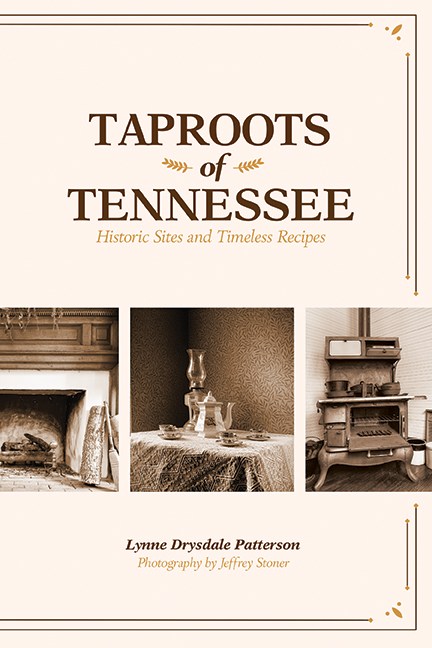
‘TAPROOTS OF TENNESSEE: HISTORIC SITES AND TIMELESS RECIPES” By Lynne Drysdale Patterson (University of Tennessee Press, 308 pages, $25).
In 2010, songwriter Lynne Drysdale Patterson saw an unexpectedly life-changing film – not a blockbuster or a heartwarming biopic, but a video to promote tourism called “Discover Tennessee Trails and Byways.” The film, she writes in “Taproots of Tennessee,” showcased the state’s “grand divisions – East, Middle and West, with their rugged terrain and trails trodden into rural, scenic backroads and winding highways.” Patterson was inspired that day to pen the lyrics that became her award-winning song, “Trails of Tennessee,” and she ultimately embarked on the research that informs “Taproots.”
“I wanted to travel these byways leading to Tennessee’s small historic towns,” writes Patterson, a member of two chapters of the Daughters of the American Revolution. And so she did, visiting 17 historical sites across the state to gather material for the book, which reaches across genres to deliver historical narrative, travel information and recipes from each place. In Patterson’s words, “Rather than an exhaustive study on the lives and times of each site’s inhabitants, this book presents a condensed, albeit insightful, portrait of Tennessee’s pioneering families, their place in our state’s history and the foods that sustained them.”
Each chapter showcases a particular site’s distinct personality, offering details on its founding, the story of its construction/architecture and a brief narrative of the people who worked its land. Practical information about planning a visit serves as a bridge from the narrative section to the recipe section, which consists of a menu based on Patterson’s extensive research on period-appropriate foodways and methods.
For example, the chapter on the Sam Houston Schoolhouse State Historic Site in Maryville begins with a poignant quote from the famous Tennessean: “While teaching in this one-room schoolhouse as a boy of 18, I experienced a higher feeling of dignity and self-satisfaction than from any office or honor which I have held since.”