
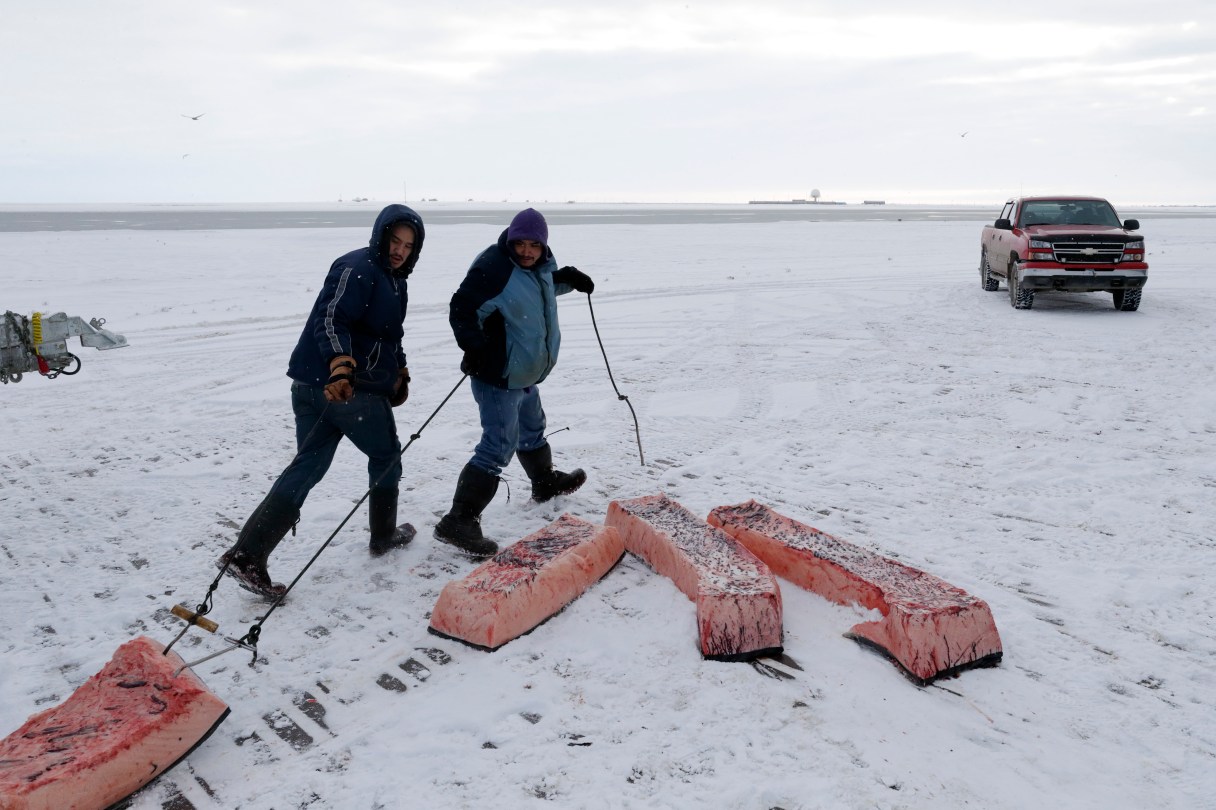
ANCHORAGE, Alaska (AP) – Alaska Inuit hunter John Goodwin for decades has hunted oogruk, the bearded seal, a marine mammal prized for its meat, oil and hide.
The largest of Alaska’s ice seals uses sea ice to rest and birth pups, and after the long winter, when ice breaks into floes, there’s a window of opportunity for Goodwin to leave his home in Kotzebue and motor his boat between ice panels, shoot seals and butcher them before they migrate north through the Bering Strait.
A hunting season that used to last weeks, however, has shrunk. Ice that formerly froze 5-feet thick or more is a fraction of that. Ice disappears quickly, and so do the seals.
“As soon as the sun comes out, it starts melting, or we have a heavy rain,” Goodwin said. “Basically, it’s the rain that deteriorates the ice real quick. We don’t have enough time to hunt.”
The environment is changing and the Inuit, who consider themselves a part of it, want measures taken to protect their culture. A report issued this month by the Inuit Circumpolar Council-Alaska, which advocates for Inuit coast villages from southwest to north Alaska, calls for policies that protect Inuit traditional food and the Arctic environment that produces it.