
Monday, November 16, 2026Nov 16

For US and Iran, nuke deal is a series of tough compromises

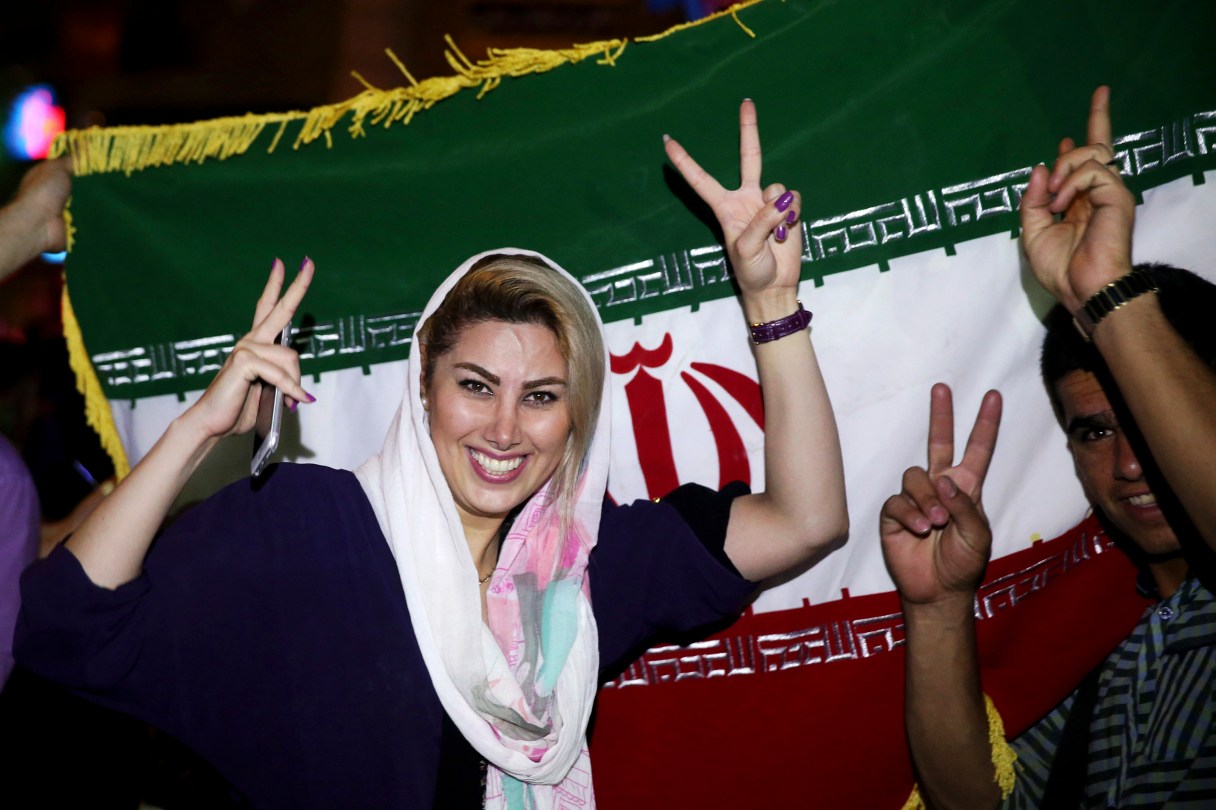
An Iranian woman shows the victory sign as people celebrate on a street following a landmark nuclear deal, in Tehran, Iran, Tuesday, July 14, 2015. Overcoming decades of hostility, Iran, the United States, and five other world powers struck a historic accord Tuesday to check Tehran's nuclear efforts short of building a bomb. The agreement could give Iran access to billions in frozen assets and oil revenue, stave off more U.S. military action in the Middle East and reshape the tumultuous region. (AP Photo/Ebrahim Noroozi)

WASHINGTON (AP) – The nuclear accord with Iran required a difficult series of compromises for world powers and Tehran.

For President Barack Obama, it meant climbing down from demands that Tehran halt almost all of its enrichment of potential bomb-making material and shutter an underground facility possibly impervious to an air attack. It also meant dropping pledges to secure “anytime, anywhere” inspections and Iran’s complete answering of questions related to past weapons work.

But Iran’s supreme leader was forced to retreat on some key issues, too. Relief from crippling economic sanctions won’t come on Day 1, as he long clamored for, and his country will have to open up military sites to international inspectors at some point if the Islamic Republic is going to fulfill its commitments. Iran also will have to adhere to multiyear restrictions on enrichment and nuclear research and development that Ayatollah Khamenei and other leaders once opposed.

A look at how Iran and world powers found middle ground on some of the agreement’s most contentious elements:

ENRICHMENT