
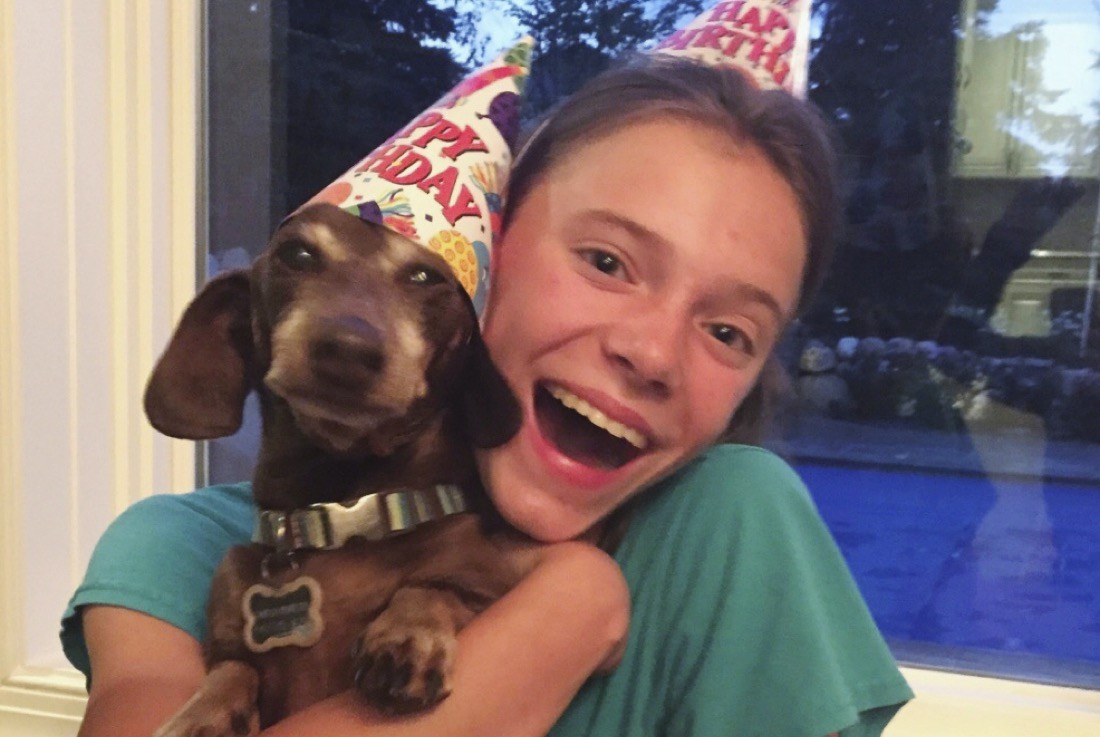
 This August 2020 photo provided by Peyton Crest shows her with her dog at home in Minnetonka, Minn. The 18-year-old ays she developed anorexia before the pandemic but has relapsed twice since it began. ”It was my junior year, I was about to apply for college,” Crest says. Suddenly deprived of friends and classmates, her support system, she’d spend all day alone in her room and became preoccupied with thoughts of food and anorexic behavior. (Courtesy Peyton Crest via AP)
Many hospital beds are full. Waiting lists for outpatient treatment are bulging. And teens and adults seeking help for eating disorders are often finding it takes months to get an appointment.
The pandemic created treacherous conditions for eating disorders, leading to a surge of new cases and relapses that is not abating as restrictions are loosened and COVID-19 cases subside in many places, doctors and other specialists say.
“We are absolutely seeing massive increases,” said Jennifer Wildes, an associate psychiatry professor and director of an outpatient eating disorders program at the University of Chicago Medicine. Some patients are waiting four to five months to get treatment such as psychotherapy and sometimes medication. Waits usually lasted only a few weeks pre-pandemic, Wildes said.
Her program is treating about 100 patients, a near doubling since before the pandemic, she said.
The Emily Program, a University of Minnesota-affiliated eating disorders treatment program, is experiencing the same thing.