
Friday, November 6, 2026Nov 6

This story is free to read.

Judge opens inquiry into death of ex-Russian spy Litvinenko

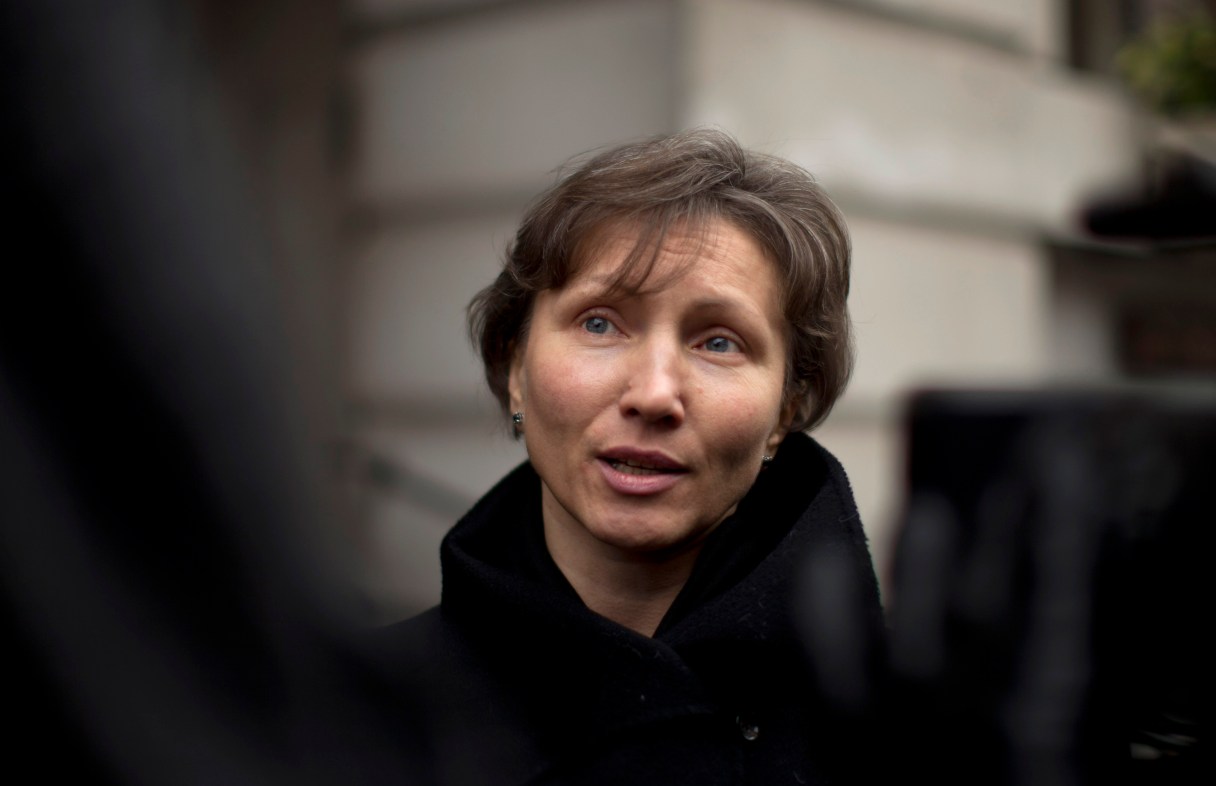
FILE - In this Thursday, Dec. 13, 2012 file photo, Marina Litvinenko, the widow of former Russian intelligence officer Alexander Litvinenko, speaks to the media as she leaves at the end of a pre-inquest review at Camden Town Hall in London. More than eight years on and with the U.K.-Russia relations at their iciest since the Cold War, an inquiry is opening on Tuesday, Jan. 27, 2015 into the killing of the Russian intelligence agent turned Kremlin critic. (AP Photo/Matt Dunham, File)
FILE - In this Thursday, Dec. 13, 2012 file photo, Marina Litvinenko, the widow of former Russian intelligence officer Alexander Litvinenko, speaks to the media as she leaves at the end of a pre-inquest review at Camden Town Hall in London. More than eight years on and with the U.K.-Russia relations at their iciest since the Cold War, an inquiry is opening on Tuesday, Jan. 27, 2015 into the killing of the Russian intelligence agent turned Kremlin critic. (AP Photo/Matt Dunham, File) FILE - In this Thursday, Dec. 13, 2012 file photo, Marina Litvinenko, the widow of former Russian intelligence officer Alexander Litvinenko, speaks to the media as she leaves at the end of a pre-inquest review at Camden Town Hall in London. More than eight years on and with the U.K.-Russia relations at their iciest since the Cold War, an inquiry is opening on Tuesday, Jan. 27, 2015 into the killing of the Russian intelligence agent turned Kremlin critic. (AP Photo/Matt Dunham, File)

LONDON (AP) – A British judge is opening an inquiry into the death of Alexander Litvinenko, a former Russian intelligence agent who died from radioactive poisoning in London in 2006.

Litvinenko, who had become a Britain-based critic of the Kremlin, became violently ill in November 2006 after drinking tea with two Russian men at a London hotel. He died three weeks later.

Britain has accused Russia of involvement. Moscow denies the claim, and has refused to extradite the two men identified by Britain as the prime suspects.

Opening the inquiry on Tuesday, Judge Robert Owen said “the issues to which his death gives rise are of the utmost gravity.” He says some portions of the inquiry dealing with sensitive intelligence evidence will be held in private.