
Friday, November 13, 2026Nov 13

States agree to cut pollutants behind Lake Erie algae

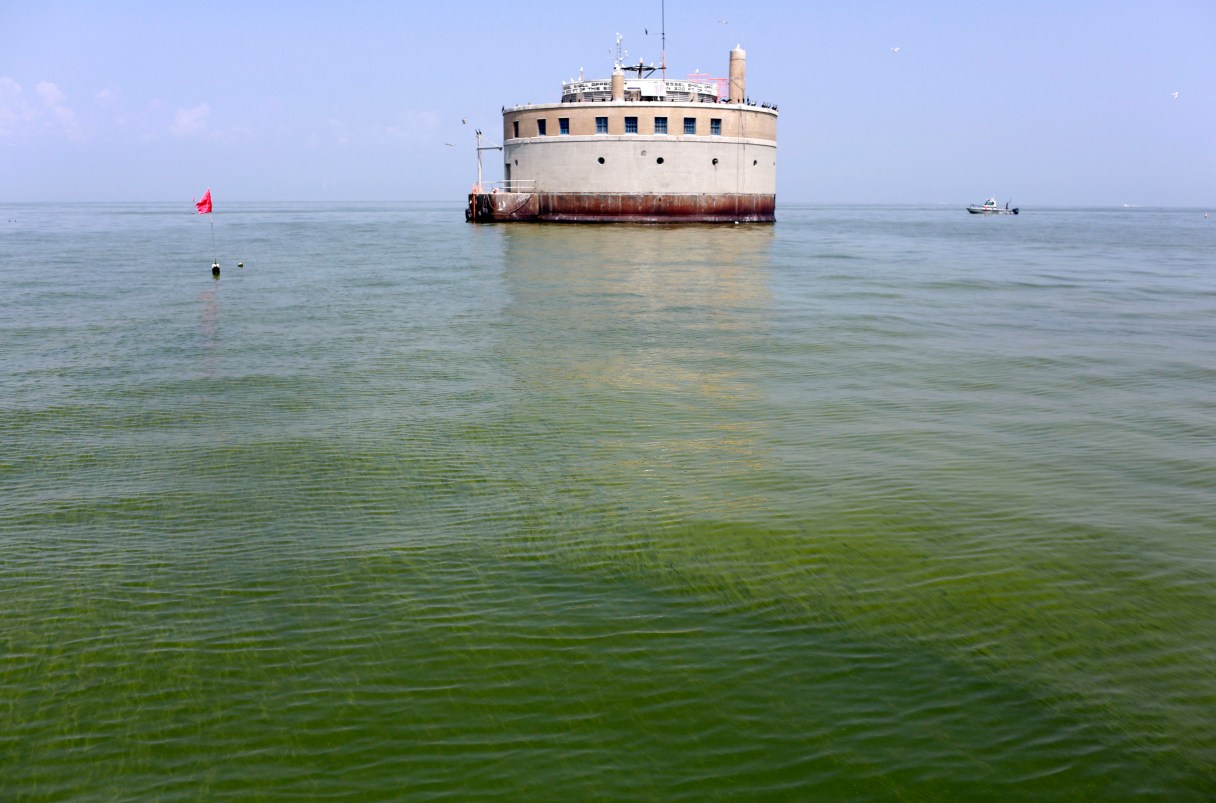
FILE - In this Aug. 3, 2014 file photo, the City of Toledo water intake crib is surrounded by algae in Lake Erie, about 2.5 miles off the shore of Curtice, Ohio. Ohio and Michigan have agreed to sharply reduce phosphorus runoff blamed for a rash of harmful algae blooms on Lake Erie that have contaminated drinking water supplies and contributed to oxygen-deprived dead zones where fish can't survive, Friday, June 12, 2015. (AP Photo/Haraz N. Ghanbari, File)
FILE - In this Aug. 3, 2014 file photo, the City of Toledo water intake crib is surrounded by algae in Lake Erie, about 2.5 miles off the shore of Curtice, Ohio. Ohio and Michigan have agreed to sharply reduce phosphorus runoff blamed for a rash of harmful algae blooms on Lake Erie that have contaminated drinking water supplies and contributed to oxygen-deprived dead zones where fish can't survive, Friday, June 12, 2015. (AP Photo/Haraz N. Ghanbari, File) FILE - In this Aug. 3, 2014 file photo, the City of Toledo water intake crib is surrounded by algae in Lake Erie, about 2.5 miles off the shore of Curtice, Ohio. Ohio and Michigan have agreed to sharply reduce phosphorus runoff blamed for a rash of harmful algae blooms on Lake Erie that have contaminated drinking water supplies and contributed to oxygen-deprived dead zones where fish can't survive, Friday, June 12, 2015. (AP Photo/Haraz N. Ghanbari, File)

TOLEDO, Ohio (AP) – Ohio and Michigan have agreed to sharply reduce phosphorus runoff blamed for a rash of harmful algae blooms on Lake Erie that have contaminated drinking water supplies and contributed to oxygen-deprived dead zones where fish can’t survive.

The two states along with Ontario, Canada, said Friday that they will work to cut the amount of phosphorus flowing into western Lake Erie by 40 percent within the next 10 years.

It’s a significant move to combat the algae blooms that have taken hold in the western third of the lake over the last decade and colored some of its waters a shade of green that’s drawn comparisons to pea soup and the Incredible Hulk.

Researchers have linked the toxic algae to phosphorus from farm fertilizers, livestock manure and sewage treatment plants that flows into rivers and streams draining into the lake.

Groups studying the algae blooms, including a U.S.-Canadian agency, began calling for a 40 percent reduction in phosphorus about two years ago. That suggestion took on greater urgency last August after an algae outbreak contaminated public drinking water supplies for more than 400,000 people in Toledo and parts of southeastern Michigan.