
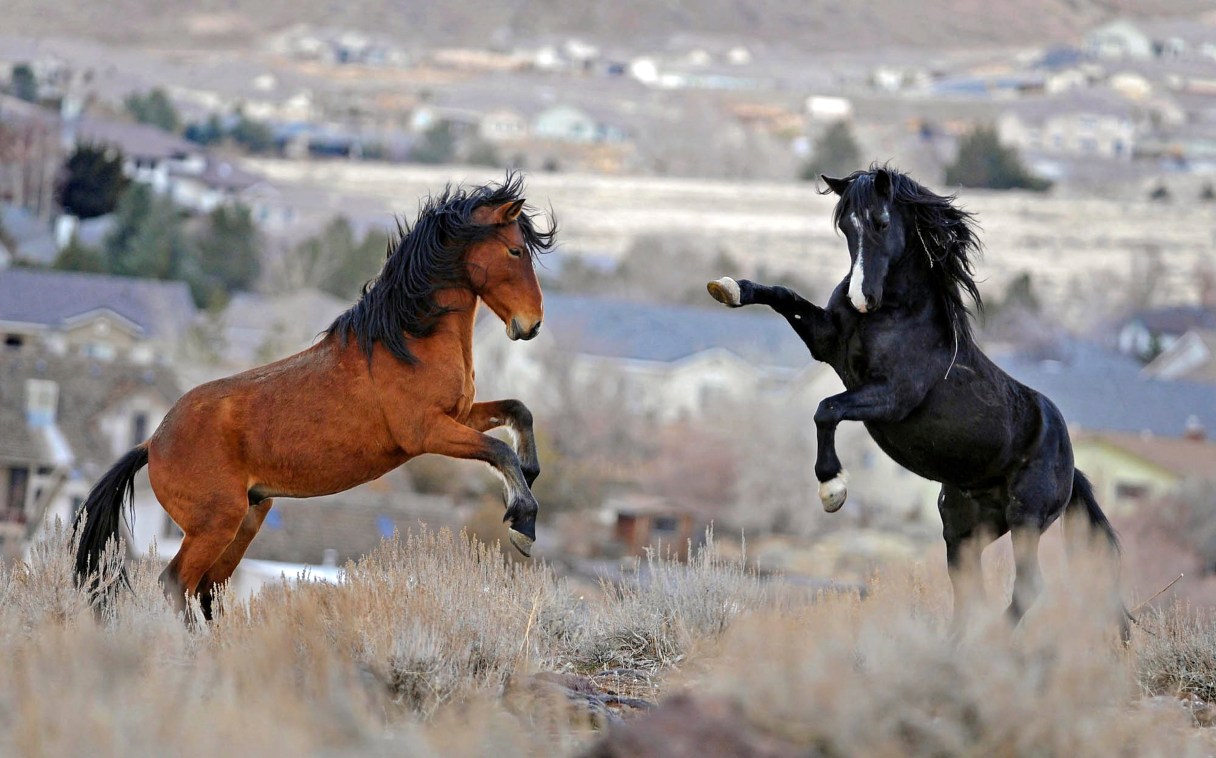
SALT LAKE CITY (AP) – Swollen populations of federally-protected wild horses roaming 10 Western states are starved and damaging rangelands, Utah and U.S. government officials said at a conference Wednesday, an invitation-only meeting that mustang-protection advocates say is promoting the slaughter of an icon of the American West.
Members of Utah’s congressional delegation and a U.S. Interior Department official speaking at the National Horse and Burro Summit in Salt Lake City all described an unsustainable population of wild horses that’s nearly three times the size that federal officials think the rangeland can support.
Horse-protection groups who weren’t allowed into the Utah State University-hosted event protested outside the downtown hotel where it was held, calling it a “slaughter summit” that’s kowtowing to livestock interests, promoting increased roundups and slaughter of wild horses from California to Colorado without public input.
“It’s a collection of politicians and lobbyists for the agriculture industry and the sole purpose is to advance their agenda of slaughtering America’s wild horses,” said Suzanne Roy with the American Wild Horse Campaign.
Terry Messmer, a wildland resources professor at Utah State, defended the conference lineup he said was organized by “a broad coalition of horse advocates – not activist groups, but people who are concerned about the welfare of horses and western rangeland management.”