

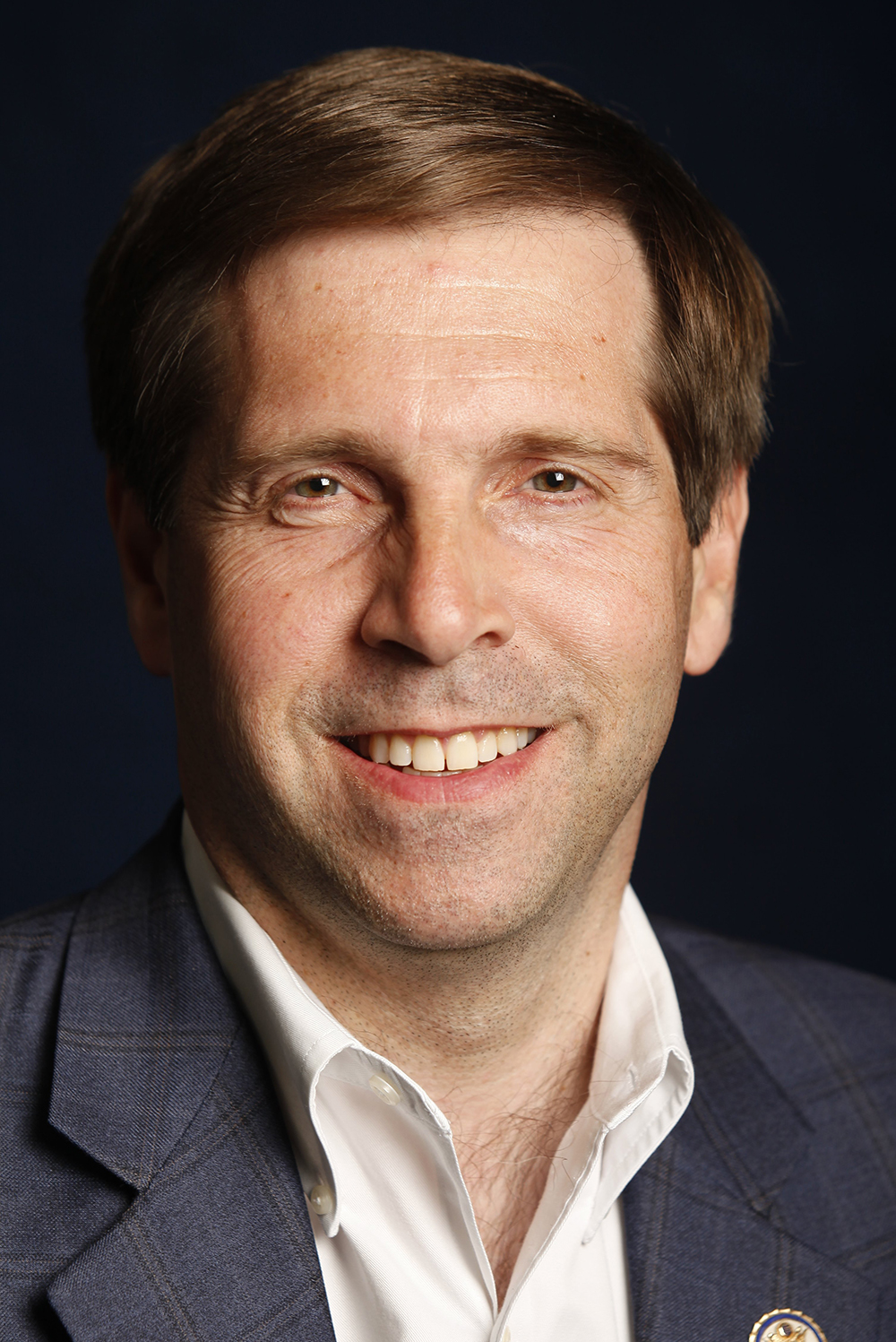
 Chuck Fleischmann
Why the wait?
Passing bills left and right in Congress is not necessarily a good thing, and inaction in Congress is not necessarily a bad thing if it prevents taxpayer money from being wasted.
But the speed at which the United States House of Representatives passed on Wednesday a desired tax hike on barge owners — attached to a popular bill allowing tax-free savings accounts for parents and grandparents of disabled people — was truly wondrous considering such a tax hike had been discussed for months.
And the fact the measure was boosted by Republican U.S. Rep. Chuck Fleischmann was even more amazing because he had been reluctant to say he supported such a fee increase in the months leading up to his August Republican primary and even during the subsequent months until his far easier November re-election to a third term.
Since the barge industry supported the tax rise, since 3rd District voters on both sides of the aisle desired to see the Chickamauga Dam lock replaced (which the fee rise could speed) and since he had basically been given a pass on the issue by Grover Norquist’s anti-tax Americans for Tax Reform group, the congressman had little reason not to be out in front on it.
But for whatever reason, he wasn’t — until after the election. Then he was on it, writing House Speaker John Boehner about the “broad coalition of bipartisan lawmakers and industry groups” who support such a fee increase and speaking on the House floor about how the tax rise combined with the inland waterways funding formula he helped change would fix crumbling locks like that at Chickamauga Dam.
We appreciate Rep. Fleischmann’s conservative approach to spending taxpayer money, but we would like to believe this fee increase — which passed the House in the savings accounts bill 404-17 and still must be approved by the Senate — could have been proposed earlier.
But if this is the nature of Congress, where a popular measure couldn’t get passed until a winding-down-the-year, lame-duck session, shame on us for electing the same people — Democrats and Republicans — election after election.
Guilt becoming go-to cry
That another man — this time, one Eric Garner in New York — died while police were trying to place him in custody is a sad and unfortunate reality. That the grand jury’s choice not to indict any of the officers trying to restrain him in the July case came on the heels of a St. Louis County, Mo., grand jury’s similar choice in a not so similar August case is bad timing.
But not one of us was there to hear the evidence that was before the grand jury in either case, so any opinion we make on what should or should not have happened is made without knowing all the facts.
What seems pretty clear, though, is if, after the smoke clears from both scenes, police become more hamstrung in doing their jobs, we all will have lost. That’s not to say there aren’t lessons to be learned by police from every stop or training methods that can be refined and refined and refined.
Truly, each incident involving police and perpetrators is different. Police have instructions from a rule book on how to respond, but few perpetrators know the rule book and act accordingly. So a hand placed a little higher in the heat of the moment here, additional force applied briefly there, combined with an unhealthy perpetrator, and suddenly a law breaker is dead. It’s not what the officers involved want; it’s certainly not what the struggling perpetrator expects. But it happens.
In 228,000 misdemeanor cases — like Garner’s — in New York City in 2013, none ended with a death. But they all had the potential to do so. The minuscule chance something could turn deadly is not a reason to write off Garner’s case, but neither is it a reason to suddenly believe an officer is a murderer. If this becomes the go-to comment in every such incident, who’d ever want to join the police force?
No Band-Aids, please
Tennessee Gov. Bill Haslam is right to be up front with residents in saying the state will have to stop building roads and bridges and stay in a maintenance phase of its infrastructure if it doesn’t get new transportation money.
He even floated the “T” word to reporters, as in increasing the state’s gas or diesel tax, neither of which has been raised in 25 years. But he’s not married to that idea or any other one yet.
Haslam doesn’t want Tennessee to become like the federal government, which passes Band-Aid bills for its transportation needs each year. And each time it does, it makes the state’s situation worse, putting off any long-term plans and delaying already planned projects.
The governor made his comments after Transportation Commissioner John Schroer — along with all agency heads — presented their spending plans. Schroer revealed the department’s current budget is $1.84 billion and is expected to shrink by $30 million next year. Yet, the state has an $8 billion backlog of transportation projects.
No one wants to pay more at the pump, but we certainly don’t want the state to fall from its top 10 ranking — by CNBC — of its transportation and infrastructure being one of the best in the nation.