
NEW YORK (AP) – Hollywood has long been fascinated with China. But that doesn’t mean it has always represented it fully or accurately – far from it.
In the new exhibit “China: Through the Looking Glass,” early Hollywood – and film in general – is just one of the lenses through which the Metropolitan Museum of Art’s Costume Institute explores the way Chinese art and aesthetics have been interpreted by the West over the years.
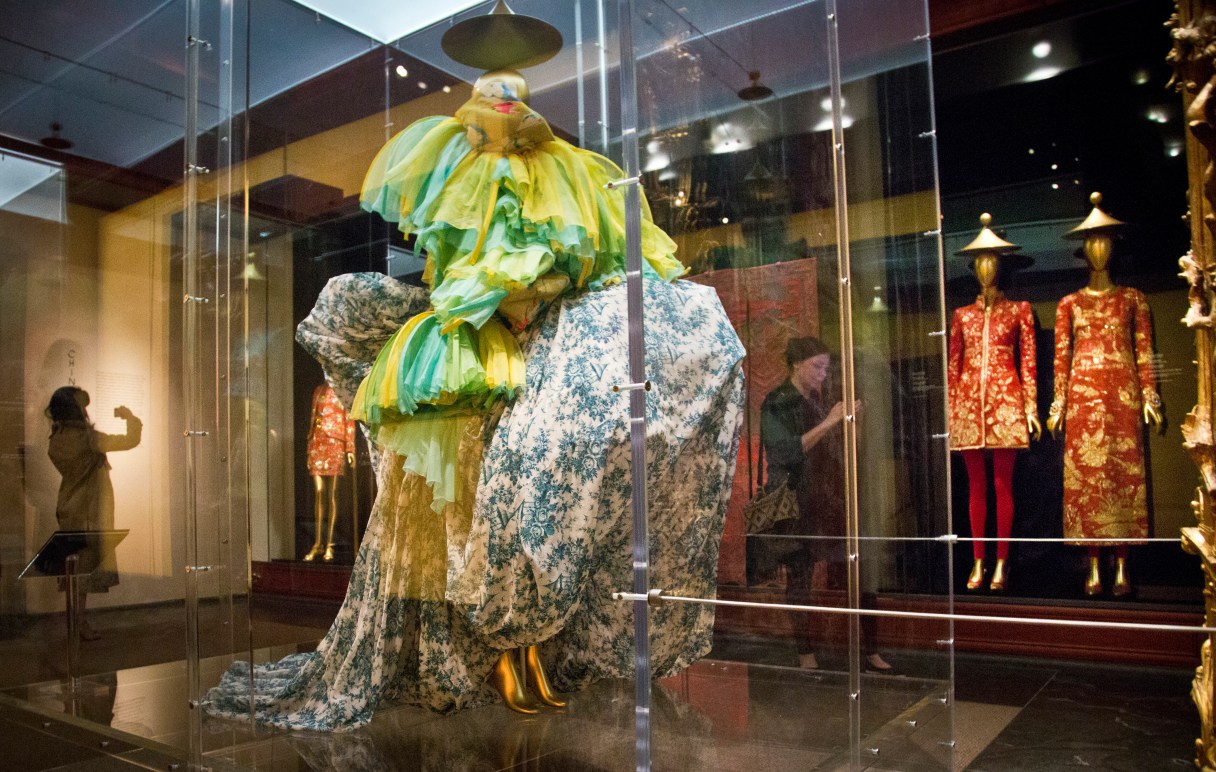
Another, naturally, is fashion – and the show boasts a massive 30,000 square feet of gallery space filled with rich ensembles: Chinese costumes, historic garments and decorative arts, displayed beside the work of dozens of Western designers who were inspired by China, including names like John Galliano, Tom Ford, Ralph Lauren, Cristobal Balenciaga, Jean Paul Gaultier and many more. The show also features work by Chinese or Chinese-American designers – Jason Wu, for example, who designed both of Michelle Obama’s inaugural gowns – working either in China or elsewhere around the globe.
The exhibit, a joint endeavor of the Costume Institute and the Met’s Asian Art department, is one of the most ambitious in scope the museum has undertaken, director Thomas Campbell said Monday at a preview. And it is fully three times the size of the usual spring Costume Institute show, noted Andrew Bolton, its curator, comprising not just the institute’s galleries but the entire Asian Art department.
One of the most striking elements of the show is how it melds its three main elements – fashion, film and decorative art – within each gallery, as well as drawing together disparate historical periods and different global perspectives, often in one glass case.