
In the 19th century, the Mississippi Valley suffered a number of yellow fever epidemics. Named for a jaundicing of the victim’s skin, the disease caused fever, chills, hemorrhaging, severe pains and, near the end of life, a black vomit.
Its cause was unknown until after the Spanish-American War when it was discovered to be mosquito-borne. Waves of infection frequently came to New Orleans from the Caribbean or West Africa and spread up the Mississippi River with the river traffic.
Memphis was struck in 1828, 1855, 1867 and 1873. The last episode caused an incredible 2,000 deaths in the Bluff City. A combination of a mild winter, long springs and hot summers set the stage. The pestilence usually raged until the first frost of fall suppressed the mosquitoes.
In late July and early August of 1878, Memphians were once more afflicted. In the space of two weeks, about 25,000 people fled the city. Of those remaining, more than 5,000 died. Despite efforts at quarantine, Tennessee towns along the various rail lines leading out of Memphis were stricken. Germantown, Moscow, Milan, Collierville, Paris, Brownsville, Martin and LaGrange all had large death rates.
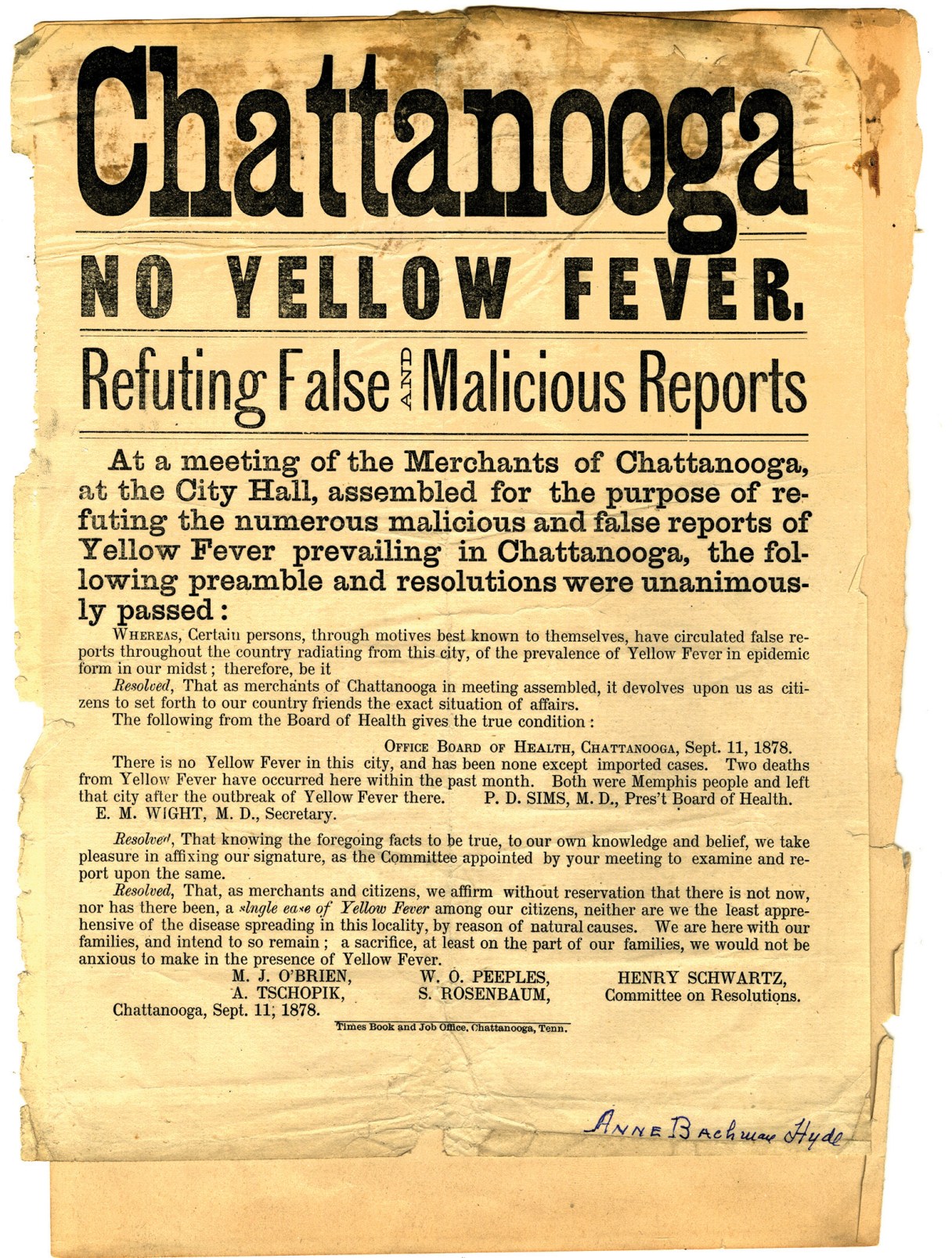
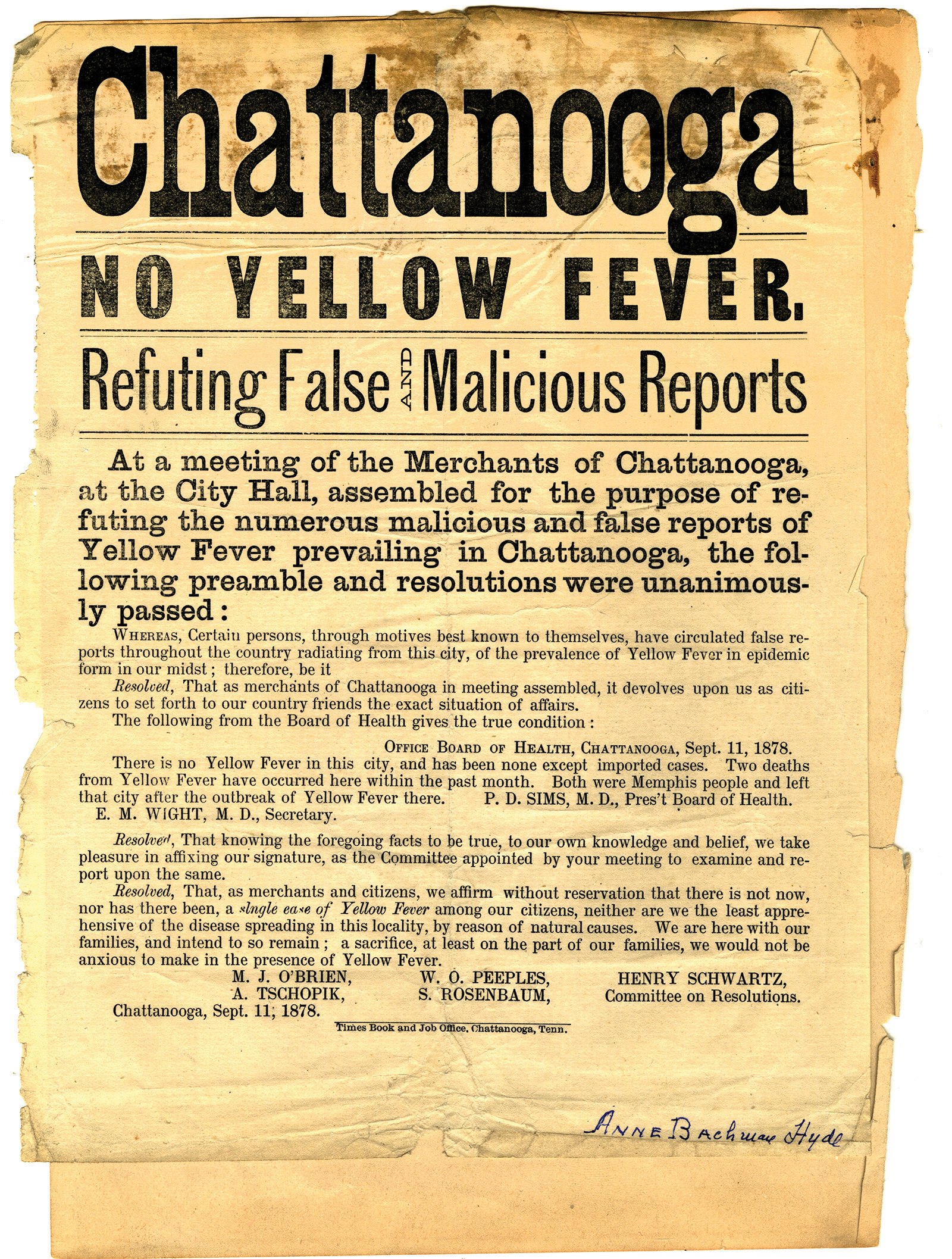 Reports of yellow fever initially were downplayed in local media. About 10,000 fled the city; 140 died.
Like many other communities, Chattanooga citizens sent financial aid to the stricken areas. Local health care workers volunteered to go, and some heroically died.