
Friday, October 30, 2026Oct 30

This story is free to read.

Ignatius: America is at war, in cyberspace

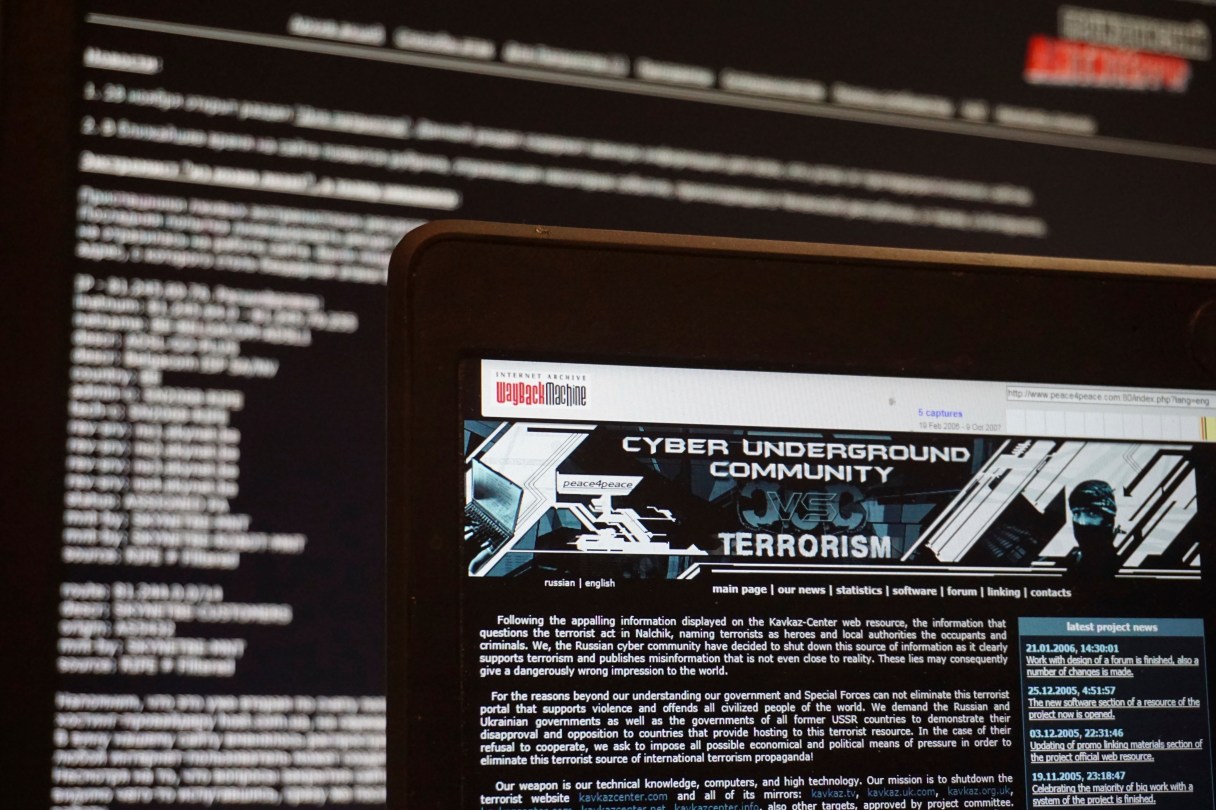
In this July 24, 2017 photo, archived versions of two Russian anti-terrorism websites on a computer screen are photographed, in Paris. The now-defunct websites were the brainchild of alleged hacker Pyotr Levashov, according to Andrei Soldatov, an expert on the Russian security services. The U.S. has orchestrated the arrest of five alleged Russian cybercriminals across Europe in the past nine months. The operations come at a fraught moment in relations between Russia and the U.S., where politicians are grappling with the allegation that Kremlin hackers intervened in the 2016 election. (AP Photo/Raphael Satter)
In this July 24, 2017 photo, archived versions of two Russian anti-terrorism websites on a computer screen are photographed, in Paris. The now-defunct websites were the brainchild of alleged hacker Pyotr Levashov, according to Andrei Soldatov, an expert on the Russian security services. The U.S. has orchestrated the arrest of five alleged Russian cybercriminals across Europe in the past nine months. The operations come at a fraught moment in relations between Russia and the U.S., where politicians are grappling with the allegation that Kremlin hackers intervened in the 2016 election. (AP Photo/Raphael Satter) In this July 24, 2017 photo, archived versions of two Russian anti-terrorism websites on a computer screen are photographed, in Paris. The now-defunct websites were the brainchild of alleged hacker Pyotr Levashov, according to Andrei Soldatov, an expert on the Russian security services. The U.S. has orchestrated the arrest of five alleged Russian cybercriminals across Europe in the past nine months. The operations come at a fraught moment in relations between Russia and the U.S., where politicians are grappling with the allegation that Kremlin hackers intervened in the 2016 election. (AP Photo/Raphael Satter)

WASHINGTON – One of the least-discussed but perhaps most consequential comments by special counsel Robert Mueller in his appearance before reporters this week was his blunt counterintelligence assessment: “Russian intelligence officers, who are part of the Russian military, launched a concerted attack on our political system.”

Here’s why this judgment is so important: The U.S. military, backed by Mueller’s findings and those of the intelligence community, has responded by developing a tough new doctrine to counter cyberattacks by Russia and other rivals. The premise is that our adversaries are engaged in constant cyberassaults against us, and America should adopt a strategy of “persistent engagement.”

What this means, basically, is that the United States is now in a low-level state of cyberwar, constantly.

Driving this new strategy is U.S. Cyber Command, the nexus of the military’s efforts to combat and deter adversaries, from terrorist groups to Russia and China.

Cyber Command initially stated its new strategy in a 2018 directive that had the classically opaque title “Achieve and Maintain Cyberspace Superiority.” The central theme was that the military cyberwarriors would take the fight into enemy networks (and the gray zones in between).