
WASHINGTON (AP) – Sticky plaque gets the most attention, but now healthy seniors at risk of Alzheimer’s are letting scientists peek into their brains to see if another culprit is lurking.
No one knows what actually causes Alzheimer’s, but the suspects are its two hallmarks – the gunky amyloid in those brain plaques or tangles of a protein named tau that clog dying brain cells. New imaging can spot those tangles in living brains, providing a chance to finally better understand what triggers dementia.
Now researchers are adding tau brain scans to an ambitious study that’s testing if an experimental drug might help healthy but at-risk people stave off Alzheimer’s. Whether that medication works or not, it’s the first drug study where scientists can track how both of Alzheimer’s signature markers begin building up in older adults before memory ever slips.
“The combination of amyloid and tau is really the toxic duo,” predicted Dr. Reisa Sperling of Boston’s Brigham and Women’s Hospital and Harvard Medical School, who is leading the so-called A4 study. “To see it in life is really striking.”
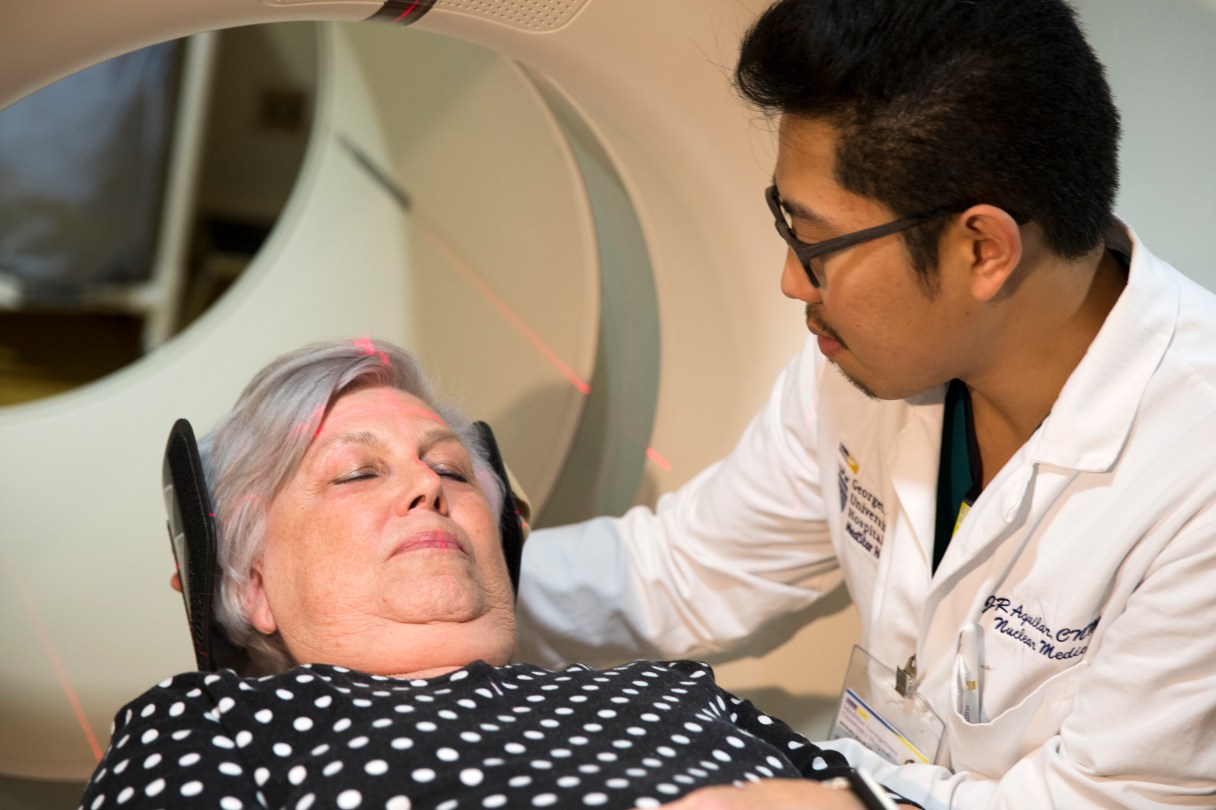
The A4 study – it stands for Anti-Amyloid Treatment in Asymptomatic Alzheimer’s – aims to enroll 1,000 healthy seniors like Judith Chase Gilbert, 77, of Arlington, Virginia. The recently retired government worker is mentally sharp but learned through the study that her brain harbors amyloid buildup that might increase her risk. Last week, researchers slid Gilbert into a doughnut-shaped PET scanner as she became one of the first study participants to also have their brains scanned for tau.