
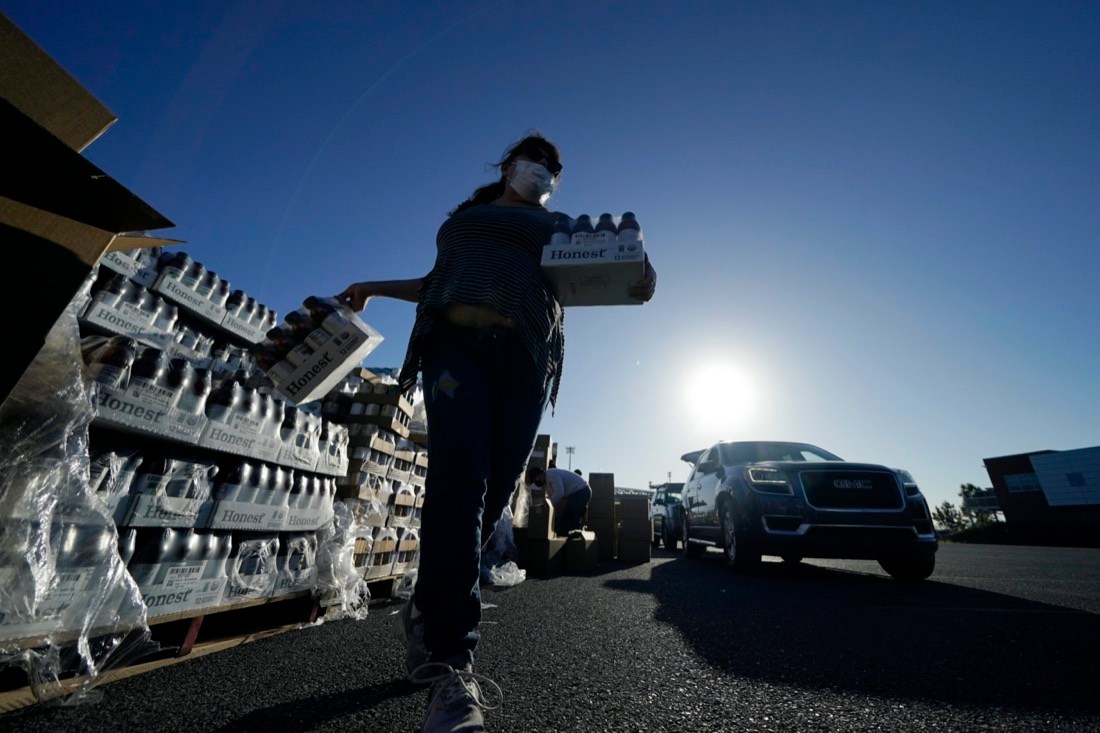
The deadly pandemic that tore through the nation’s heartland struck just as Aaron Crawford was in a moment of crisis. He was looking for work, his wife needed surgery, then the virus began eating away at her work hours and her paycheck.
The Crawfords had no savings, mounting bills and a growing dread: What if they ran out of food? The couple had two boys, 5 and 10, and boxes of macaroni and cheese from the dollar store could go only so far.
A 37-year-old Navy vet, Crawford saw himself as self-reliant. Asking for food made him uncomfortable. “I felt like I was a failure,” he says. “It’s this whole stigma … this mindset that you’re this guy who can’t provide for his family, that you’re a deadbeat.”
Hunger is a harsh reality in the richest country in the world. Even during times of prosperity, schools hand out millions of hot meals a day to children, and desperate elderly Americans are sometimes forced to choose between medicine and food.
Now, in the pandemic of 2020, with illness, job loss and business closures, millions more Americans are worried about empty refrigerators and barren cupboards. Food banks are doling out meals at a rapid pace and an Associated Press data analysis found a sharp rise in the amount of food distributed compared with last year. Meanwhile, some folks are skipping meals so their children can eat and others are depending on cheap food that lacks nutrition.