
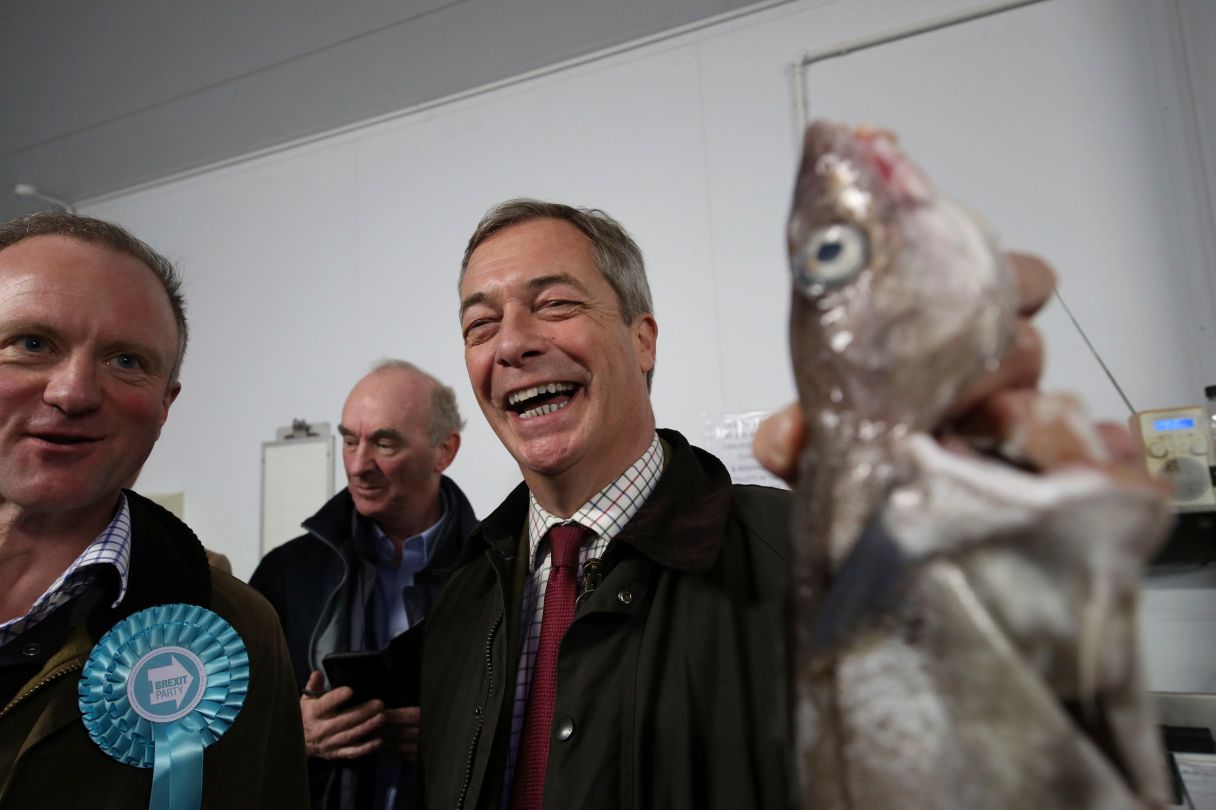
LONDON – Britain’s Brexit Party has failed to reach a tactical voting pact with the ruling Conservatives, saying Thursday that it will field 300 candidates in next month’s election to force Prime Minister Boris Johnson to deliver on his promise of a clean break with the European Union.
Brexit Party leader Nigel Farage said the party had to contest the seats in Britain’s Dec. 12 election to keep the pressure on Johnson, rebuffing Conservative arguments that doing so risks splitting the pro-Brexit vote and boosts parties that want to remain in the EU. His comments came on the final day for candidates to register.
“What we’ve got so far in this campaign is for Boris to promise to change direction, what we now have to do is to hold him to account, to make sure we get a proper Brexit, and that’s my job,” Farage told the BBC.
Britain is holding a national election on Dec. 12 because Johnson wants to secure a majority so he can take the U.K. out of the bloc by the next Brexit deadline of Jan. 31. All 650 seats in the House of Commons are up for grabs.
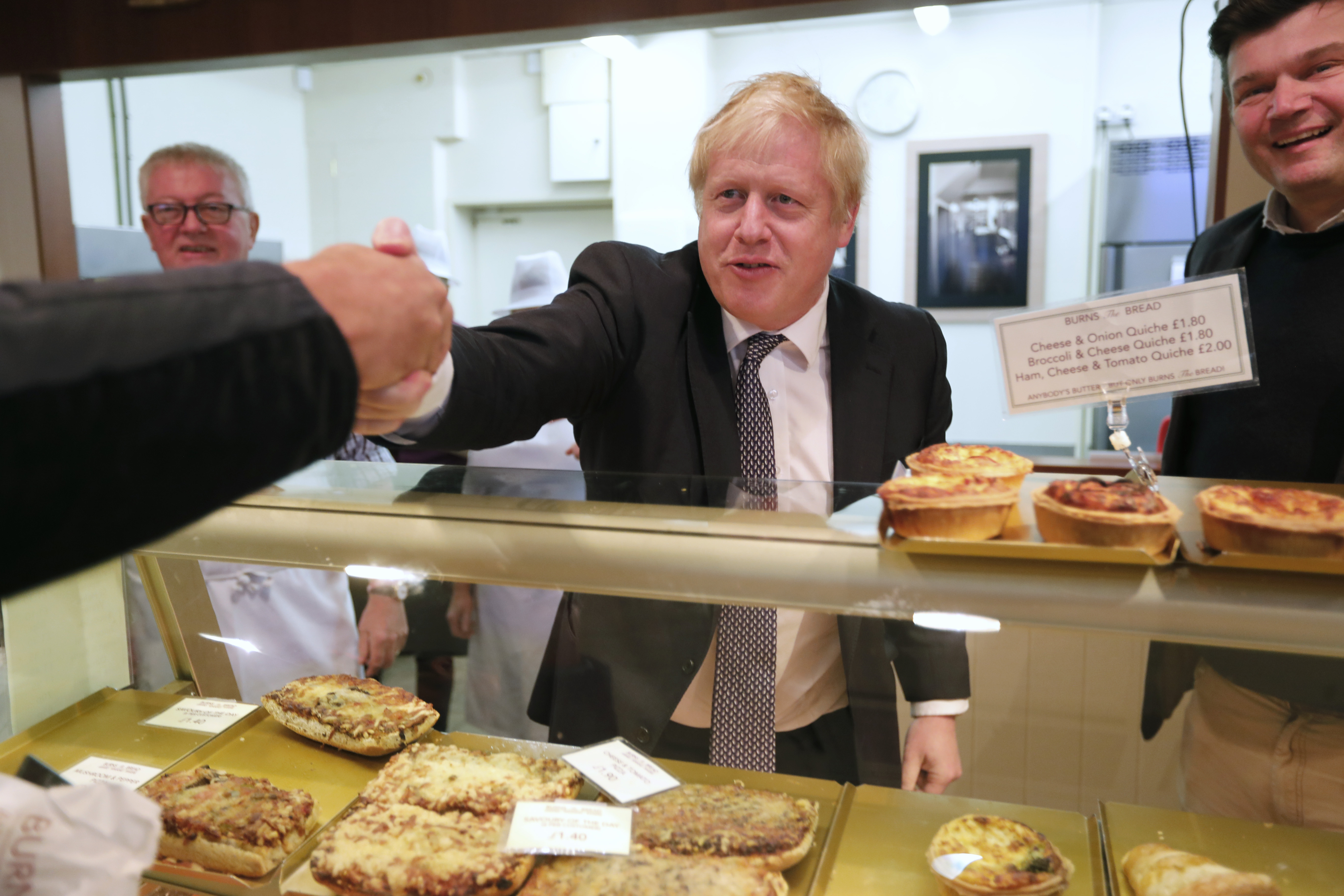 Britain’s Prime Minister Boris Johnson visit a bakery during a General Election campaign trail stop in Wells, England, Thursday, Nov. 14, 2019. Britain goes to the polls on Dec. 12. (AP Photo/Frank Augstein, Pool)
Johnson reached a Brexit deal with the EU but so far has not persuaded enough British lawmakers to pass it. The single-issue Brexit Party, meanwhile, prefers to leave the EU without a deal, something that economists say would damage both the British and EU economies.