
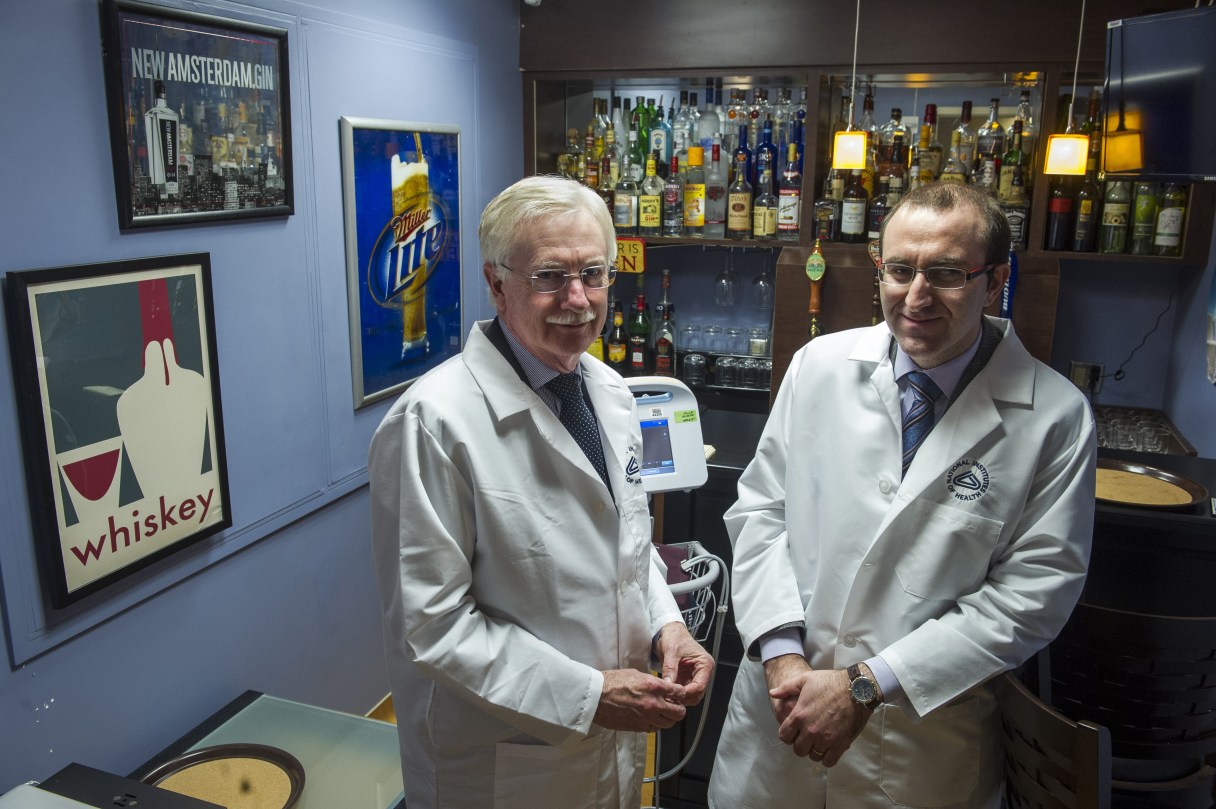
WASHINGTON (AP) – There’s no skunky bar odor amid the beer taps. Instead of booze, colored water fills the bottles. The real alcohol is locked away but still close enough for the extra temptation of smell – and to test the safety of a new drug designed to help heavy drinkers say “when” sooner than usual.
The replica of a fully stocked bar inside the hospital at the National Institutes of Health is an important part of the experiment. Researchers believe that sitting in the dimly lit bar-laboratory should cue the volunteers’ brains to crave a drink, and help determine if the pill they’re testing counters that urge.
“The goal is to create almost a real-world environment, but to control it very strictly,” said lead researcher Dr. Lorenzo Leggio, who is testing how a hormone named ghrelin that sparks people’s appetite for food also affects their desire for alcohol, and if blocking it helps.
Amid all the yearly resolutions to quit, alcohol use disorders affect about 17 million Americans, and only a small fraction receives treatment. There’s no one-size-fits-all therapy, and the NIH is spurring a hunt for new medications that target the brain’s addiction cycle in different ways – and to find out which options work best in which drinkers.
“Alcoholics come in many forms,” explained Dr. George Koob, director of NIH’s National Institute of Alcohol Abuse and Alcoholism, which has published new online guides, at www.niaaa.nih.gov, explaining who’s at risk and what can help.