
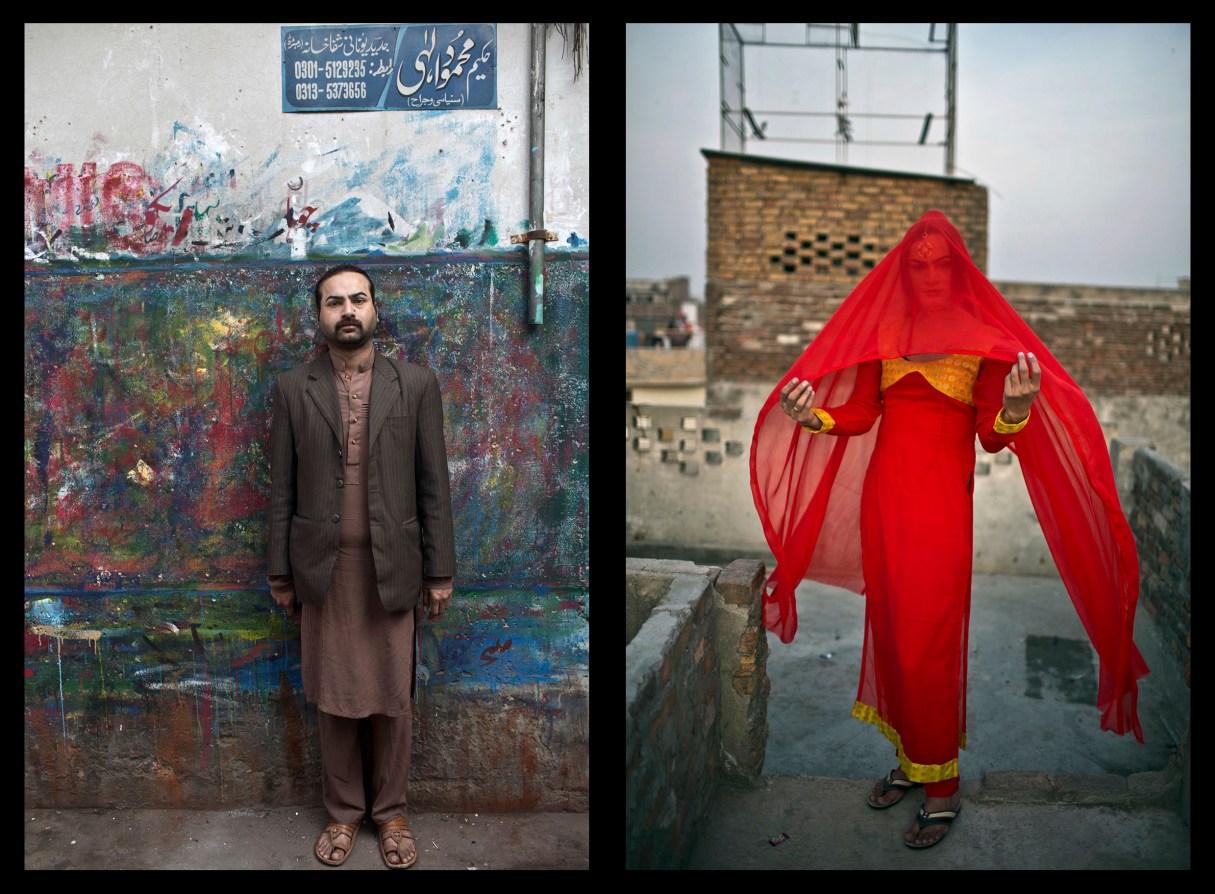
RAWALPINDI, Pakistan (AP) – By day, 27-year-old Waseem Akram sells mobile phone accessories from an alleyway shop in an old neighborhood of this Pakistani city. But by night, Akram stands before a mirror, shaving away his beard and picking through mascara and rouge to become Rani, a female wedding party dancer
“Life is so hard, one job is not enough to help me and my family,” Akram says, the bachelor’s voice taking on Rani’s higher register. “Being a dancer at weddings, parties and private events … helps me to earn much more money than working in a shop.”
Across conservative Pakistan, where Islamic extremists launch near-daily attacks and many follow a strict interpretation of their Muslim faith, male cross-dressers and the transgendered face a challenge of balancing two identities. Some left their villages for the anonymity of a big city, fearing the reactions of their families while still concealing their identity from neighbors and co-workers.
___
EDITOR’S NOTE – Muhammed Muheisen, chief photographer in Islamabad for The Associated Press, spent two years talking with Pakistan’s cross-dressing men and the transgendered, working to gain their trust to offer a rare glimpse into their lives in this conservative country.